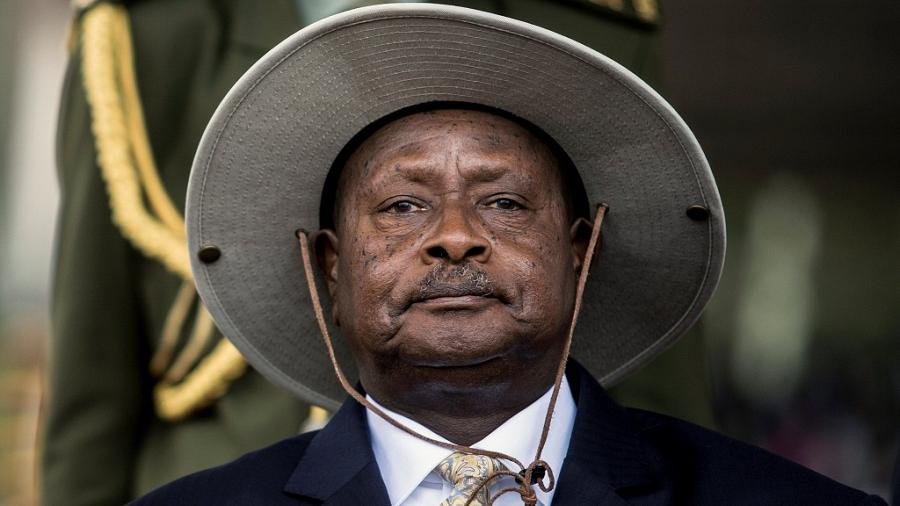
𝐒𝐏𝐄𝐂𝐈𝐀𝐋 𝐀𝐍𝐍𝐎𝐔𝐍𝐂𝐄𝐌𝐄𝐍𝐓 | President @KagutaMuseveni is set to be sworn in on 12th May 2026 following his victory in the recent election. pic.twitter.com/Ak57v4yH7g
— Uganda Media Centre (@UgandaMediaCent) April 8, 2026
Introduction
On 17th January 2026, Uganda’s Electoral Commission announced that President Yoweri Museveni was re-elected to a seventh term after securing 71.65 percent of the vote. His main challenger, Robert Kyagulanyi also known as Bobi Wine, aged 43, received 24.72 percent according to the official results.
Uganda’s 2026 election was characterised by repression and intimidation targeting political opposition members, human rights defenders, journalists, and other critics. A report by the UN Human Rights Office found that authorities relied on laws adopted or amended since the 2021 elections to consolidate control, reinforce impunity, and restrict the rights to freedom of expression, association, and peaceful assembly. These measures included provisions under recent amendments to legislation governing digital communication, civil society regulation, and military authority, which officials used to detain opposition figures and activists, raid opposition party premises, seize property, suspend radio stations, arrest bloggers, and tighten oversight of nongovernmental organisations. The findings indicate a systematic pattern of legal and administrative action aimed at constraining dissent and limiting civic space ahead of voting.
Similarly, Human Rights Watch and other organisations documented patterns of repression in the period leading up to the elections, reporting measures that constrained civic space and targeted critics, opposition actors, and independent voices. Security forces reportedly beat and arrested hundreds of people at opposition rallies, assaulted journalists, and used tear gas and force to disperse gatherings. The government ordered several human rights, media, and election monitoring organisations to suspend operations on vague grounds and imposed a nationwide internet shutdown days before the vote. Following President Yoweri Museveni’s victory, opposition leader Robert Kyagulanyi reported that security forces surrounded his home, cut electricity and surveillance systems, and abducted senior members of his party, some of whom remain missing.
Association
Ahead of the elections, on 9th January 2026, the National Bureau for Non-Governmental Organisations under the Ministry of Internal Affairs suspended at least seven human rights organisations, namely; Chapter Four Uganda, Alliance for Election Finance Monitoring, Human Rights Network for Journalists-Uganda, National NGO Forum, Center for Constitutional Governance, National Coalition of Human Rights Defenders, and African Centre for Treatment and Rehabilitation of Torture Victims. Authorities cited unspecified intelligence and alleged breaches of national security and domestic law under Section 42(d) of the NGO Act. The orders required immediate cessation of all activities pending investigations of an undefined duration. Regulators also instructed banks to freeze transactions linked to the organisations. This action forced office closures, halted programmes, and suspended payments to staff and service providers across Uganda. The timing and scope indicate a recurring pattern in which authorities restrict communication and arbitrarily target prominent critics and civic actors ahead of elections, apparently to suppress dissent before polling. Similar restrictions occurred during the 2021 electoral period, reinforcing concerns about systematic use of regulatory powers to constrain civic space during politically sensitive moments.
The crackdown intensified on 22nd January 2026 when authorities in Uganda detained Muwanga Kivumbi, a Member of Parliament and deputy to opposition leader Bobi Wine in the National Unity Platform (NUP). Police stated that they had arrested the legislator over his alleged role in election related violence in which at least seven people were killed. The following day, a court in Butambala charged Kivumbi with terrorism and remanded him in custody until 3rd February. The arrest and prosecution of a senior opposition official on terrorism charges following contested polls raised concerns about the use of serious criminal offences against political actors during periods of heightened tension.
On 23rd January 2026, Uganda’s military chief Muhoozi Kainerugaba stated that authorities in Uganda had detained about 2,000 opposition supporters, killed 30, and were pursuing others following the elections. In a series of overnight social media posts, Kainerugaba, son of President Yoweri Museveni, described supporters of the NUP as hooligans and terrorists and claimed security forces had killed 30 of them without explaining the circumstances. The government accused supporters of opposition leader Bobi Wine of election related violence, while opposition figures alleged that security forces attacked their members. Opposition parties and rights organisations reported that some detainees were held in unofficial facilities where torture allegedly occurred, indicating serious risks of abuses linked to political affiliation.
Pan African Solidarity, a continental network of human rights and democracy advocates have issued a solidarity statement calling out Uganda and Tanzanian regimes over the ongoing persection of political figures, prisoners of conscience and the proposed sovereignity bill in… pic.twitter.com/p3XgjzViSn
— Ssuuna King James -MP UOT🇺🇬 🇰🇪🇹🇿🇸🇩🇵🇸 (@SuunaKing_James) March 31, 2026
Separately, in February 2026, Uganda’s Parliament received the proposed NGO Funding Bill, 2026, which aims to introduce a new framework regulating how non-governmental organisations are financed and operate. In late March 2026, the government renamed the draft law the 'National Sovereignty Bill', reframing it as a measure to safeguard the country from external influence. Government officials state that the bill is intended to tighten oversight of foreign funding, particularly funds channelled to NGOs. It would require organisations to disclose the source, amount and intended purpose for all foreign funding within a set timeframe. The proposal also introduces limits on the share of foreign funding NGOs can receive and grants authorities powers to block funds deemed to interfere with political processes or threaten national sovereignty.
Supporters argue that the legislation will improve accountability, strengthen national sovereignty and ensure NGO activities align more closely with national development priorities, especially in areas such as education and literacy in underserved regions. However, critics warn that funding caps and increased ministerial control could erode the independence and operational space of civil society, with stricter compliance requirements potentially constraining NGO work and weakening partnerships with international actors.
Peaceful Assembly
On 20th October 2025, a magistrate’s court in Uganda denied bail to 12 environmental activists who had been arrested during a protest opposing the East African Crude Oil Pipeline, a major fossil fuel infrastructure project.
Police detained the group, eight of whom are students, on 1st August 2025 on charges of public nuisance. Magistrate Winnie Nankya Jatiko ruled that proceedings had advanced too far to justify their release. The court had previously rejected bail on 18th August, citing repeated protest activity and breaches of earlier bail conditions by some defendants. The activists were scheduled to return to court on 6th November to determine whether they had a case to answer. On that date, a court in Kampala authorised trial proceedings against the twelve activists
Ahead of the January 2026 elections, Amnesty International documented a series of violent actions by security forces against peaceful political gatherings in Uganda, particularly in Kawempe and Iganga. Officers deployed tear gas, pepper spray, batons, wires, and dogs to disperse crowds attending National Unity Platform campaign rallies, while also imposing arbitrary movement restrictions. In Kawempe, following the arrival of NUP presidential candidate Robert Kyagulanyi Ssentamu (Bobi Wine), the police launched tear gas and pepper spray, causing panic and a stampede that led dozens of people to fall into a deep ditch. In Iganga, the military reportedly blocked an exit with a truck and opened fire as attendees attempted to leave, resulting in at least one death and multiple injuries. These incidents occurred despite eyewitness reports confirming that rally participants remained peaceful and carried only the Ugandan national flag. Authorities defended the actions by alleging that opposition supporters had stoned police and damaged vehicles, yet Amnesty International’s verification of digital evidence and eyewitness accounts suggests a systematic campaign of repression aimed at obstructing the opposition and undermining the rights to freedom of association and peaceful assembly.
Expression
In October 2025, security personnel in Uganda prevented journalists from Nation Media Group-Uganda outlets NTV Uganda and Daily Monitor from entering parliament, stating they had instructions to deny them access. Reports indicated that since March, authorities had also blocked the group’s reporters from covering events involving President Yoweri Museveni. According to the newspaper, these measures came days after the company’s decision to withdraw its journalists from a by election in Kampala after security personnel assaulted and arrested members of the press. Deputy presidential press secretary Farouk Kirunda wrote on X that Museveni personally ordered the restriction, citing what he described as repeated misreporting.
On 30th December 2025, security forces in Uganda raided the home of Sarah Bireete, a prominent activist and government critic, and arrested her two weeks before the 15th January 2026 elections. Authorities charged her with “unlawfully obtaining or disclosing personal data”, alleging without detail that she had accessed national voters’ information without consent from the Electoral Commission. Police allegedly interrogated her about social media posts critical of the government and the elections. The court scheduled her bail hearing for 21st January, ensuring her detention extended beyond election day, and only granting it on 28th January 2026.
Bireete heads the Center for Constitutional Governance, one of the CSOs suspended in early January 2026 (see association section). She frequently comments in media and online, where she has questioned the credibility of the forthcoming elections and highlighted alleged discrepancies in the voters’ register.
On 5th January 2026, the Ugandan government banned live broadcasts of ‘riots’, unlawful processions, and other violent incidents ahead of the national elections in which President Yoweri Museveni sought to extend his 40-year rule. The Ministry of Information Communication and Technology justified this move claiming that live streaming would escalate tensions and spread panic. Authorities frequently label anti-government protests as riots, and the ministry also banned the dissemination of content deemed inciting, hateful, or violent. The directive raised concerns about restrictions on media freedom and the ability of citizens to access independent information during a politically sensitive period.
On 13th January 2026, the Uganda Communications Commission directed all mobile network operators and internet service providers to suspend public internet access nationwide from 6 p.m., two days before the general elections. The regulator cited concerns over online misinformation, potential electoral fraud, and content that could incite violence and undermine public confidence and national security. The order blocked social media, web browsing, video streaming, email services, messaging applications, and most other online platforms, while allowing limited access to essential services including hospitals, banking, tax systems, utilities, and the electoral commission portal. It also halted SIM card sales and disabled outbound data roaming to One Network Area countries. Monitoring by independent sources, including Cloudflare Radar and Internet Outage Detection Analysis, confirmed a sharp decline in internet traffic. The blanket shutdown constitutes a direct attack on freedom of expression and the public’s right to information. Ugandan authorities have routinely imposed similar restrictions during elections, limiting voters’ access to crucial electoral information. During the 2021 elections, the government also implemented a nationwide internet blackout.
In positive developments, on 17 March 2026, the Constitutional Court of Uganda declared criminal defamation unconstitutional. The court held that the offence, which was punishable by up to two years’ imprisonment, violated the right to freedom of expression, adding that civil remedies provide sufficient redress. In reaching its findings, the court found Section 162 of the Penal Code Act, 1950, which defines libel, to be vague and inconsistent with Uganda’s international obligations on freedom of expression.
In the same landmark ruling, the court also nullified the Computer Misuse (Amendment) Act, 2022 on procedural grounds, finding that it was passed without the required parliamentary quorum. The invalidated law had imposed broad restrictions on the sharing of “unsolicited” or “malicious” information and content deemed to ridicule, degrade, or demean others, with penalties of up to seven years’ imprisonment.