INTRODUCTION
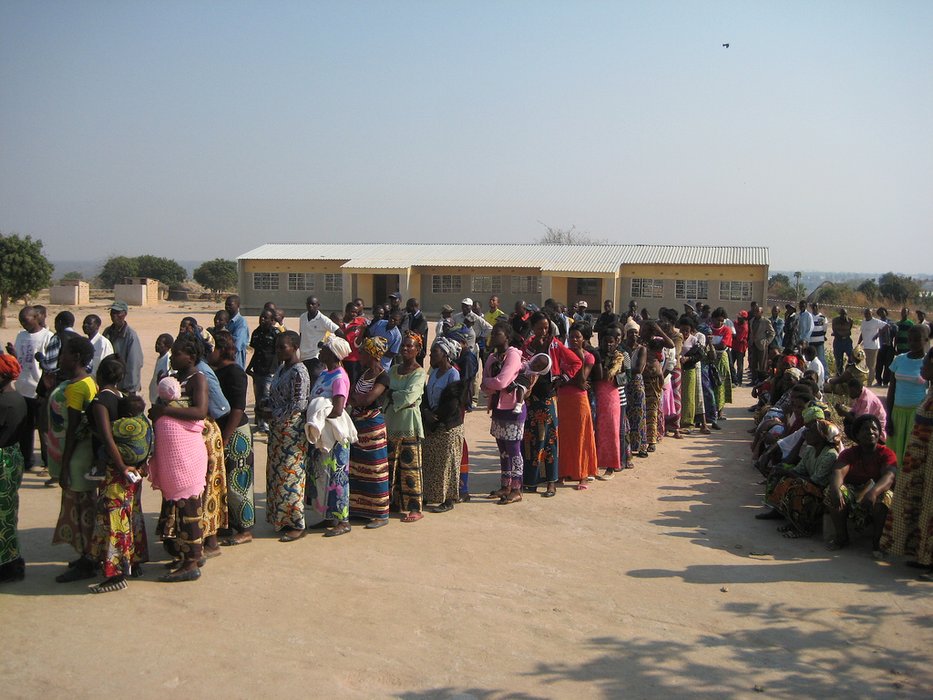
Zambia held its General Election on 13th August 2026, with incumbent President Hakainde Hichilema of the United Party for National Development (UPND) declared the winner by the Electoral Commission of Zambia (ECZ) on 18th August 2026. President Hakainde Hichilema secured 2,965,326 votes (approximately 60.5%) of the valid votes cast, while his main contestant, Brian Mundubile of the National Reconciliation Party for Unity and Prosperity (NRPUP), received 1,856,217 votes (approximately 37.9%% of the valid votes cast).
The election process encountered disruptions when vote counting was temporarily suspended following reports of violence against polling staff and the alleged theft of ballot papers. Counting resumed several hours later after the ECZ announced that the security threat had been contained.
The Southern African Development Community Electoral Observation Mission (SEOM) described the 2026 General Election as peaceful and orderly, noting improvements in the political environment compared with the 2021 Elections. However, it raised concerns about political violence, restrictions on freedom of expression, late electoral reforms, unequal media coverage and potential threats to ballot secrecy. SEOM recommended comprehensive legislation regulating political parties, stronger electoral independence, timely reforms, improved voter education and greater inclusion of women and persons with disabilities.
Association
Following Zambia’s 13th August 2026 General Election, a series of high-profile arrests involving opposition figures, political activists and other government critics raised concerns about a broader crackdown on dissent. Reports of arbitrary arrests and detention prompted questions about the protection of civil liberties, due process and the rights to freedom of assembly, association and expression.
ARRESTS AND TREASON CHARGES FOLLOW 2026 ELECTIONS
On 16th August 2026, the Zambian government announced that 11 people had been arrested during a security operation at a property in Kabulonga, Lusaka, on the night of 13th August 2026, following the 2026 General Election. Secretary to the Cabinet Patrick Kangwa alleged that the operation had uncovered a suspected militia and weapons intended for an armed insurrection. He also claimed that an exchange of gunfire occurred after occupants allegedly fired at law-enforcement officers, while some individuals reportedly fled the scene. Former Cabinet minister Mutotwe Kafwaya was fatally shot during the incident. Authorities described an exchange of gunfire, while opposition figures disputed the official account and rejected the allegations of militia activity and plans for an insurrection.
Opposition presidential candidate Brian Mundubile, who was among those found at the scene, and his running mate Makebi Zulu, subsequently sought refuge at a United Nations facility in Lusaka, citing concerns for their safety. They surrendered to police on 27th August 2026 and were charged with treason alongside other individuals. Both denied the allegations, which followed Mundubile’s rejection of the election results and claims of irregularities.
The arrests raised concerns about due process, political freedoms and the treatment of opposition figures. UN human rights chief Volker Türk urged Zambian authorities to end arbitrary arrests and uphold detainees’ due process rights, including access to legal representation and family contact, human treatment, and prompt appearance before a judge.
ZAMBIA CANCELS PASSPORTS OF GOVERNMENT CRITICS
On 7th September 2026, the Zambian authorities issued Government Gazette Notice No. 1421 of 2026, cancelling the passports of six government critics. The notice was published on 11th September 2026 and took immediate effect. Those affected were former Zambian Ambassador Emmanuel Mwamba, former Petauke Member of Parliament Emmanuel Jay Banda, former Nkana Member of Parliament Binwell Mpundu, former presidential political aide Peter Kaiser (Kaizer) Zulu, academic Sishuwa Sishuwa and social media commentator Lillian Mutambo. The government cited “security reasons in the interest of national security” but did not specify the individual grounds for the cancellations. The affected individuals were ordered to surrender their passports, which were declared invalid for travel, identification and official purposes.
The cancellations prompted criticism from CSOs, which argued that the measure violated international human rights law and could restrict freedom of movement. Amnesty International noted that Zambia’s Passport Act sets out specific grounds for passport cancellation, including loss of citizenship, fraud and certain criminal convictions, and that political criticism is not itself a stated ground. The organisation called on the government to reverse the cancellations and restore the passports.
Expression
JOURNALIST ARRESTED AND DETAINED UNDER THE CYBER CRIMES ACT
On 17th July 2026, MacPherson Mukuka, a journalist with the state-owned Zambia National Broadcasting Corporation (ZNBC), was arrested in Lusaka over an audio recording published on the Earth Television Zambia Facebook page. Police alleged that he had recorded a private conversation involving public servants without prior notice, in violation of Section 10 of the Cyber Crimes Act No. 4 of 2025. The recording reportedly captured members of a presidential campaign team discussing engagement with polling-station staff ahead of the 13th August general election. Mukuka was formally charged on 21st July 2026 under Section 10 of Zambia’s Cyber Crimes Act No. 4 of 2025, which prohibits recording a private conversation without prior notice. The offence carries a potential prison sentence of up to two years, a fine, or both.
His detention prompted condemnation from Amnesty International, the Committee to Protect Journalists, the International Federation of Journalists and the Zambian Civil Liberties Union. These organisations called for his release and the dropping of charges, warning that criminal prosecution over reporting on matters of public interest could undermine media freedom and discourage investigative journalism.
After 14 days in custody, Mukuka was released following a Lusaka High Court order issued on 31st July 2026. The court ordered his immediate release after the State failed to provide an affidavit justifying his continued detention. His lawyers had challenged the detention through habeas corpus proceedings, arguing that it violated his constitutional rights. The court reportedly found the continued detention unlawful and unconstitutional and ordered the State to pay costs.
ENTERTAINERS ARRESTED DURING OPPOSITION RALLY
On 5th August 2026, Zambian police arrested musicians Moses Ng’andwe, popularly known as Chester, and Felix Ndangeni Inshila, alongside comedian Winston Ngosa, known as IDC Light Comedy, in the Mongu/Kalabo area of Western Province. The arrests occurred during opposition political campaign activities ahead of the 13th August general elections. Police initially accused the entertainers of conduct likely to cause a breach of the peace. On 21st August 2026, they were subsequently charged with riotous behaviour and possession of offensive weapons, allegations they contested in court.
The arrests prompted concern among civil society and professional associations about freedom of expression and political participation during the electoral period. The Zambia Music Association and the Comedy Association of Zambia confirmed the arrests and called for the release of their members. ZAM president Brian Bwembya, known as B-Flow, sought clarification from the police regarding the circumstances of their detention. The opposition National Reconciliation Party for Unity and Prosperity (NRPUP) also appealed for their release and urged law enforcement authorities to exercise professionalism and restraint.
On 29th August 2026, the Kalabo Magistrate’s Court granted bail to the entertainers and other accused persons after they had spent 24 days in detention.