Georgia
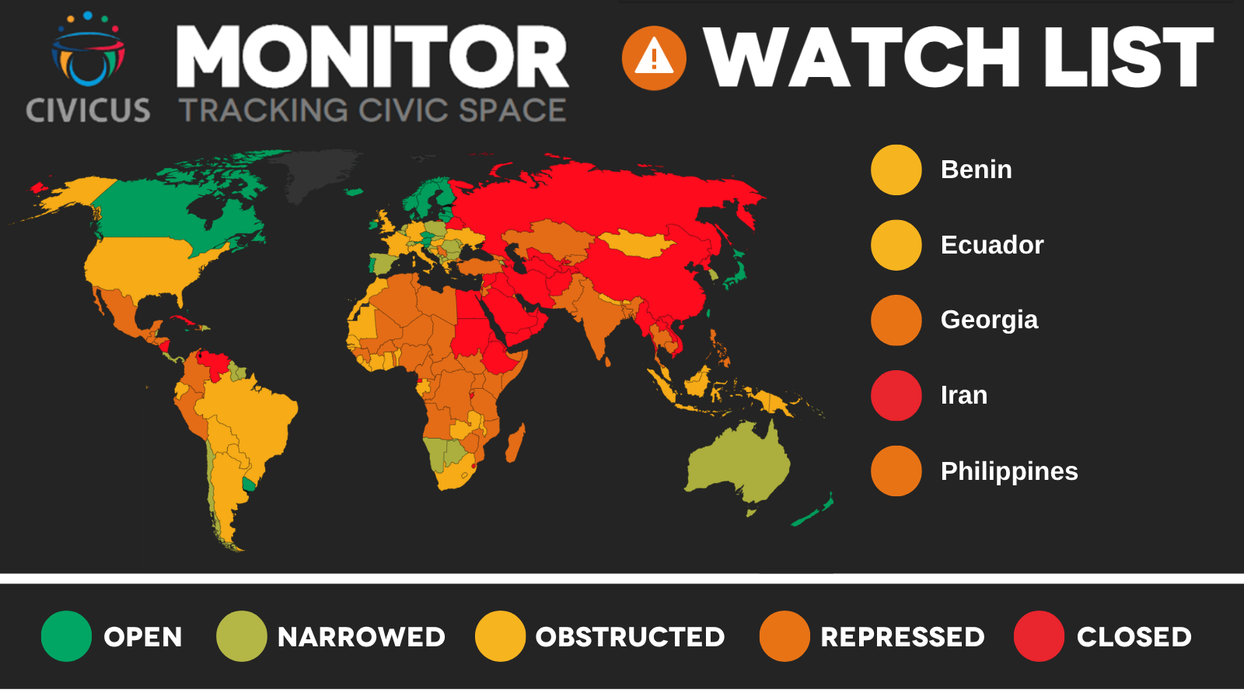
Georgia added to human rights watchlist as sweeping new laws come into force
- Civic space rapidly shrinking as political crisis deepens since 2024
- Successive laws on protests and foreign funding tightening grip on dissent
- Escalating pressure on independent civil society and media
25 March 2026 – Georgia has been added to the CIVICUS Monitor Watchlist as authorities escalate a sweeping crackdown on dissent amid a deepening political crisis that began with mass protests in 2024. Since then, the ruling Georgian Dream party has unleashed a torrent of repressive laws and punitive measures designed to restrict protest and constrain the work of independent civil society and media.
The alarming speed at which the situation is deteriorating has been reflected in the country’s plummeting civic space rating. After being downgraded from “narrowed” to “obstructed” in 2024, the CIVICUS Monitor further lowered the country’s rating to “repressed” in December 2025. This classification, the second worst rating a country can receive, indicates severe restrictions to the freedoms of expression, peaceful assembly, and association. Alongside Georgia, the latest Watchlist also includes Benin, Ecuador, Iran and the Philippines.
A new wave of restrictive laws
On 12th March 2026, the Organisation for Security and Co-operation in Europe (OSCE), through its Moscow Mechanism, published findings from a fact-finding mission warning that Georgia is undergoing “marked democratic backsliding.”
Earlier in March, parliament approved sweeping amendments that dramatically expand the definition of “foreign grants” to include any financial or material support deemed to influence public policy, even donations from individuals. Failure to obtain prior government approval can result in prison sentences of up to six years. Lawmakers also introduced criminal liability for “extremism against the constitutional order”, widely seen as targeting those who contest the legitimacy of the 2024 elections, and imposed eight-year bans on political party membership for individuals previously employed by organisations labelled as serving “foreign interests.”
These measures build on an escalating legislative offensive. Following the adoption of a controversial “foreign agents” law in 2024, which triggered mass protests and warnings of a slide towards Russian-style authoritarianism, authorities introduced even harsher restrictions throughout 2025. These include a second “foreign agents” law extending obligations to individuals, a ban on broadcasters receiving foreign funding, and new rules requiring NGOs to secure government approval before accepting foreign grants.
At the same time, authorities have steadily tightened restrictions on protests. Successive amendments have criminalised an expanding range of common protest activities, from covering one’s face to blocking traffic or allegedly “obstructing movement” in pedestrian areas, with immediate administrative detention as a penalty. Repeat offences can trigger criminal charges and prison sentences of up to two years.
“Authorities are introducing sweeping new restrictions at a relentless pace, dismantling civic space piece by piece,” said Tara Petrović, Europe researcher for the CIVICUS Monitor. “This constant stream of repressive laws must be urgently reversed, and provisions that are incompatible with Georgia’s human rights obligations must be repealed in full.”
A deepening crisis: dissenting voices under attack
The crackdown builds on the state’s response to mass protests that began in November 2024 following the government’s decision to pause EU accession talks. Police used tear gas, water cannons and arbitrary arrests, while masked groups allegedly linked to authorities carried out attacks.
By late 2025, civil society organisations estimated that hundreds of protesters had faced detention, torture and ill-treatment, criminal investigations and fines. As smaller demonstrations continue on a daily basis, authorities persist in targeting participants with heavy fines and detentions under increasingly restrictive laws.
The legislative assault is also placing civil society and independent media under severe strain. Administrative pressure has intensified, with numerous organisations subjected to inspections by anti-corruption bodies, politically motivated criminal investigations and the freezing of bank accounts. In February 2026, a broadcaster critical of the government reported facing administrative proceedings over a single donation from the United States, likely sent by a Georgian living abroad.
Political pluralism in the country is also under threat. In 2025, leading opposition politicians received jail sentences and temporary bans from office for refusing to testify before a parliamentary commission consisting of Georgian Dream and its allies after the opposition refused to take up their seats in parliament. Later that year, authorities opened a criminal case against eight opposition leaders, with some facing up to 15 years in prison. In a pending petition before the Constitutional Court, Georgian Dream is seeking to ban three opposition parties and has threatened to expand the case to include all nine parties that have formed an alliance against it.
“The speed and scale of these repressive measures should alarm anyone concerned about Georgia’s future,” said Petrović. “The country is rapidly approaching a point where meaningful dissent may no longer be possible.”
NOTES TO THE EDITOR
On Georgia’s civic space rating of Repressed:
In countries with this rating the civic space is significantly constrained. Active individuals and civil society members who criticise power holders risk surveillance, harassment, intimidation, imprisonment, injury and death. Although some civil society organisations exist, their advocacy work is regularly impeded, and they face threats of de-registration and closure by the authorities (see full description of ratings). See Frequently Asked Questions about the Watchlist here.
There are a total of 50 countries in the world with this rating (see all).
About the CIVICUS Monitor:
The new watchlist is released by the CIVICUS Monitor, an online platform that tracks the latest developments to civic freedoms, including the freedoms of expression, association and peaceful assembly, across 198 countries and territories.
მასშტაბური საკანონმდებლო ცვლილებების ძალაში შესვლის შემდეგ საქართველო ადამიანის უფლებათა მონიტორინგის სიას დაემატა
- 2024 წლიდან, პოლიტიკური კრიზისის გამწვავების ფონზე, მკვეთრად შეიზღუდა სამოქალაქო სივრცე
- პროტესტსა და უცხოურ დაფინანსებასთან დაკავშირებულ კანონმდებლობაში შეტანილი ცვლილებების შედეგად, გამკაცრდა კონტროლი წინააღმდეგობის გამოხატვაზე
- გაიზარდა წნეხი დამოუკიდებელ სამოქალაქო და მედია ორგანიზაციებზე
25 მარტი, 2026 - “სივიკუს მონიტორმა” საქართველო დასაკვირვებელი ქვეყნების სიაში დაამატა, წინააღმდეგობის გამოხატვაზე ხელისუფლების მიერ ზომების მნიშვნელოვნად გამკაცრებისა და პოლიტიკური კრიზისის გამწვავების ფონზე, რომელიც 2024 წელს დაწყებულ მასობრივ პროტესტს მოჰყვა. ამ დროიდან მოყოლებული, მმართველმა პარტიამ, “ქართულმა ოცნებამ”, მიიღო რეპრესიული კანონებისა და სადამსჯელო ზომების წყება, პროტესტისა და დამოუკიდებელი სამოქალაქო საზოგადოებისა თუ მედიის მუშაობის შესაზღუდად.
სიტუაციის გაუარესების შემშფოთებელი ტემპი აისახა ქვეყნის სამოქალაქო სივრცის რეიტინგზეც, რომელიც მკვეთრად დაეცა. 2024 წელს “შეზღუდულიდან” “დაბრკოლებულამდე” დაქვეითების შემდეგ, 2025 წლის დეკემბერში, “სივიკუს მონიტორმა” ქვეყნის რეიტინგი კიდევ უფრო დაბალ საფეხურზე “რეპრესირებულამდე” ჩამოწია. აღნიშული კლასიფიკაცია, რომელსაც ერთი საფეხური აშორებს ყველაზე ცუდ მაჩვენებლამდე, მიუთითებს გამოხატვის თავისუფლების, მშვიდობიანი შეკრებისა და გაერთიანების მხრივ არსებულ მძიმე შეზღუდვებზე ქვეყანაში. საქართველოსთან ერთად, მონიტორინგის სიის უკანასკნელ ვერსიაში ასევე მოხვდნენ ბენინი, ეკვადორი, ირანი და ფილიპინები.
შემზღუდავი კანონმდებლობის ახალი ტალღა
2026 წლის 12 მარტს, ევროპის უშიშროებისა და თანამშრომლობის ორგანიზაციამ (ეუთო), მოსკოვის მექანიზმის ფარგლებში, გამოქავეყნა ფაქტების დამდგენი კომისიის დასკვნა, სადაც აღნიშნულია, რომ საქართველო “მკვეთრ დემოკრატიულ უკუსვლას” განიცდის.
რამდენიმე დღით ადრე კი, საქართველოს პარლამენტმა დაამტკიცა საკანონმდებლო ცვლილებები, რომლის თანახმადაც მკვეთრად გაფართოვდა “უცხოური გრანტის” განმარტება. ახალი რედაქციით, ნებისმიერი ფინანსური თუ მატერიალური დახმარება, მათ შორის, ინდივიდებისათვის დონაციის გამოყოფა, შეიძლება ჩაითვალოს საჯარო პოლიტიკაზე გავლენის მოხდენის მცდელობად. მთავრობის წინასწარი თანხმობის მოპოვების უგულებელყოფამ კი შესაძლოა 6 წლამდე პატიმრობა გამოიწვიოს. კანონმდებლებმა ასევე დააწესეს სისხლისსამართლებრივი პასუხისმგებლობა „ექსტრემიზმზე კონსტიტუციური წყობილების წინააღმდეგ“, რომელიც აღიქმება როგორც მიმართული იმ ადამიანების წინააღმდეგ, ვინც 2024 წლის არჩევნების ლეგიტიმაციას არ ცნობს. გარდა ამისა, პარლამენტმა შემოიღო 8-წლიანი აკრძალვა პოლიტიკური პარტიის წევრობაზე მათთვის, ვინც წარსულში მუშაობდა ორგანიზაციებში, რომლებსაც ამჟამად “უცხოეთის აგენტებად” არიან მონიშნულნი.
ეს ზომები უკვე მიღებული მწვავე საკანონმდებლო ცვლილებების გაგრძელებაა. 2024 წელს, “უცხოეთის აგენტების” სადავო კანონის დამტკიცების შემდეგ, რომელმაც მასობრივი პროტესტი გამოიწვია და გაამწვავა წუხილები ქვეყნის რუსული სტილის ავტორიტარიზმისაკენ გადახრის შესახებ, 2025 წელს, ხელისუფლებამ კიდევ უფრო მკაცრი შეზღუდვები შემოიღო. აღნიშნული ცვლილებები, “უცხოეთის აგენტების” კანონით დაწესებულ შეზღუდვებს ავრცელებს ცალკეულ ინდივიდებზე, ტელემაუწყებლებს უკრძალავს უცხოური დაფინანსების მიღებას და აწესებს ახალ რეგულაციებს, რომლის თანახმადაც, არასამთავრობო ორგანიზაციებმა უცხოური გრანტების დამტკიცებამდე მთავრობის თანხმობა უნდა მიიღონ.
ამავდროულად, მთავრობამ ეტაპობრივად გაამკაცრა შეზღუდვები პროტესტის გამოხატვაზე. თანმდევი ცვლილებებით მოხდა პროტესტთან დაკავშირებული ქმედებების კრიმინალიზება, მათ შორის სახის დაფარვა, საგზაო მოძრაობის შეზღუდვა და ტროტუარებზე ფეხით მოსიარულეათა “გადაადგილების შეზღუდვა”, რომელიც სასჯელის სახით დაუყოვნებლივ ადმინისტრაციულ დაკავებას ითვალისწინებს. კანონის განმეორებით დარღვევას შესაძლოა სისხლის სამართლის პასუხისმგებლობა და ორ წლამდე პატიმრობა მოჰყვეს.
“საქართველოს ხელისუფლება განსაკუთრებული ტემპებით აწესებს ახალ, მასშტაბურ შეზღუდვებს, რაც სამოქალაქო სივრცეს ნაწილ-ნაწილ ჩამოშლის,” - აღნიშნავს ტარა პეტროვიჩი, “სივიკუს მონიტორის” ევროპის მკვლევარი. “რეპრესიული კანონების ეს უწყვეტი ნაკადი სასწრაფოდ უნდა შეჩერდეს, ხოლო ის საკანონმდებლო ცვლილებები, რომლებიც წინააღმდეგობაში მოდის ადამიანის უფლებების თვალსაზრისით საქართველოს მიერ ნაკისრ ვალდებულებებთან, სრულად უნდა იქნას გაწვეული.”
გაღრმავებული კრიზისი: თავდასხმა განსხვავებულ აზრზე
მიღებული მკაცრი ზომები პასუხია მასობრივ პროტესტზე, რომელიც მოჰყვა 2024 წლის ნოემბერში მთავრობის გადაწყვეტილებას, შეეჩერებინა ევროკავშირში ქვეყნის გაწევრიანების მოლაპარაკების გახსნის პროცესი. პოლიციამ გამოიყენა ცრელმსადენი გაზი, წყლის ჭავლი და თვითნებური დაკავებები, ხოლო ხელისუფლებასთან სავარაუდოდ დაკავშირებული სახედაფარული ადამიანების ჯგუფები პროტესტის მონაწილეებს თავს ესხმოდნენ.
სამოქალაქო ორგანიზაციების შეფასებით, 2025 წლის მიწურულს, ასობით ადამიანი იყო დაკავებული, ან დაექვემდებარა წამებასა და არასათანადო მოპყრობას, დაიწყო მათი სისხლსისამართლებრივი დევნა ან დაჯარიმდა. შედარებით მცირე მასშტაბის ყოველდღიური დემონსტრაციების პარალელურად, ხელისუფლება აგრძლებს პროტესტის მონაწილეებისათვის სოლიდური ჯარიმების გამოწერას და დაკავებებს, სულ უფრო მკაცრი კანონმდებლობის შესაბამისად.
საკანონმდებლო ცვლილებები რთულ მდგომარეობაში აყენებს სამოქალაქო საზოგადოებასა და დამოუკიდებელ მედიასაც. გაძლიერდა ადმინისტრაციული წნეხი, რომლის შედეგადაც არაერთ ორგანიზაციაში ინსპექცია ჩაატარა ანტი-კორუფციულმა სამსახურმა, დაიწყო პოლიტიკურად მოტივირებული სისხლისსამართლებრივი გამოძიებები მათ წინააღმდეგ და დააყადაღეს მათი საბანკო ანგარიშები. 2026 წლის თებერვალში, ხელისუფლებისადმი კრიტიკულად განწყობილმა ერთ-ერთმა ტელემაუწყებელმა განაცხადა მათ წინააღმდეგ დაწყებული ადმინისტრაციული წარმოების შესახებ, რომლის მიზეზიც სავარაუდოდ საზღვარგარეთ მცხოვრები ქართველების მიერ აშშ-იდან ერთჯერადად გადმორიცხული დონაცია გახდა.
საფრთხე ემუქრება ქვეყანაში პოლიტიკურ პლურალიზმსაც. მას შემდეგ, რაც ოპოზიციამ უარი განაცხადა პარლამენტში შესვლაზე, 2025 წელს, წამყვანი ოპოზიციონერი პოლიტიკოსები დააპატიმრეს და დაუწესეს დროებითი თანამდებობრივი შეზღუდვები “ქართული ოცნებისა” და მისი მოკავშრეების მიერ დაკომპლექტებულ საპარლამენტო კომისიის წინაშე დაკითხვაზე უარის თქმის გამო. მოგვიანებით, ხელისუფლებამ დაიწყო ოპოზიციის რვა ლიდერის სისხლისსამართლებრივი დევნა, რომლთაგან ზოგს 15 წლამდე პატიმრობა ემუქრება. საკონსტიტუციო სასამართლოში შეტანილი სარჩელით კი, “ქართული ოცნება” ცდილობს სამი ოპოზიციური პარტიის აკრძალვას და პრიობას დებს, რომ სარჩელი ცხრა პარტიაზე გავრცელდება, თუკი ისინი ალიანსს შექმნიან.
“აღნიშნული რეპრესიული ზომების ტემპი და მასშტაბი უნდა აშფოთებდეს ყველას, ვისაც საქართველოს მომავალზე გული შესტკივა,”- აღნიშნავს პეტროვიჩი. “ქვეყანა დაჩქარებული ტემპებით უახლოვდება მდგომარეობას, როდესაც წინააღმდეგობის არსებითად გამოხატვა შეუძლებელი იქნება”.
შენიშვნა რედაქტორებისთვის
საქართველოს სამოქალაქო სივრცის “რეპრესირებულად” შეფასებასთან დაკავშირებით:
აღნიშნული რეიტინგის მქონე ქვეყნებში, სამოქალაქო სივრცე მკვეთრად არის შეზღუდული. ინდივიდები და სამოქალაქო საზოგადოების წევრები, რომლებიც აქტიურად აკრიტიკებენ ხელისუფლებას დგანან თვალთვალის, შევიწროვების, დაშინების, დაპატიმრების, ფიზიკური ზიანისა თუ სიკვდილის რისკის ქვეშ. მიუხედავად იმისა, რომ ცალკეული სამოქალაქო ორგანიზაციები აგრძელებენ არსებობას, მათ მუშაობს მუდმივად ეშლება ხელი, დგანან რა ხელისუფლების მხრიდან რეგისტრაციის გაუქმებისა და დახურვის საფრთხის წინაშე (იხ. რეიტინგების სრული აღწერა). დასაკვირვებლ ქვეყანათა სიის შესახებ ხშირად დასმულ შეკითხვებზე პასუხი იხილეთ აქ.
მსოფლიოში ამ რეიტინგის მქონე 50 ქვეყანაა (იხ. ჩამონათვალი).
სივიკუს მონიტორის შესახებ:
დასაკვირვებელი ქვეყნების სიას ამზადებს “სივიკუს მონიტორი”, ონლაინ პლატფორმა, რომელიც შეისწავლის სამოქალაქო თავისუფლების, მათ შორის გამოხატვის, გაერთიანებისა და მშვიდობიანი შეკრების მხრივ არსებულ მდგომარეობას 198 ქვეყანასა თუ ტერიტორიაზე.