Georgia
DECEMBER 9, 2025
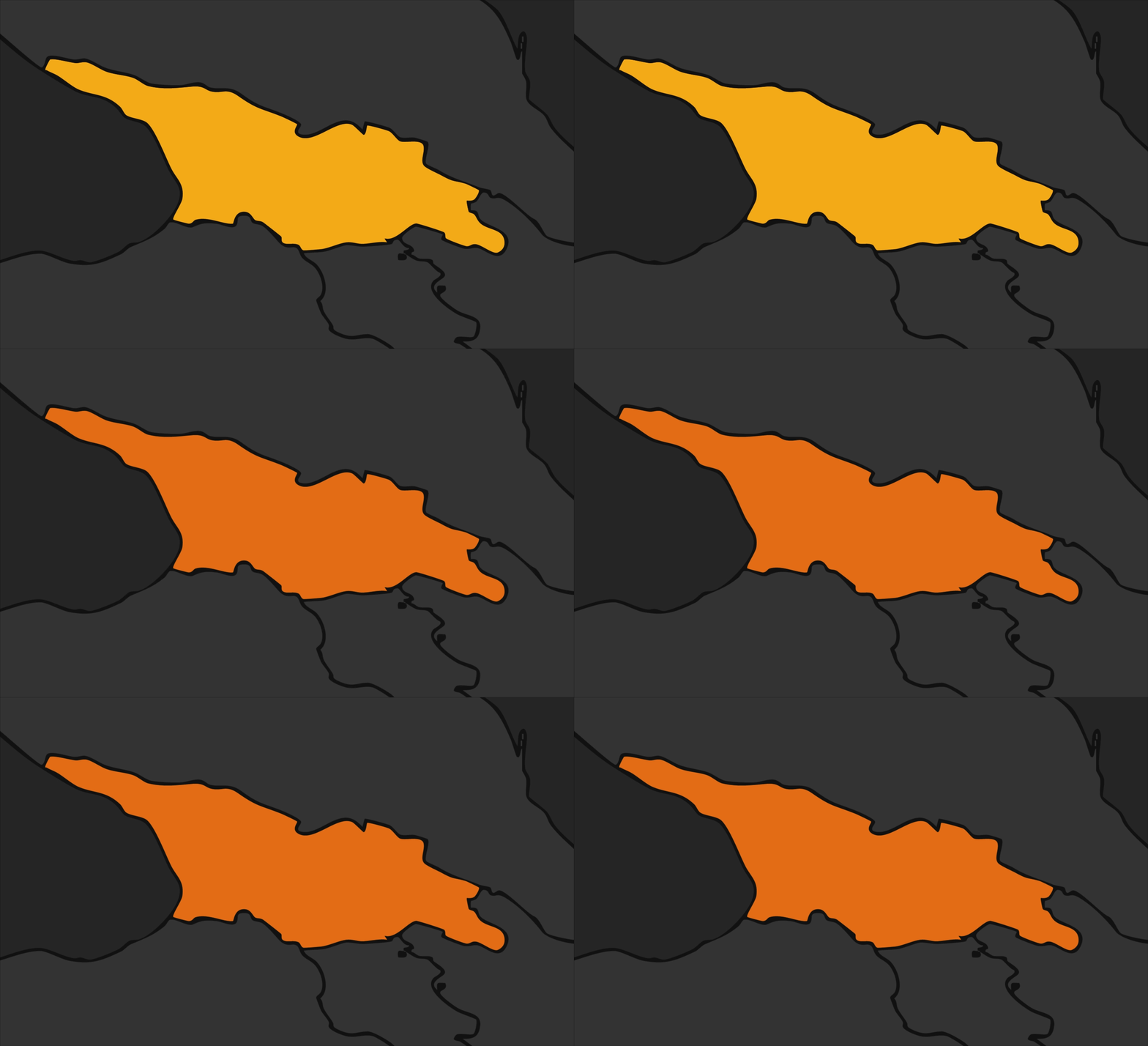
Georgia downgraded in global ratings report on civic freedoms
- Country downgraded from “Obstructed” to “Repressed”
- Draconian protest laws and controls on foreign-funded CSOs and media introduced
- Opposition leaders detained, their parties and those deemed affiliated facing bans from public life
The CIVICUS Monitor announced in a new report on Tuesday that it has downgraded Georgia’s civic space to “Repressed” in its annual ratings as authorities escalate efforts to crush persistent anti-government protests with increasingly punitive measures.
The deterioration of Georgia’s civic space has progressed at a rapid rate. After being downgraded from “Narrowed” to “Obstructed” in 2024, the country has now fallen even further in its rating, plummeting to “Repressed”, the second worst category. A “Repressed” rating means civic space is highly restricted, with dissenters facing severe threats, including violence and imprisonment. There are 50 total “Repressed” countries around the world in 2025, including Serbia, Zimbabwe, Pakistan and El Salvador. This is the first time a country has been downgraded in two consecutive years by the rating platform.
Nightly mobilisations have continued for more than a year, sparked by the Georgian Dream administration’s decision to suspend EU accession negotiations until 2028 following disputed parliamentary elections. Beginning on 28th November 2024, mass protests were met with brutal force, including tear gas, water cannons, arbitrary arrests, and beatings on the streets and in custody. Disturbingly, reports have emerged that riot police deployed chloropicrin, a World War One-era chemical agent originally used as a battlefield toxin, against demonstrators, raising grave concerns about the escalation of state violence and the health risks posed to protesters.
“Georgians have shown extraordinary courage in standing up for their democratic future,” said Tara Petrović, Europe researcher for the CIVICUS Monitor. “Instead of listening to its people, the government has chosen to escalate repression and criminalise legitimate dissent.”
As protests have continued in smaller numbers, the government has attempted to crush public resolve through a series of draconian laws, heavy fines, and administrative detentions. Successive amendments to protest legislation have made blocking roads—an ongoing feature of the nightly demonstrations in front of Parliament—punishable by administrative detention, followed by criminal charges and imprisonment for repeat offences.
Civil society and media have also come under direct attack. Following the contentious 2024 “foreign agents law”, which itself triggered massive protests against what many viewed as Russia-inspired efforts to silence dissent, authorities this year adopted additional restrictions on foreign-funded media and NGOs, regularly vilifying them as enemies of the state. These measures include a Georgian translation of the US Foreign Agents Registration Act, extending restrictions to individuals and enabling criminal penalties, as well as legislation requiring NGOs to obtain government approval before receiving foreign grants.
Beyond civil society, the government has moved to dismantle the political opposition. Leaders of pro-Western parties have been jailed or detained, and in October Georgian Dream petitioned the Constitutional Court to outlaw the three largest opposition groups. At the same time, it adopted legislation allowing anyone deemed associated with these parties to be indefinitely deprived of core political rights, including joining or founding new parties, standing in elections, or making political donations.
“These actions represent a wholesale attempt to erase political pluralism,” added Petrović. “Suppressing opposition, silencing the media and criminalising NGOs are the tactics of authoritarians, not a government that claims to respect democratic norms.”
We are calling on the government to de-escalate its assault on dissent, immediately halt the use of violence and arbitrary detention against protesters, and repeal repressive laws that violate Georgia’s international human rights obligations.
Notes to the Editor
The CIVICUS Monitor is a global research platform that assesses the state of civic freedoms—including freedom of expression, association, and peaceful assembly—across 198 countries and territories. Drawing on verified reports of civic space violations from a network of 20+ research partners worldwide, the Monitor tracks incidents including protests, censorship, the detention of activists and more. Each country is assigned a score from 0 to 100, reflecting the openness of its civic space, with higher scores indicating greater respect for civic freedoms. Based on these scores, countries are classified into five categories: Open, Narrowed, Obstructed, Repressed, or Closed.
For more information or to arrange an interview, please contact: media@civicus.org