In Numbers
Global Summary: civic space dynamics
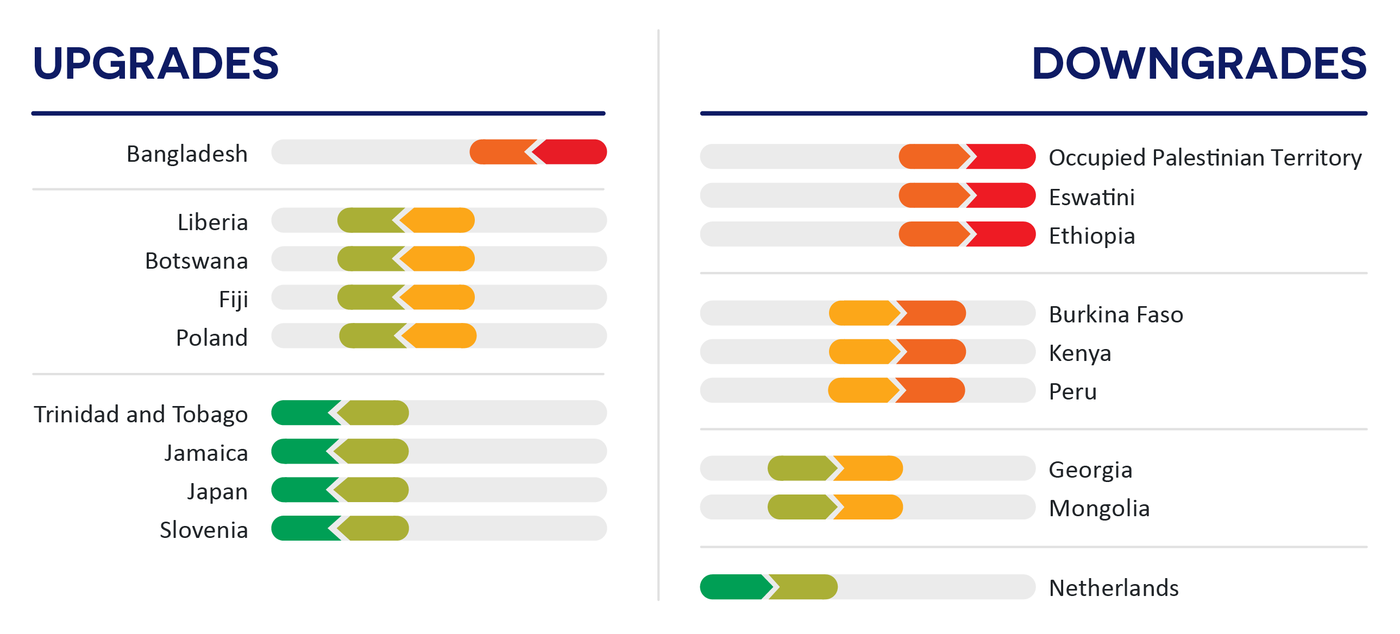
Civic space ratings have changed for 18 countries since our previous report in December 2024. While civic space conditions have improved for three countries in Africa South of the Sahara – Gabon, Mauritania and Senegal – they have deteriorated in 15 countries. Burundi and Sudan move to the worst rating of closed civic space while Madagascar now has a repressed rating.
In Europe, France, Germany and Italy move from narrowed to obstructed ratings, indicating a worsening environment for civil society in the European Union (EU), while Georgia and Serbia move to the repressed category, the second worst civic space rating, and Switzerland to narrowed. In the Americas, conditions for civil society have worsened in Argentina and the USA, both now rated as obstructed, and El Salvador, which moves to the repressed category. In the Middle East and North Africa (MENA), Israel’s civic space is downgraded to repressed, while Oman moves to closed, the worst category.
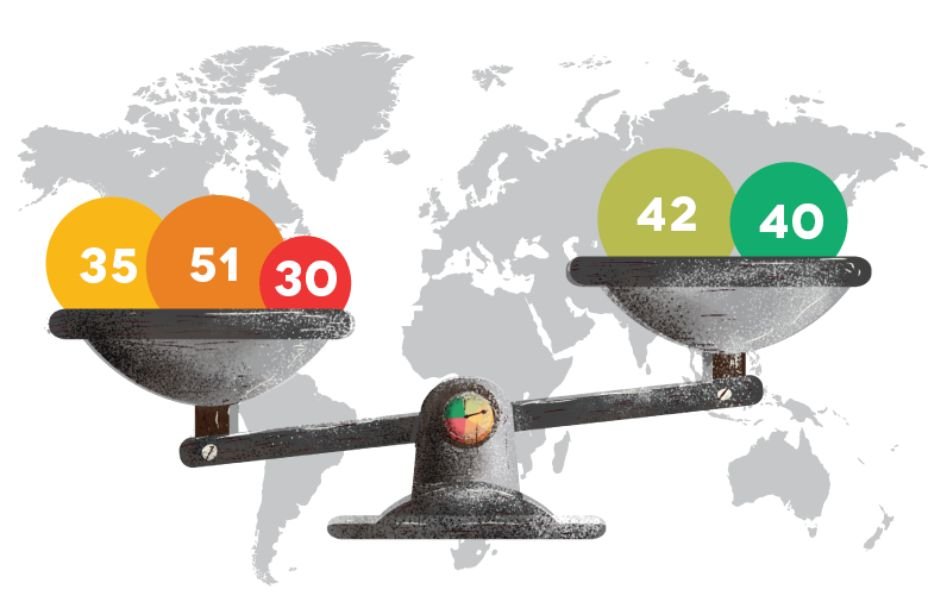
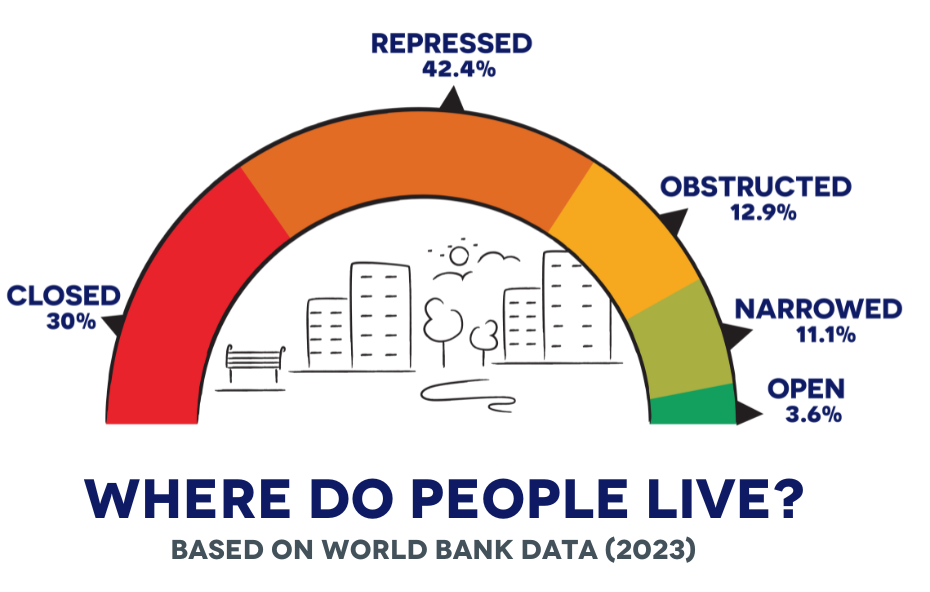
Only 39 out of 198 countries and territories now have an open civic space rating, which indicates that fundamental freedoms are broadly respected in those countries, compared with 83 that are now rated as having repressed or closed civic space, indicating routine repression of fundamental civil society freedoms. Seventy-three per cent of the world’s population lives under these restricted conditions. Almost 31 per cent lives in countries where civic space is completely closed.
Only 7.2 percent of the global population now lives in countries where civic space is open or narrowed, 7.5 percentage points less than in 2024, indicating a further deterioration of civic space conditions globally.Z`