INTRODUCTION
Following Tanzania’s crackdown on 2025 post-election protests, the country scored 28 out of 100 in Freedom House’s “Freedom in the World” 2026 assessment. It remained classified as “Not Free.” Freedom House highlighted restrictions on meaningful opposition competition, personal expression and media freedom, among other elements, to justify Tanzania’s score, the second-largest deterioration in rights and freedoms during 2025. Similarly, in Reporters Without Borders’ (RSF) World Press Freedom Index, Tanzania fell from 95th in 2025 to 117th out of 180 countries in 2026. RSF highlighted that “[t]he media outlets and journalists that criticise the authorities risk suspensions and arrest […].”
Between April and September 2026, Tanzania’s public debate continued to be dominated by the protests that took place in the aftermath of the 29th October 2025 presidential and legislative elections and the authorities’ brutal crackdown, which left hundreds, possibly thousands dead, as previously documented on the Monitor. The period was marked by a further tightening of restrictions on citizen and political mobilisation, as well as heavy policing to prevent large-scale demonstrations.
Since the last Monitor update, the Commission of Inquiry into Incidents of Breach of Peace (COI) established by President Samia Suluhu Hassan concluded its work. It did not make its full report public, however, as the report was treated as an internal advisory document intended for the Head of State. The COI contented itself with sharing broad findings with the media, including confirmation that 518 people had died of “unnatural causes,” including from gunshot injuries. Civil society issued a detailed critique of the COI’s investigation, citing methodological flaws and incomplete analysis, including on alleged “funding” of the protests.
In August 2026, President Hassan used the COI’s recommendations to launch a subsequent, more specialised criminal inquiry into “criminal offences, violence and breaches of peace in relation to Tanzania’s 2025 general election.” The new Commission, chaired by Justice Shaban Lila, comprises six Commissioners, including two foreign judges. President Hassan gave the Commission five months to submit its final report. The main opposition party, Chama cha Demokrasia na Maendeleo (Chadema), rejected the new Commission’s legitimacy. On 8th September 2026, the Vice-Chairman of the ruling Chama Cha Mapinduzi (CCM) party for Tanzania Mainland, Stephen Wasira, openly acknowledged that the country’s recent election had left a stain on the nation’s reputation.
Between April and September 2026, Tanzania experienced further restrictions on fundamental freedoms, including a ban on political rallies and arrests of opposition members in connection with planned “Saba Saba” demonstrations calling for democratic reforms and justice for people killed in election violence. As in December 2025, when the opposition had announced mass demonstrations, heavy security deployments instilled fear in the population and prevented protests from happening on 7th July 2026.
Meanwhile, Tanzania’s two main opposition parties took different paths. While ACT-Wazalendo pursued institutional reconciliation with the ruling CCM party and signed a political agreement in Zanzibar, leading to a government of national unity in the archipelago, Chadema rejected collaborative overtures and pursued its resistance strategy centred on a “New Constitution” agenda and the slogan “No Reforms, No Election,” which led to its boycott of the 2025 polls. Chadema continues to demand a reset in the ongoing constitutional process, returning to a second draft prepared by the Constitutional Review Commission chaired by retired Prime Minister Judge Joseph Sinde Warioba.
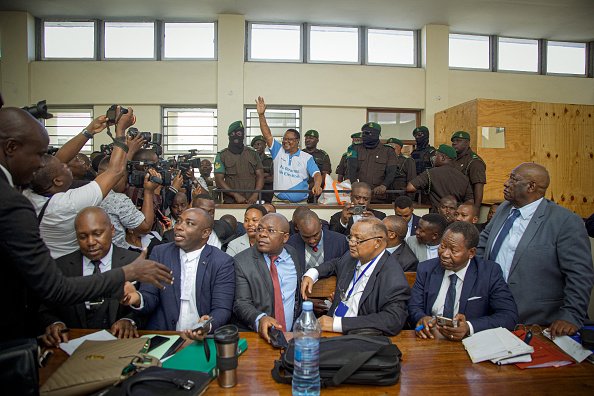
As of 30th September 2026, Chadema leader Tundu Lissu remained in detention as his treason case neared closure, with a judgment announced for 6th November 2026. Lissu had been arrested in April 2025 and charged with “treason” over statements and social media posts urging Tanzanians to boycott elections. Lissu could face the death penalty if convicted.
Association
On 7th May 2026, Tanzania's Office of the Registrar of Political Parties (ORPPs) gave Chadema until 20th May to explain why it should not face disciplinary sanctions, including suspension or a fine. The notice concerned alleged statements by the party’s leadership that the Registrar considered potentially contrary to the Political Parties Act. Chadema subsequently secured a victory at the High Court of Tanzania, which dismissed preliminary objections by the government and extended a temporary injunction protecting Chadema during ongoing proceedings.
This move by ORPPs came after Chadema faced a long history of harassment, including being barred from conducting any political activities, as previously documented in the Monitor.
Peaceful Assembly
On 26th June 2026, the government announced a nationwide suspension of public political rallies “until further notice,” citing security concerns. This decision, which took the form of a directive by Home Affairs Minister Patrobas Katambi, was criticised by opposition actors as illegal. It marked a reversal of reforms, including President Hassan’s 2023 decision to lift a six-year ban on political rallies, imposed by her predecessor John Magufuli.
Weeks later in July, the Legal and Human Rights Centre (LHRC), the Tanganyika Law Society, and political activist Wilbroad Slaa filed a case at the High Court challenging the ban. They invoked several provisions of Tanzania’s Constitution, including Articles 12, 13 and 29, deeming the ban unconstitutional.
Ahead of protests planned for 7th July 2026, the army warned that demonstrations would not be tolerated and urged citizens to report anyone involved in organising demonstrations. Authorities arrested dozens of people, intensifying a crackdown on dissent as activists demanded democratic reforms and the release of jailed opposition leader Tundu Lissu. At least 51 opposition officials were charged with non-bailable “terrorism” offences in relation to the planned 7th July protests, which did not materialise on a significant scale due to a climate of fear.
On 9th July 2026, President Hassan warned people she described as “activists by name,” whose actions she associated with terrorism, that the state would take action against them. Civil society and other actors raised concern about the potential implications of associating activism with terrorism, all the more since the President relied on a broad definition of terrorist acts. The presidential address came two days after 7th July, when many Tanzanians stayed at home following the government’s warning of a crackdown on any demonstrations.
In separate developments, Kenyan activists called for demonstrations on 3rd September 2026 over the escalating repression of opposition figures across East Africa. Their immediate focus was Ugandan opposition leader Kizza Besigye, but organisers also cited Tundu Lissu’s prosecution in Tanzania as part of a wider repressive pattern. The escalating pattern of transnational repression has been a cause for concern across East Africa and has been documented severally on the Monitor.
Expression
On 21st July 2026, ACT-Wazalendo demanded the immediate and unconditional release of lecturers arrested at various universities across the country, stating that these arrests raised questions about academic freedom. Some lecturers were accused of inciting the protests that were scheduled for 7th July.
On 31st August 2026, human rights and social justice activist Godlisten Elisante Malisa was detained after arriving at the Tanzanian border from Kenya where he had transited by road on his way back from the United States. In a statement published on 1st September, Arusha Regional Police said Malisa and another person had been arrested over undisclosed “criminal allegations under investigation,” questioned, and released on bail. Before the police statement, THRDC and others had called on authorities to confirm Malisa’s location, state the grounds for his detention, and ensure he could communicate with family and counsel.