General situation
Tanzania’s 29th October 2025 elections triggered the country’s largest anti-government mobilisation since independence, with mass protests erupting in Dar es Salaam, Arusha, Mbeya and other cities as demonstrators rejected the credibility of the elections. On 1st November 2025, the government held Samia’s swearing-in at a closed military ground in Dodoma, an unusual move that highlighted the tense atmosphere as authorities restricted public access to the event. The electoral commission announced that Samia had won almost 98 per cent of ballots on a turnout of around 87 per cent. However, the absence of major opposition contenders, many of whom were jailed or disqualified as previously documented, raised concerns among observers. International observers raised serious concerns about the integrity and transparency of the process. At the same time, reports of post-election killings varied widely and remained difficult to verify due to sustained information controls. Samia defended the election as free and democratic, dismissing protesters as unpatriotic. The authorities continued to downplay the violence, even as allegations of fraud surfaced in Zanzibar, where the ruling Chama Cha Mapinduzi (CCM) secured another overwhelming victory. On 4th November 2025, Tanzanian authorities lifted the nationwide curfew and restored internet access.
Regional and international bodies raised alarm over the human rights violations in Tanzania following the 29th October general election. The African Commission on Human and Peoples’ Rights warned that reported violations, including the use of excessive force and suppression of fundamental freedoms, would constitute grave breaches of the African Charter. It urged the government to ratify the African Charter on Democracy, Elections and Governance to strengthen electoral integrity and institutional accountability. The African Union Commission acknowledged the election outcome but expressed regret over the deaths that occurred during post-election protests and emphasised the need to uphold the rights to peaceful assembly and expression as core elements of democratic governance. Additionally, the African Union declared that the election “did not comply with AU principles, normative frameworks, and other international obligations and standards for democratic elections.” Its observers reported incidents of ballot stuffing at several polling stations and cases where voters were issued multiple ballots. The UN High Commissioner for Human Rights reported the killing of at least 10 people in various regions in the first two days of the protests, yet opposition parties and civil society groups claimed the toll was significantly higher, with the actual figure still unknown due to restricted access and limited independent verification. The High Commissioner also highlighted the nationwide curfew and widespread internet shutdown imposed without justification, and called for an end to disproportionate force, reinstatement of internet access, release of those arbitrarily detained, and independent investigations into all election-related violence.
The Southern African Development Community (SADC) and the European Union (EU) expressed deep concern over the credibility of Tanzania’s recent general elections, citing intimidation, restricted freedoms, and unequal treatment of candidates. In its preliminary report, the SADC Election Observation Mission noted that although election day was largely peaceful, many voters were unable to express their democratic will freely. The mission concluded that the process fell short of the benchmarks set out in SADC’s 2021 Principles and Guidelines Governing Democratic Elections, particularly in terms of transparency, political pluralism, and respect for civil rights. Observers reported that opposition leaders, including Tundu Lissu, were harassed, detained, or threatened, creating a climate of fear that undermined political competition. SADC also raised concern about the nationwide internet shutdown during election day, which disrupted communication and hindered election monitoring, and noted that state media coverage heavily favoured the ruling party. The EU echoed these findings, condemning credible reports of violence, killings, and enforced disappearances, while calling for independent investigations and the release of detained politicians. In response, President Samia Suluhu Hassan thanked international observers but reaffirmed Tanzania’s sovereignty, stating that its political direction remains the responsibility of its citizens. SADC urged the government to reform its electoral framework by strengthening judicial oversight, protecting observers, and expanding political participation.
In her inauguration speech, President Samia Suluhu Hassan condemned the post-election violence in Tanzania. She accused foreign actors of fuelling the unrest, remarks that heightened tensions with neighbouring Kenya, as Tanzanian police alleged that some foreigners entered the country illegally to commit crimes and incite disorder. Suluhu's statement sparked fear among Kenyans living in Tanzania, with reports emerging of targeted attacks, detentions, and killings.
Meanwhile, several Kenyan families raised alarm over missing relatives, including reports of a Kenyan teacher, John Ogutu, who was allegedly shot dead by police in Dar es Salaam, with rights groups claiming his body cannot be traced for repatriation. Medical sources in Dar es Salaam told the BBC that vehicles marked “Municipal Burial Services” collected bodies of those believed to have died in the protests.
Association
On 22nd October 2025, a senior opposition figure in Tanzania, John Heche, was arrested as political tensions rose ahead of the country’s general election. Heche, who serves as Chadema’s deputy chairperson, was detained outside the High Court in Dar es Salaam while attempting to attend the treason trial of party leader Tundu Lissu. According to Chadema, authorities plan to arrest several senior party members and hold them until after the election, a claim the government has not addressed. The party also reported that Heche was being transported to Tarime, a northern town more than 1,300 kilometres from the capital. The incident marked Heche’s second arrest in a week after he was briefly detained for allegedly attempting to cross into Kenya illegally, an accusation Chadema denied. His detention followed growing concern over the harassment and disappearance of opposition figures and government critics, reinforcing fears of a broader clampdown on civic and political freedoms in the lead-up to the vote.
On 8th November 2025, Tanzanian police arrested Amani Golugwa, the deputy secretary-general of the opposition party Chadema, amid an intensifying post-election crackdown on dissent. His arrest made him the third senior Chadema official detained, following the earlier arrests of party leader Tundu Lissu and deputy leader John Heche. In a statement on X, Chadema accused the government of seeking to cripple its leadership and paralyse its operations, claiming that police were coercing lower-level members to confess to organising demonstrations. Police confirmed Golugwa’s arrest alongside nine others, citing an ongoing investigation into recent unrest marked by a heavy-handed response to protests. Authorities also announced that Chadema’s Secretary-General John Mnyika and head of communications Brenda Rupia were being pursued as part of a broader manhunt. However, on 11th November 2025, police released four senior Chadema officials, including vice chairman John Heche, deputy secretary-general Amani Golugwa, central committee member Godbless Lema, and coastal region chairman Boniface Jacob.
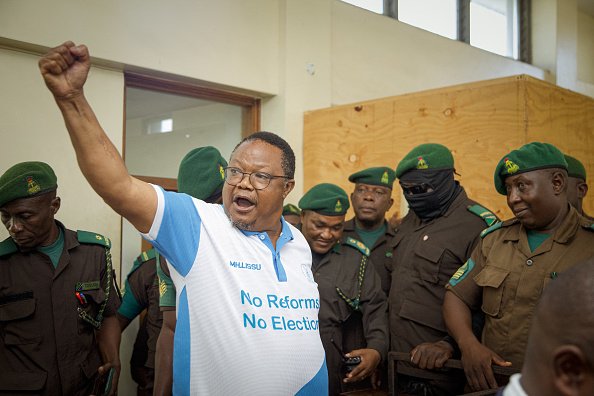
On 10th November 2025, prison authorities failed to bring Chadema national chairperson Tundu Lissu to the High Court in Dar es Salaam for his scheduled treason hearing, forcing the court to postpone the trial. Senior State Attorney Thawabu Issa told the three-judge panel that Lissu could not appear due to “security reasons,” and prosecution witnesses also did not attend, citing similar concerns. The court rejected the prosecution’s request for a two-week adjournment, granting only a two-day postponement and ordering that Lissu be produced in court on 12th November to continue the proceedings.
Peaceful Assembly
Protests erupted across multiple Tanzanian cities on 29th October, including Dar es Salaam, Arusha, Mwanza and Mbeya, as well as in several regions, prompting a heavy security response. Authorities used live ammunition and tear gas to disperse crowds and imposed a nationwide 24-hour lockdown from 29th October until 3rd November, ordering residents to remain at home. While the government did not immediately release an official death toll, the Catholic Church in Tanzania reported hundreds of fatalities. The opposition Chadema party claimed more than 1,000 people were killed and alleged that security forces concealed bodies to obscure the scale of the violence. The Kenya Human Rights Commission asserted that up to 3,000 people may have been killed, with thousands still missing, citing photographic evidence suggesting targeted killings rather than crowd-control measures. In November, the UN reported that hundreds had been killed during the protests.
In early November, at least 240 individuals were charged with treason in connection with the protests. They were accused of inciting demonstrations with the intent to obstruct the electoral process, and those found guilty could face the death penalty, though most death sentences in Tanzania are ultimately commuted to life imprisonment.
Expression
Tanzanian authorities intensified their crackdown on digital expression ahead of the 29th October 2025 general election.
In late September, authorities detained online activists Innocent Paul Chuwa and Frida Mikoroti for a week. Their detention, widely criticised by human rights groups as procedurally unlawful, appeared linked to their online calls for peaceful protests. Their release on bail on 1st October occurred against a broader backdrop of restrictive state actions, including an August directive instructing police to conduct online patrols to monitor perceived threats to public order and cybercrime.
On 27th October, authorities arrested social media influencer Jennifer Jovin in Dar es Salaam after she posted a short video on TikTok dancing to a satirical song that comments on President Samia Suluhu. Officials claimed the clip mocked the President and incited public disorder. She was also charged with conspiracy to commit treason, arguing that her online activity contributed to mobilising resistance against security forces under the broad scope of the country’s treason provisions. Her lawyer stated that the charge rests partly on allegations that she encouraged people to buy face masks to protect themselves from tear gas.
Between 29th October and 3rd November 2025, NetBlocks confirmed a nationwide internet shutdown in Tanzania that coincided with election day. This action contravenes international human rights standards that require states to avoid restricting online access during elections. The African Commission concluded that the shutdown violated Article 9 of the African Charter on Human and Peoples' Rights, which guarantees freedom of expression and access to information. Such measures impede transparency and public participation. Authorities partially restored connectivity on 4th November.
On 30th October 2025, CNN journalist Larry Madowo, on his X account, stated that authorities had prevented him from covering the Tanzanian elections by refusing to grant him the accreditation required for foreign reporters. He noted that Tanzania has a long record of withholding such permits and that the situation had not improved since the Magufuli era.
Madowo also noted that many journalists were denied accreditation to cover the elections and that several foreign correspondents who applied for permission received no response.
On 4th November 2025, Human Rights Watch reported that the lockdown significantly restricted media coverage of the elections and subsequent protests. Tanzania-based journalists reported that they could not carry out basic reporting, while foreign correspondents faced systematic barriers. Accreditation requests from international media went unanswered, and the International Press Association of East Africa stated that it was unaware of any foreign journalists authorised to cover events on the mainland. Incidents of active obstruction also occurred. Agence France-Presse reported that its accredited team was denied access to a rally venue in Stone Town. A local journalist similarly described an opaque accreditation process in which his online application received no response, and follow-up calls were ignored.