The state of civic space in Taiwan is rated as ‘open’ by the CIVICUS Monitor. This means the state has created an enabling environment for people to enjoy their civic freedoms. Civil society is able to operate and undertake their work without harassment or undue interference. People are free to hold protests in public places and form associations. There is also a relatively free media, and journalists are able to do their work without any major restrictions.
In recent months, a Chinese exchange student was deported over a social media post, and the government blocked a China-run youth platform. A gay bar was raided and the government is seeking dissolution of a pro-China party. Individuals have been criminalised for their pro-China activities.
Expression
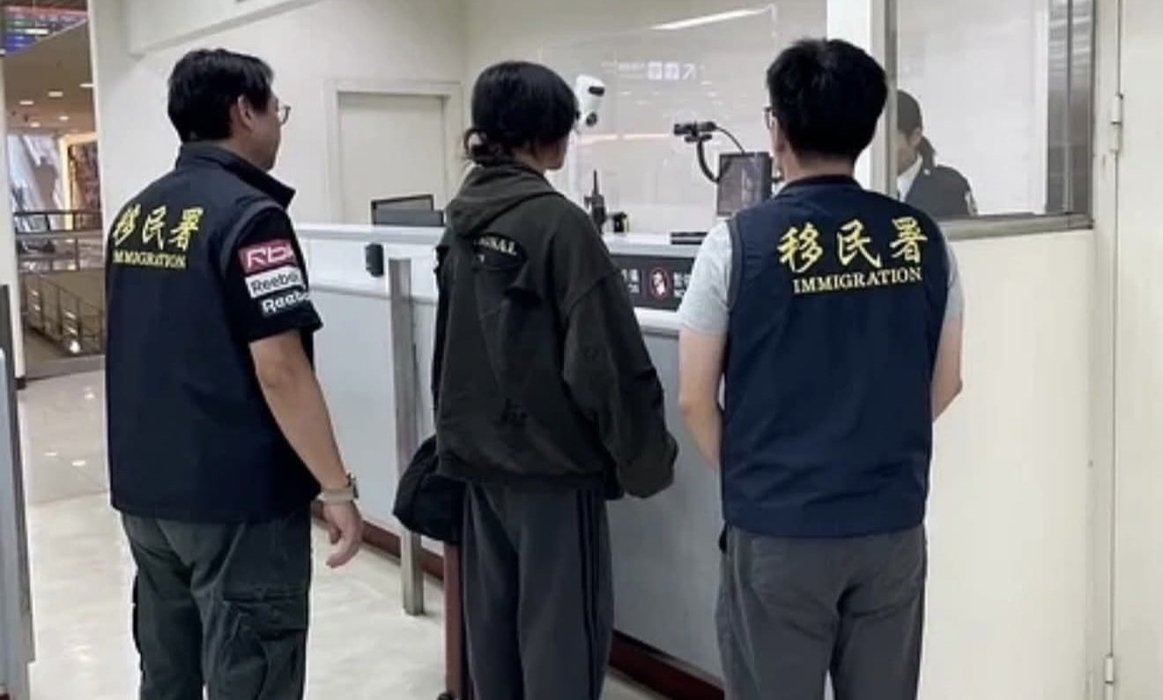
Chinese exchange student deported over a social media post
Taiwan’s Central News Agency: A Chinese exchange student was deported on Friday after posting a video that appeared to show him pinching President Lai Ching-te (賴清德) between his fingers, with comments including “Got the little Lai Ching-te.” https://t.co/sHdykSsFo2
— Jonathan Cheng (@JChengWSJ) October 17, 2026
On 16th October 2026, it was reported that a Chinese exchange student was deported after posting a video that appeared to show him pinching President Lai Ching-te between his fingers, with comments including "Got the little Lai Ching-te." The post also included slogans such as: “Unification across the Taiwan Strait is a historical inevitability” and “Oppose separatist acts promoting Taiwan independence.”
The student, surnamed Wang, who was on an exchange programme at National Taiwan University (NTU), was escorted by National Immigration Agency (NIA) officials to customs before leaving Taiwan. He will also be barred from entering Taiwan for five years.
The NIA said the decision was based on Article 12 of the Regulations Governing Permission for People of the Mainland Area to Enter the Taiwan Area, which lists grounds for deportation, including "conduct that violates the principles of equality and dignity."
According to a video obtained by local media, Wang appeared to film Lai from an NTU hall where Lai spoke at an event about talent development, making it look as though Wang was pinching Lai between his fingers.
Wang later deleted the post and issued an apology after it drew criticism online, but the incident had already attracted public attention.
Government blocks China-run youth platform
In August 2026, Taiwan blocked a Chinese platform - "Taiwan Youth e-Home" - advertising educational and employment opportunities in China for young Taiwanese, over alleged legal violations and personal data risks
The Mainland Affairs Council (MAC) has previously warned that Chinese authorities could potentially use data collected through the platform for other purposes or to exert pressure on young Taiwanese.
Liang noted that the platform's content violated Articles 23, 33 and 34 of the Cross-Strait Act, which regulate recruitment for Chinese educational institutions, Taiwanese taking positions in certain Chinese party or political organisations, and advertising activities involving Chinese goods and services, respectively.
"Taiwan Youth e-Home" was launched on 15th July 2026, with the stated aim of supporting the "integrated development" of young people across the Taiwan Strait, according to China's Taiwan Affairs Office (TAO).The platform covers internships, employment, exchanges and education, and allows Taiwanese users to search for vacancies and submit applications online.
Other Chinese platforms have also been restricted. In December 2025, Taiwan’s Ministry of the Interior imposed a one-year ban on Xiaohongshu (Rednote), a Chinese social media platform, which has become an important source of everyday information, particularly for younger users in Taiwan.
Critics have accused the Democratic Progressive Party (DPP) government of curbing freedom of expression and selectively targeting platforms of Chinese origin. Analysts also argue that the ban may be a barrier to the right to access information, and the blanket prohibition prevents all Taiwanese users from accessing any content.
Association
Ministry of the Interior to seek dissolution of pro-China party
台湾内政部周四(7月30日)表示,8月将向宪法法庭声请解散“中华统一促进党”(简称统促党),将成为台湾首例声请政党违宪解散案件。 内政部长刘世芳指出,该党涉配合中国在台发展组织介选、实施跨境镇压且多名党员涉重大犯罪。内政部去年1月审议后,认定统促党已严重危害国家安全及自由民主宪政秩序,对该党违宪案展开事证搜集。 内政部指出,证据显示,统促党涉接受中国官方指示,在台发展间谍网络、介入选举,及渗透民间公庙呼应统战。此外,统促党成员长期系统性组织犯罪,多次涉犯《台湾地区与大陆地区人民关系条例》、《国家安全法》、《反渗透法》等遭起诉。 统促党主席张安乐30日表示,内政部应“以相同标准检验民进党”。他指民进党人士涉贪污弊案,且欲“将台湾带上战争边缘”,危害台湾人民生命财产安全,“要解散,先解散民进党”。 2024年10月,统促党时任发言人张孟崇涉嫌在担任嘉云广播主持人期间,收受中国国台办资金并依其指示制作特定立场内容,遭台湾检方依《反渗透法》起诉;隔年9月,张孟崇在该案审理期间病逝。 2025年,统促党副秘书长温珑遭台湾高等法院判处有期徒刑10个月,因他接触台湾现、退役军官,协助中国官员在台情搜。 统促党多次涉及中国跨境镇压案件,包含2019年香港歌手何韵诗在台遭泼红漆案,以及2017年台湾大学“中国新歌声”溅血事件、香港社运人士黄之锋在机场遭殴打等案件。此外,统促党成员屡次涉及重大犯罪,台媒中央社指,2010年至2024年间,统促党员涉杀人、强盗、跨国人口贩运等罪达134人。 依台湾《宪法增修条文》第5条规定,政党若危害“中华民国之存在”或“自由民主宪政秩序”,即属违宪;“政党违宪解散”依法应由内政部检具事证向宪法法庭声请,经大法官现有总额三分之二以上同意宣告解散,且审理时须进行言词辩论 。 台媒《自由时报》引述法律人士指出,若宪法法庭认定声请人举证显有不足,可能裁定不受理。与此同时,宪法法庭目前大法官人数共8人,“大法官现有总额”人数计算方式仍存在分歧,恐面临无法召开会议或判决效力等困境。 台湾宪法法庭2025年12月19日在停摆逾一年后作出判决指,立法院先前提高“同意违宪宣告”门槛至9人的《宪法诉讼法》修正条文违宪,但这份由5名大法官作成的判决,当时被认为存在参与评议人数不足的争议。
— DW 中文- 德国之声 (@dw_chinese) July 31, 2026
The Ministry of the Interior (MOI) said on 30th July 2026 it would petition the Constitutional Court in early August to dissolve the pro-China Chinese Unification Promotion Party (CUPP), accusing it of systematically engaging in activities that threaten national security and Taiwan's free democratic constitutional order.
The ministry cited three grounds for seeking the party's dissolution: collaborating with China to establish organisations in Taiwan, carry out united front work, infiltrate grassroots groups, recruit military personnel for espionage and interfere in elections; engaging in cross-border repression, including attacks on Hong Kong activists and other pro-democracy figures in Taiwan; and operating as a criminal organisation under the guise of a political party.
At a press conference, Interior Minister Liu Shyh-fang said the CUPP has long been linked to organised crime, including cross-border offences, while core members have repeatedly been implicated in alleged violations of the National Security Act, the Anti-Infiltration Act, election laws, the Organised Crime Prevention Act and other legislation.
Such activities have seriously undermined national security, social stability and the fairness of elections, Liu said, adding that the ministry had completed its review of the evidence and would submit the petition in early August.
Deputy Interior Minister Ma Shih-yuan said the CUPP's objective was to eliminate the Republic of China, Taiwan's official name, through unification with China, and that the ministry was obligated under the Constitution and the Political Parties Act to seek the dissolution of parties whose objectives or actions endanger the nation's existence or democratic constitutional order.
It also accused the CUPP of recruiting Chinese spouses for activities directed by Beijing, sponsoring trips to China to influence voters, organising protests to disrupt election campaigns, operating radio programmes that spread Chinese propaganda, and infiltrating civic groups and temple associations.
Hsiao-Ling Weng, a representative of the Legislative Yuan (Taiwan’s unicameral parliament) from the Kuomintang (KMT, Chinese Nationalist Party), strongly criticised the petition for violating citizens’ constitutionally guaranteed freedom of association. Weng emphasised that existing mechanisms of criminal prosecution are sufficient to hold the CUPP’s members accountable for their wrongdoing. At the same time, she condemned the petition as a draconian scheme initiated by the DPP-led government to selectively silence political parties opposing the DPP’s pro-independence platform.
Criminalisation of individuals for their pro-China activities
On 24th July 2026 it was reported that Chinese immigrant Zhou Manzhi would soon have her status as a Taiwanese resident revoked after her conviction for contravening the National Security Act.
Zhou, who became a Taiwanese resident through marriage in 2003, was sentenced by the Kaohsiung branch of the High Court to eight years in prison in January 2026 for creating immigrant associations sponsored by Chinese “united front” groups and promoting China’s “one country, two systems” agenda.
Zhou’s residency status would also be revoked in accordance with the Act Governing Relations Between the People of the Taiwan Area and the Mainland Area.
The deportations have created a debate in Taiwan on free speech and national security. Those who support the government’s decision cite the solid legal basis and process in which the deportation took place, including appeals and procedures for handling a clear breach of laws. However, some argue that these deportations are a violation of Taiwan’s spirit of free speech in that speech deemed offensive to the government is silenced. Questions have also been raised whether the revocation of residence is propionate to the offence.
In August 2026, China-born spouse Xu Chunying was sentenced to seven years in prison after being convicted of campaigning for the Taiwan People's Party's (TPP) 2024 presidential ticket under instructions from Beijing, among other offences.
Raid on gay bar condemned by LGBTQI+ rights organisations
100 people for a rally that was declared with less than twelve hours notice and which appeared online at like 2 AM is quite something. It attests to the strength of mobilization in Taiwan https://t.co/LVf8j0jM18
— Brian Hioe 丘琦欣 (@brianhioe) October 4, 2026
On 3rd October 2026, the Taipei City Police Department’s Wanhua Precinct raided Commander D, a BDSM-themed gay bar in the city’s Ximending District. Of the 58 patrons at the bar, 51 were detained for questioning and cited for violations of Taiwan’s Social Order Maintenance Act, which prohibits “wantonly exposing one’s naked body or presenting a lascivious posture in a public place or publicly accessible place,” a precinct spokesperson explained. Police also arrested the bar’s owner.
In a joint statement, 10 LGBTQI+ rights organisations condemned the raid, accusing police of procedural violations, including refusing to show a warrant, excessive use of force, and making discriminatory remarks to people with disabilities.
Witnesses alleged that police were accompanied by a reporter who was allowed to take photos during the raid.
The groups demanded an independent investigation into the raid, disciplinary action, and a public apology, along with various reforms to the way police operations are handled in LGBTQI+ spaces.
The following day, protestors gathered in Ximending district calling on the mayor to explain how various instances of what they described as discriminatory enforcement align with the city’s LGBTQI+-friendly reputation.
The demonstration saw around 100 people march to the Wanhua Police Precinct, where a precinct chief reportedly told protesters that police “respect the culture of a pluralistic society and will protect the rights of every citizen.”