Singapore’s civic space is rated as ‘repressed’ in the new CIVICUS Monitor’s People Power under Attack report. There are ongoing concerns about the use of restrictive laws as well as the harassment of human rights defenders. The 2019 Protection from Online Falsehoods and Manipulation Act (POFMA) provides excessive powers to the government and has been used to target activists and critics, and block websites, while there are ongoing restrictions on peaceful assembly under the 2009 Public Order Act (POA).
On 2nd October 2025, CIVICUS and FORUM-ASIA submitted a joint report to the 4th cycle of the UN Universal Periodic Review (UPR), examining Singapore’s human rights practices. The report highlighted ongoing restrictions on civil society, particularly violations of freedoms of association, expression, and peaceful assembly, and the harassment of human rights defenders since its last UPR review in 2021.
It raised concerns over the government’s use of laws like POFMA to target and silence activists, critics, journalists and opposition politicians and the 2009 Public Order Act (POA) to suppress peaceful protest. The submission also noted that Singapore has not ratified the International Covenant on Civil and Political Rights (ICCPR), leaving these rights inadequately safeguarded.
In recent months, the government denied entry to a Hong Kong activist and blocked a Malaysia news outlet under the POFMA law. An international media outlet is facing defamation lawsuits from two ministers for a report it published while a filmmaker was questioned by the police for comments after a documentary on Palestine. A US comedian was targeted by POFMA for refusing to edit his social media posts.
Association
Hong Kong pro-democracy activist denied entry into country
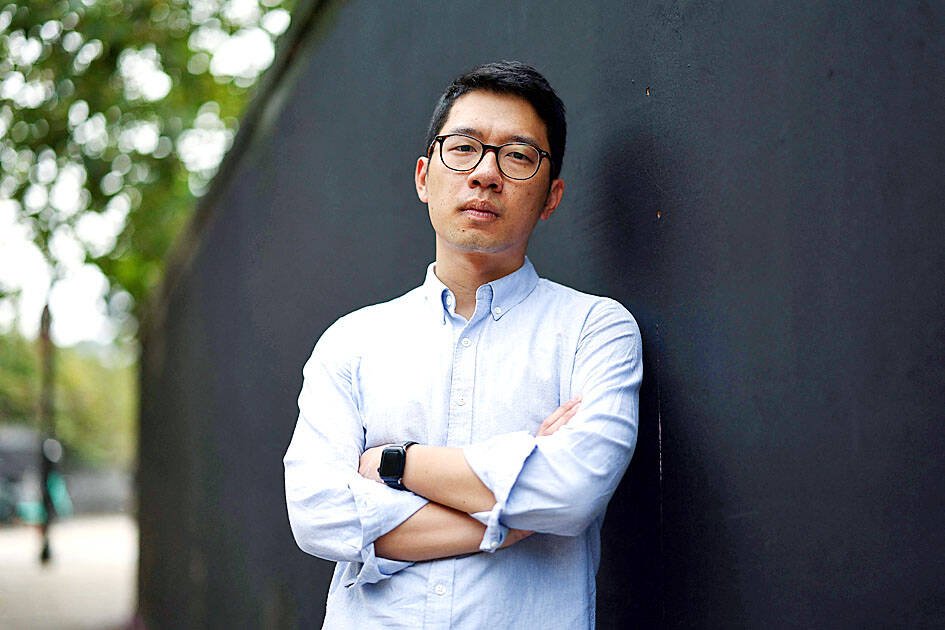
On 27th September 2025, pro-democracy activist Nathan Law (pictured above), a former Hong Kong lawmaker and prominent campaigner, was denied entry to Singapore despite holding a visa.
The human rights defender, who is wanted under Hong Kong’s draconian national security law, was detained and questioned by Singaporean immigration authorities for four hours after arriving from San Francisco, before being deported back after spending about 14 hours in the country.
Law, who holds a UK refugee passport, had received a visa three weeks earlier to attend a “closed-door, invitation-only” event. A statement from the Home Affairs Ministry said: "Law's entry into and presence in the country would not be in Singapore's national interests."
“I was granted a visa, so I was legitimately expecting an entry. I think the decision to deny entry was political, although I am unsure whether external forces, such as the PRC, are involved, directly or indirectly,” Law told Al Jazeera.
Law fled the territory in 2020 after China imposed the sweeping national security law which targets secession, subversion and terrorism with punishments of up to life in prison. In 2021, he was granted asylum in the UK. Hong Kong authorities have offered rewards of HK$1m (USD 128,000) for information that can help them arrest Mr Law and other pro-democracy activists.
Expression
MalaysiaNow news outlet blocked for failing to comply with POFMA direction
Access to MalaysiaNow to be blocked in S’pore after it fails to comply with Pofma correction order https://t.co/9KWfwFgoo6
— The Straits Times (@straits_times) November 17, 2025
The Protection against Online Falsehoods and Manipulation Act (POFMA), as previously documented, is a sweeping piece of legislation which permits a single government minister to declare that information posted online is “false” and to order the content’s “correction” or removal if deemed to be in the public interest.
Human rights groups have highlighted how the Act contains vague and overbroad provisions; offers unfettered discretion to ministers and government authorities in making decisions; and lacks protection for freedom of expression and opinion, and access to information. It has been used against opposition politicians, civil society and the media.
On 17th November 2025, Singapore’s Ministry of Digital Development and Information (MDDI) and Ministry of Home Affairs (MHA) announced that internet service providers were ordered to block access to the online news outlet MalaysiaNow after it failed to comply with a correction direction issued under POFMA.
The move stemmed from a POFMA correction direction issued to MalaysiaNow on 15th November 2025 concerning a 9th November article on the treatment of convicted drug courier Pannir Selvam Pranthaman, which authorities said contained multiple falsehoods. According to the Ministry of Home Affairs, the article wrongly claimed that Pannir’s execution disregarded the rule of law and that the government’s refusal to grant a certificate of substantive assistance was unlawful.
MalaysiaNow was instructed to carry correction notices on its website and across its social media platforms, including Facebook, X, and LinkedIn. The outlet rejected the Correction Direction and the accompanying instructions, criticising the directive as “draconian” and accusing the Singapore government of attempting to control foreign media. Editor Abdar Rahman Koya said the outlet would not comply with the directive, describing it as an overreach of Singapore’s laws.
Additionally, Targeted Correction Directions have been issued to social media companies. These platforms are now required to display correction notices to all users in Singapore who have accessed — or will access — MalaysiaNow’s posts linking to the article.
This is not the first time POFMA has been used to blocked websites. In 2020, the government instructed internet service providers to block access to the website of Lawyers for Liberty (LFL), a Malaysian rights group, after it refused to include a correction notice to an article alleging that Singapore's prisons had used unlawful methods for executions. Asia Sentinel – an independent website specialising in Asian news coverage - has not been accessible throughout the city state since 2nd June 2023 as a result of blocking orders issued by the government. More recently, in January 2025, a similar blocking order was issued against the Australia-based academic site East Asia Forum after it failed to comply with POFMA directions.
Bloomberg news outlet facing defamation trial
Defamation suit by K Shanmugam & Tan See Leng against Bloomberg & reporter set for trial in Apr. 2026 https://t.co/3hMZF9hVlR pic.twitter.com/eWBak52yIB
— Mothership (@MothershipSG) January 8, 2026
Financial media company Bloomberg is set to defend itself in a defamation trial in April 2026, following lawsuits brought by Singapore’s Home Affairs Minister K Shanmugam and Manpower Minister Tan See Leng.
According to The Online Citizen, the case concerns a Bloomberg article published on 12th December 2024 titled “Singapore mansion deals are increasingly shrouded in secrecy”, which included references to both ministers’ property transactions.
In their lawsuits, filed separately on 6th January 2025, both ministers argue that Bloomberg’s article falsely implies they exploited legal loopholes and a lack of disclosure requirements to conduct property transactions in a secretive manner.
In defence submissions filed on 5th February 2025, Bloomberg denied that the article was defamatory. The media outlet stated that its report was focused on broader trends in the high-end residential property market.
Filmmaker interviewed by police over documentary
— Laremie Tan (@Chinesepop) December 27, 2025
Filmmaker Jason Soo said he was under police investigation following remarks made after a documentary screening of Al Awda on 13th December 2025.
Al Awda, meaning “The Return”, documents a high-risk mission by 22 activists attempting to reach Gaza by sea in 2018. The vessel was part of an international flotilla seeking to challenge Israel’s maritime blockade.
He said the Singapore Police Force contacted him on 23rd December 2025, informing him that a complaint had been lodged regarding his post-screening remarks.
Soo stated that officers informed him he is being investigated under Section 298 of the Penal Code. He said he has been asked to attend a police interview as part of the probe.
Section 298 criminalises deliberate acts intended to wound the religious or racial feelings of any person. The offence carries penalties of up to three years’ imprisonment, a fine, or both, and is aimed at preserving racial and religious harmony.
Laws that prohibit “outraging religious feelings” has been cited by the former UN special rapporteur on the right to freedom of expression, Frank La Rue, as an example of overly broad laws that can be abused to censor discussion on matters of legitimate public interest.
On 29th December 2025, Soo revealed that he had completed a 90-minute police interview. In a Facebook post published, Soo said he answered approximately 30 questions during the interview conducted by investigating officers. According to Soo, the officers told him that a complainant had raised concerns about four statements made during the discussion session.
US comedian targeted by POFMA for refusing to edit social media posts
On 4th September 2025, Singapore directed Meta and X to act after Lebanese-Palestinian American comedian Sammy Obeid failed to comply with a POFMA correction order over claims about his cancelled shows. This requires the social media companies to communicate correction notices to users in Singapore who accessed, or will access, the posts.
On 27th August 2025, Obeid had posted that two planned performances were cancelled due to government censorship, alleging his script was rejected and references to Gaza were restricted. He also alleged that the authority in charge - the Infocomm Media Development Authority (IMDA) - told him that they were rejecting his application for a licence, among other things, because they were wary that he might go off-script on stage.
However, the authorities claimed that the application to hold the show was submitted too late - about 10 working days before the events instead of the required 40. A correction direction issued on 1st September 2025 required him to add correction notices to the posts.
New online safety law passed
On 5th November 2025, Singapore’s parliament passed the Online Safety (Relief and Accountability) Bill (OSRA) after over eight hours of debate.
Introduced in mid-October 2025, the bill builds on the 2019 POFMA law, expanding government powers. OSRA will create the Online Safety Commission (OSC), establish statutory torts for online harms, and hold perpetrators accountable. The OSC is expected to be fully operational by mid-2026 and will address 13 categories of online harms such as doxxing, stalking, intimate image abuse, and image-based child abuse.
However, there are concerns that OSRA could further expand state censorship powers and entrench government ministers as the sole arbiter of truth on matters pertaining to Singaporean society.
Some of the 13 categories of ‘online harmful activity’ seem to be broadly defined and vague and could be used to silence and criminalise online dissent or satire such as online harassment, online impersonation, publication of false material, and publication of statements harmful to reputation. International law and standards for freedom of expression state that any restrictions in laws must meet the requirements of legality, necessity, proportionality and legitimate objectives as set out in the International Covenant on Civil and Political Rights and the relevant jurisprudence.
Peaceful Assembly
Acquittal of Palestinian activists
Goods news. Three Singaporean women who led a peaceful pro-Palestinian march through the streets acquitted on grounds they did not know that the route they took was prohibited under the Public Order Act. www.channelnewsasia.com/singapore/th...
— Elaine Pearson (@elainepearson.bsky.social) October 21, 2025 at 10:55 PM
[image or embed]
In October 2025, a court in Singapore acquitted three women activists who organised a walk to the presidential office to show support for the Palestinian cause.
As previously documented, on 2nd February 2024, approximately 70 individuals walked along Orchard Road towards the Istana - the office of the President - carrying umbrellas decorated with watermelon images as a symbolic show of support for the Palestinian cause. Their aim was to deliver letters to Prime Minister Lee Hsien Loong. Following this, three women activists - Mossammad Sobikun Nahar, Siti Amirah Mohamed Asrori and Annamalai Kokila Parvathi - were charged under the Public Order Act 2009 for organising a procession around the perimeter of the Istana, a designated prohibited area, without a permit.
The judge found that the prosecution had proved the first element of the charges - that Sobikun and Amirah had organised the procession, with Annamalai assisting on the day itself. However, he agreed with the defence lawyers, that the prosecution did not prove the second element - that the women ought reasonably to have known that the procession took place in a prohibited area. This was because the area outside the Istana was a public area with no signs to indicate that the public path was a prohibited area.
On 23rd October 2025, the Asian Forum for Human Rights and Development (FORUM-ASIA) and CIVICUS: World Alliance for Citizen Participation welcomed the acquittal of the three activists. Additionally, the group urged the Singaporean government to repeal or amend the Public Order Act 2009 to fully protect the right to peaceful assembly, in accordance with international human rights standards.
The Public Order Act 2009 requires a police permit for any gathering or meeting of one or more people intending to demonstrate for or against a group or government, publicise a cause or campaign, or mark or commemorate any event. The only outdoor venue in which an assembly may be held without a police permit is Speakers’ Corner in Hong Lim Park. The law covers not only outdoor gatherings, but also those held indoors if they are in a place open to the public, or if the public is invited.