Senegal’s ruling Pastef party has won a resounding victory in legislative elections, securing 130 of 165 seats in parliament, according to provisional results https://t.co/E9Xp6mDj2B pic.twitter.com/LJfEWoCV8F
— Al Jazeera English (@AJEnglish) November 21, 2024
General
Legislative elections
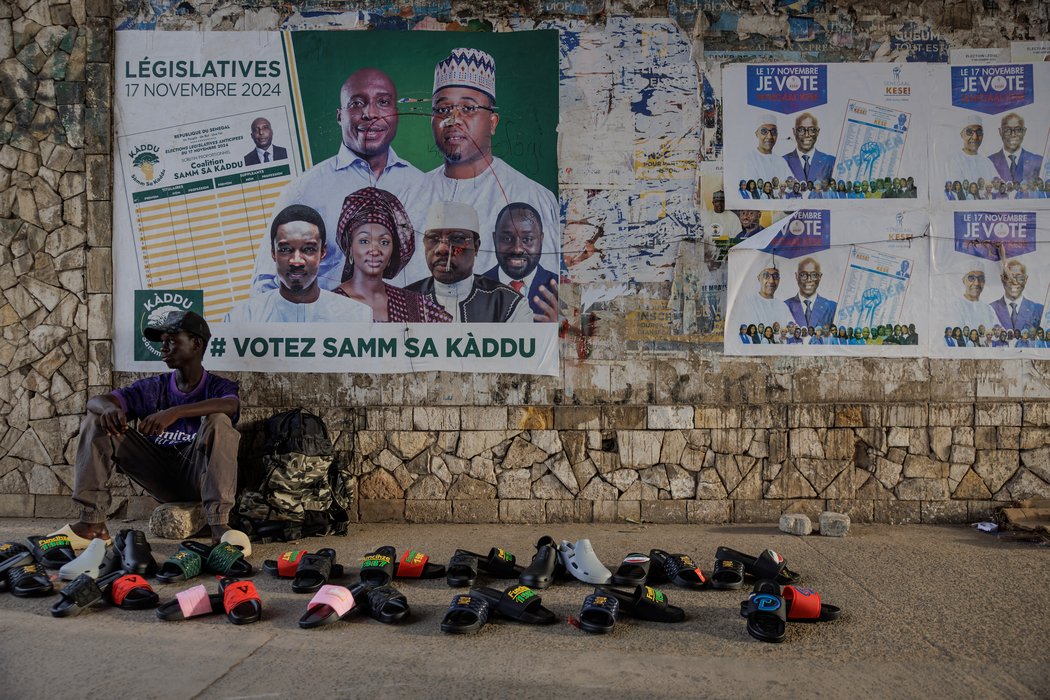
On 17th November 2024, more than seven million eligible voters were called to elect 165 members of the National Assembly in early elections. As reported previously on the Monitor, in September 2024, President Bassirou Diomaye Faye dissolved the National Assembly, eight months after he was elected, saying that the opposition-dominated National Assembly hampered the new administration’s plans to bring “systemic transformation”.
On 27th November 2025, the Constitutional Council announced that Patriotes Africains du Sénégal pour le Travail, l'Éthique et la Fraternité (PASTEF), the ruling political party of President Faye, had won 130 of the 165 seats in the National Assembly.
Although the elections were peaceful, some violent incidents took place prior to the elections, including a fire at the headquarters of an opposition party and clashes between supporters of the opposition coalition, Takku Wallu, and PASTEF. Ahead of the elections, a group of 15 CSOs created the collective Saxxal Jamm (Promote peace in Wolof) to tackle violence during the electoral period.
Expression
Journalist summoned for questioning
On 10th February 2025, after having been summoned by the Police’s Criminal Investigation Unit, officers questioned Walf TV journalist and columnist Pape Sané, reportedly so as to reveal his sources. The summons and questioning of the journalist comes after a broadcast in which the journalist made allegations of a corruption scandal implicating a businessman and a government official.
Cyberattacks against media outlets
According to Reporters without Borders (RSF) and media sources, several media outlets – news websites Seneweb, Dakaractu and the YouTube channel of PressAfrik – were targeted with cyberattacks in February and March 2025. According to Seneweb, the news site was subjected to a DDos (Distributed Denial of Service) attack, receiving more than 1.7 billion requests over a period of ten days, distrupting access to the website for legitimate users. Dakaractu experienced a similar attack. An investigation was opened into the origins of the cyberattacks.
#Senegal
— amnistia . org (@amnistia) March 14, 2025
Justice, truth and reparation require that security forces allegedly responsible for illegal use of force during protests be prosecuted
The amnesty law constitutes an obstacle that must be removed by the authorities, as they pledged to dohttps://t.co/rxtKuaGfEl
Peaceful Assembly
Accountability for protest killings 2021-2024
Civil society groups continue to call for accountability for the hundreds of victims of the violent crackdown on protests between 2021 and 2024 and the repeal of an amnesty law passed the previous year, on 6th March 2024. In that period, at least 65 people were killed, at least 1,000 injured and over 2,000 arrested in protests triggered by the judicial prosecution of then opposition leader Ousmane Sonko. The protests were met with excessive use of force, including live ammunition. The amnesty law, heavily criticised by human rights actors as promoting impunity, covers all acts “likely to be classified as crimes or offences relating to ‘demonstrations or politically motivated events’”, including the use of lethal force by security forces. While the financial assistance granted by authorities to families of those killed during the protest was viewed as a welcome first step, the amnesty law prevents justice from taking place, in particular as those responsible for the protest killings were granted amnesty.
Women protest against gender-based violence, climate change
On 14th January 2025, women’s rights organisations organised a march against gender-based violence against women and children in Malika, Dakar, following the killing of Diary Sow, a 12-year old girl, on 31st December 2024.
On 4th November 2024, ahead of COP 29, which took place in Azerbaijan from 11th to 22nd November 2024, dozens of women gathered in Dakar against what they call global inaction against climate change.
Le sit in de ce 31 Décembre avec le dress code n*u/taatu neen a été interdit par le préfet de Dakar. https://t.co/aRyBpGNdEV
— Collectif des Féministes du Sénégal (@CollFemSn) December 28, 2024
‘Naked’ sit-in against gender-based violence banned
A ‘naked’ sit-in planned for 31st December 2024, organised by the Collective of Feminists to highlight the levels of gender-based violence in Senegal, was banned by the prefect of Dakar.
Association
Civil society calls for a law to protect human rights defenders (HRDs)
On 26th December 2024, the Coalition Sénégalaise des Défenseurs des Droits Humains (COSEDDH - the Senegalese Coalition of Human Rights Defenders) organised a press conference to highlight the findings of their report on the situation of HRDs in Senegal, indicating a precarious situation for HRDs in the country. Among constraints faced by HRDs, COSEDDH highlighted restrictive legislation and practices, including criminal offences related to defamation, public insults and restrictive provisions in the counterterrorism laws, and the instrumentalisation of these limitations to freedom of expression for political purposes.
The coalition has called for the adoption of a law on the protection of HRDs and has submitted a draft law to the Minister of Justice.