General Update
In late February 2026, the Head of the United Nations Support Mission in Libya (UNSMIL), Hanna Tetteh, told the UN Security Council that despite ongoing UN‑facilitated efforts, Libya’s rival political institutions had made little to no headway in advancing the agreed political roadmap. Tetteh highlighted that key steps, including agreements between the House of Representatives and the High Council of State on implementing the roadmap’s milestones, had not been completed, reflecting continuing deadlock between major political actors and limiting progress toward credible, unified elections and governance arrangements.
On 12th March 2026, a joint official statement was issued in Tripoli signalling a formal easing of recent tensions between the Presidential Council and the Government of National Unity. The announcement followed a high‑level meeting held the previous day between senior leaders of the two institutions, during which they agreed to set aside recent disagreements that had strained their working relationship. The statement indicated that the Presidency, the unity government, and the High Council of State had affirmed institutional coordination, with the Presidency Council confirming approval of recent ministerial appointments and the parties expressing support for enhanced cooperation going forward.
Libya’s High National Elections Commission had indicated that presidential and parliamentary elections could be held in mid-April 2026, although this timeline remained conditional on agreement over the legal and political framework.
Protest in Zawiya due to deteriorating living conditions and rising dollar exchange ratehttps://t.co/DxlkG9zaBE #Libya #ليبيا pic.twitter.com/6UlRfKbe4q
— Alwasat Libya (@alwasatengnews) February 25, 2026
Peaceful Assembly
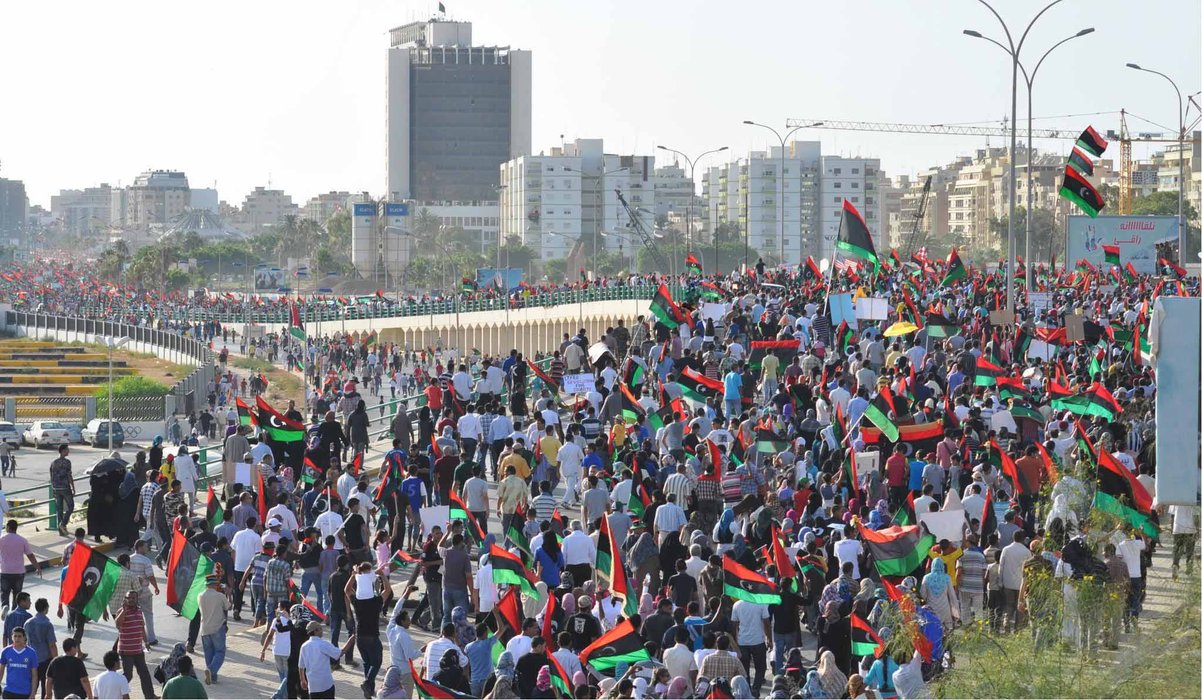
Amid worsening economic conditions and a prolonged political deadlock, protests erupted on 24th February 2026 in Zawiya, western Libya. Demonstrators gathered in multiple parts of the city and blocked key roads, expressing frustration over fuel shortages, rising prices, and declining living standards. The protests quickly escalated into broader political demands, with participants calling for the removal of all existing governing bodies and denouncing corruption and institutional division. Reports indicate that the demonstrations continued over the following days in late February, with sustained gatherings and chants reflecting widespread dissatisfaction with Libya’s fragmented leadership. On 28th February 2026, the National Institution for Human Rights in Libya condemned the arbitrary arrest of peaceful protesters in Tripoli. Security forces reportedly detained several participants in demonstrations the previous night, prompting the institution to call for their immediate release and for authorities to respect the right to peaceful assembly under Libyan law.
Following the late‑February protests and arrests, anti‑government demonstrations in western Libya continued into early March 2026. On 4th March, small gatherings took place in Zawiya, with a few dozen participants reiterating calls for the removal of all governing bodies and warning of possible action against the local refinery if their demands were ignored. In Zliten, around 150 residents staged protests to voice frustration over worsening living conditions and the ongoing political deadlock.
Expression
Individuals in Libya continued to be targeted for expressing critical opinions and engaging in public or artistic dissent. On 21st February 2026, armed individuals in Benghazi detained poet Faiez Ali Emazzib and actor Faraj Abdulkarim in separate incidents. Emazzib was taken from his home after sharing a video on social media criticising security agencies and prosecution offices, while Abdulkarim was held following his participation in a satirical television programme highlighting mismanagement within the security sector.