General Update
In a landmark victory for the rights of persons with albinism (PWAs), the African Court on Human and People’s Rights has held the United Republic of Tanzania accountable for serious human rights violations in the case of Centre for Human Rights and Others v. United Republic of Tanzania (Application No. 019/2018). The Institute for Human Rights and Development in Africa (IHRDA), the Centre for Human Rights (CHR) at the University of Pretoria, and the Legal and Human Rights Centre (LHRC) jointly brought the case, exposing Tanzania’s failure to prevent the killings, abductions of, and systemic discrimination against PWAs. The Court found that the Tanzanian government violated multiple rights, including the rights to life, dignity, health, education, and protection from torture and discrimination, particularly for children with albinism. In response, the Court ordered the government to pay reparations, reform discriminatory laws, strengthen shelters, and launch public awareness campaigns. This judgment not only affirms the dignity and rights of PWAs but also sets a powerful precedent, reinforcing states’ obligations under the African Charter to protect marginalised groups from violence and exclusion.
The African Court on Human and People’s Rights granted IHRDA and Robert F. Kennedy Human Rights (RFK Human Rights) permission to intervene as amici curiae (Latin for “friends of the court” - independent experts who assist by offering specialised legal insight) in the case of Ado Shaibu and 5 Others v. United Republic of Tanzania (Application 046/2020). The applicants contend that the Tanzanian government violated electoral rights during the 2020 general elections by orchestrating and enabling actions that suppressed political participation. They assert that state actors, including the National Electoral Commission, security forces, and state-controlled media, deliberately restricted civic and political space, mainly targeting opposition parties and independent voices. On 19th March 2025, the Court issued a decision allowing the amici to submit expert legal analysis on electoral rights and civic space, particularly in Tanzania’s disputed 2020 general elections.
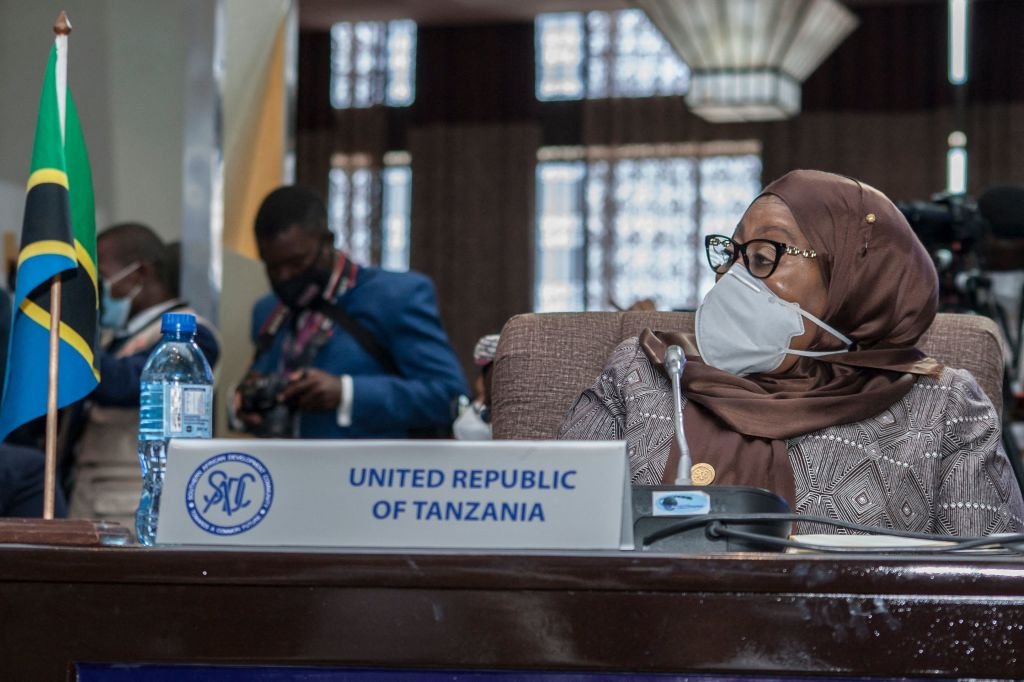
On 20th January 2025, Tanzania’s ruling party, Chama Cha Mapinduzi (CCM), unanimously nominated President Samia Suluhu Hassan as its presidential candidate for the upcoming general elections. Two days later, on 22nd January, the main opposition party, Chama cha Demokrasia na Maendeleo (Chadema), elected prominent politician and human rights advocate Tundu Lissu as its new chairman, marking a significant shift in the country’s political landscape. Lissu won the leadership contest with 513 votes (51.5%), narrowly defeating long-serving party leader Freeman Mbowe, who secured 482 votes (48.3%).
As the country moves closer to its general elections in October this year, authorities double down on their clampdown on dissent. Tanzanian authorities’ reach has extended not only to Tanzanian HRDs and opposition inside Tanzania, but also to its citizens who are living across its borders in neighbouring countries. The repression is also being felt by citizens from bordering countries entering Tanzania for human rights work.
Association
Opposition bears the brunt ahead of 2025 elections
On 9th April 2025, police officers arrested Tundu Lissu, leader of Tanzania’s main opposition party, Chadema, after he held a political rally in Mbinga town, southwest of Tanzania. Police used teargas and shot into the air to disperse his supporters who gathered around during the arrest. The following day, authorities charged Lissu with treason, a non-bailable offence, over a social media post he published on 3rd April 2025 calling for a boycott of the upcoming elections, which he alleged would be rigged. The state also charged him with three counts under Tanzania’s cybercrime laws for allegedly publishing false information. In a YouTube video posted on 3rd April, Lissu claimed that police had participated in electoral malpractice on orders from the president following the November 2024 local elections. He also alleged that the judiciary lacks independence and operates under pressure from the ruling party. Authorities denied Lissu the right to enter a plea on the treason charge, but he pleaded not guilty to the publication-related offence and was scheduled to appear in Court again on 24th April 2025. His lawyer, Rugemeleza Nshala, denounced the charges as politically motivated, pointing to a broader crackdown on dissent ahead of Tanzania’s October 2025 general elections.
On 12th April 2025, Tanzania’s Independent National Electoral Commission disqualified the Lissu-led Chadema party from participating in the upcoming 2025 elections. Ramadhani Kailima, the Commission’s director of elections, claimed that Chadema failed to sign a (controversial) mandatory code of conduct by the deadline, effectively barring it from all electoral processes, including by-elections, until 2030. The exclusion of Chadema has sparked widespread outrage among human rights defenders and opposition voices, who condemned the move as part of an escalating crackdown on political dissent under President Samia Suluhu Hassan’s administration. Civil society actors continue to raise alarms over patterns of repression, including enforced disappearances and unlawful killings targeting critics of the government.
Cross-border repression a cause for concern
On 12th January 2025, Tanzanian activist Maria Sarungi Tsehai was abducted outside a Nairobi salon in broad daylight. She reported that unidentified men, claiming to be police officers, pulled her from a taxi around 3 p.m. and forced her into a van. They blindfolded, choked, and restrained her with handcuffs, pinning her down by sitting on her feet. Her abductors confiscated her phones and repeatedly demanded access to her social media accounts, which she refused to provide. Hours later, they released her on the city’s outskirts but kept her devices. Maria believes the abduction was an attempt to access her digital communications, likely linked to her activism and criticism of the Tanzanian government. Maria fled Tanzania in 2020 after facing escalating threats under the late President John Magufuli’s administration. In recent months, she had raised alarms about her safety, citing incidents of unknown individuals searching for her at her residence.
In mid-May 2025, Ugandan human rights defender Agather Atuhaire and Kenyan human rights defender Boniface Mwangi, who had arrived in Tanzania as part of a delegation to observe Tundu Lissu’s trial, were forcibly deported after they had been arbitrarily arrested, tortured, sexually assaulted and detained incommunicado for days. Leading Kenyan lawyer and former Justice Minister Martha Karua, former Kenyan chief justice Willy Mutunga and other prominent rights activists who also travelled there over Lissu's case said they were stopped and held at the airport before being deported.
The above incidents, involving the abduction of Tanzanian human rights defender Tsehai in Nairobi, alongside the detention, assault, and deportation of Ugandan and Kenyan HRDs Agather Atuhaire and Boniface Mwangi in Tanzania, highlight a continuing pattern of cross-border repression within the sub-region. As previously documented, Ugandan opposition leader Kizza Besigye was also abducted in Nairobi in November 2024, and forcibly transferred to Uganda in a covert operation involving both governments. These incidents suggest a coordinated effort among East African governments to suppress dissent and support each other in targeting activists and opposition leaders beyond their own jurisdictions. They underscore the persistent and escalating threats faced by human rights defenders and opposition voices in the region, particularly through the unlawful use of renditions to silence critical voices.