This update covers developments relating to the freedoms of expression, association and assembly in Jamaica from October 2025 to August 2026.
Context
Deportation orders against Haitian nationals raise concerns over access to asylum procedures
On 30th July 2026, authorities issued deportation orders against eight Haitian nationals - five men and three women - who had arrived in Jamaica by boat on 17th July 2026 after their vessel encountered difficulties. The group was subsequently detained and charged with illegal entry. When the Passport, Immigration and Citizenship Agency (PICA) presented the orders to the St Catherine Parish Court on 31st July, their lawyer, Donahue Martin, questioned why the Minister of National Security had signed the orders while court proceedings were ongoing and announced plans to challenge them. The illegal-entry charges were withdrawn.
As reported by the European Union System for an Enabling Environment (EU SEE) - a consortium of international civil society organisations and network members in 86 countries - the Jamaica Umbrella Group of Churches (JUGC) urged the authorities to ensure that Haitian nationals seeking refuge were treated with dignity, fairness and compassion. They also called for clear, publicly communicated and consistently applied procedures for people seeking asylum, emphasising the humanitarian and security crisis in Haiti.
Peaceful Assembly
Granville protests intensify after fatal police shooting of Latoya Bulgin
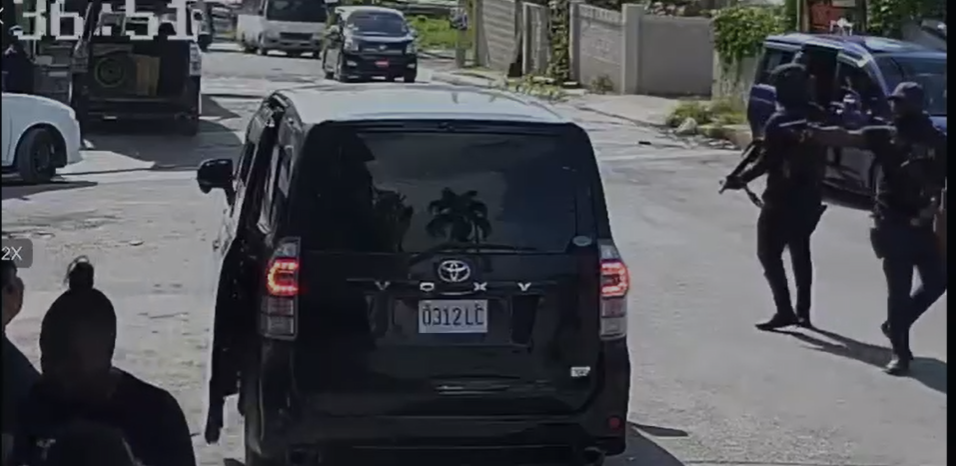
On 17th May 2026, police fatally shot Latoya Bulgin in Granville, Montego Bay, in the parish of St James, during crowd-control operations connected to a protest over an earlier police killing. According to local reporting, Bulgin was driving a vehicle carrying residents to the demonstration when an officer fired towards the vehicle and fatally wounded her. None of the three police officers assigned to crowd-control duties at the protest had been issued or was wearing a body-worn camera.
The initial police account reportedly alleged that Bulgin had driven the vehicle towards an officer and posed an imminent threat. CCTV footage showed officers removing Bulgin from the vehicle after she was shot and placing her in the rear of a police vehicle, raising concerns about the handling of Bulgin after the shooting, including the preservation of potential evidence and respect for her dignity.
This followed the police killing of 17-year-old Tjey Edward, Bulgin’s cousin. On 11th May 2026, Edward’s mother, residents and political representatives had already demonstrated to demand accountability, with protesters also calling for wider use of body-worn cameras by police officers.
Bulgin’s killing triggered several days of protests and roadblocks in Granville. For example, on 18th May 2026, residents blocked roads with household appliances, trees and other debris and set some obstructions alight. Police and firefighters repeatedly removed the barricades amid a heavy security presence. Protesters demanded accountability for Bulgin, Edward and others killed in earlier police-related incidents in the community. The Granville Peace, Justice and Resource Development Foundation and Stand Up for Jamaica also called for accountability and scrutiny of the police response.
On 23rd May 2026, the Inter-American Commission on Human Rights (IACHR) expressed concern about Bulgin’s killing and called for a prompt, independent, impartial and transparent investigation. It reiterated that states should facilitate peaceful protest and that law-enforcement officers must comply with the principles of legality, necessity and proportionality when using force.
As demonstrations continued, police said they would permit peaceful protest but would not allow roadblocks. St James police commander Senior Superintendent Eron Samuels also said that four permits for community entertainment events had been rejected while roads remained obstructed. Police nevertheless said they would cooperate with residents to facilitate the planned peaceful march. On 24th May, residents held a further peaceful demonstration against police violence, with protesters dressed in black, carrying placards and calling for accountability for Bulgin, Edward and others killed in earlier incidents. Unlike some previous demonstrations, protesters did not build roadblocks following the police warning.
The case also intensified debate over body-worn cameras and police accountability. On 19th May 2026, the opposition People’s National Party Women’s Movement called for an immediate expansion of body-camera use, citing the role of civilian CCTV in documenting Bulgin’s shooting. The government subsequently reiterated plans to expand police camera systems.
On 3rd June 2026, authorities charged Constable Andrew Wilson with murder in relation to Bulgin’s death. The Independent Commission of Investigations (INDECOM) highlighted the importance of rapidly securing and analysing available video evidence, which it said helped investigators establish an objective account of the incident. At the time of writing, the prosecution remained ongoing.
Police detain members of Rastafarian civil society group following a demonstration outside King’s House
On 16th June 2026, four members of the Kingdom of Debre Zeit Human Rights Defenders, including its leader, Luel Ras Mesfin Haile Selassie, were reportedly detained by police following a demonstration outside King's House, the official residence of Jamaica’s Governor-General, in St Andrew. According to the EU SEE, the group was protesting Jamaica’s continued constitutional relationship with the British monarchy and advocating for decolonisation, self-determination and the protection of human rights. The demonstration was intended to deliver a petition to the Governor-General concerning alleged violations of citizens’ rights.
The organisation reported that officers attached to the Half-Way Tree Police Station detained four of its members and seized one of its vehicles. Despite the police intervention, representatives stated that they had successfully delivered their petition to King's House. Following the incident, members expressed concern about what they considered state interference with their advocacy and reaffirmed their intention to continue campaigning.
The group has previously used demonstrations and petitions at King’s House as part of its advocacy. In September 2019, members staged a peaceful demonstration outside the residence and attempted to deliver a letter to the Governor-General. A subsequent Supreme Court judgment records that Luel Ras Mesfin Haile Selassie organised the protest and delivered the letter to a police officer on duty before later bringing legal proceedings concerning the authorities’ response.
Court ruling maintains police authorisation requirement for demonstrations
On 16th April 2026, the Supreme Court of Judicature of Jamaica delivered judgment in Patterson, Thompson and others v Attorney General of Jamaica, arising from demonstrations organised by members of the United Independents’ Congress (UIC) during COVID-19 restrictions in 2021. The claimants challenged provisions of the Disaster Risk Management Act and sections of the Public Order Act, including the requirement to obtain police authorisation before holding a public march during daylight hours.
The Court expressly acknowledged that requiring a permit for a public march infringes the constitutional right to freedom of movement but concluded that the restriction was reasonably justified. In reaching its decision, the Court considered that the permit system served legitimate objectives, including limiting disruption to road users, facilitating security planning and preventing simultaneous marches from creating public disorder. It therefore upheld the challenged provisions of the Public Order Act as constitutional and refused the claimants' requests for declarations and damages:
“In reviewing sections 6, 11(b), and 12 of the Public Order Act, the right to Freedom of Movement is curtailed to some extent, as citizens are not allowed to gather and march arbitrarily. The mischief the Public Order Act seems to address is the way these marches are conducted in public spaces, given that they disrupt traffic and pedestrians. The requirement or necessity of requesting a permit would: a. Minimise the impact on road users by scheduling the marches during specified hours; b. Could allow for forward planning regarding security for other road users; c. Prevent more than one march from occurring at the same time, which may lead to chaos.”
The judgment raises concerns regarding Jamaica’s obligations under Article 21 of the International Covenant on Civil and Political Rights (ICCPR), which protects the right to peaceful assembly. The Court’s reliance on traffic disruption and security planning to justify a general prior-authorisation requirement presents questions about whether the legislation contains sufficient safeguards against unnecessary or disproportionate restrictions on peaceful assembly. Although public order considerations can justify specific limitations, they do not automatically warrant making the exercise of a fundamental right conditional on discretionary police approval.
In its General Comment No. 37, the UN Human Rights Committee emphasises that requiring prior permission to hold a peaceful assembly undermines its recognition as a fundamental right. While prior notification may be permissible where necessary to facilitate demonstrations and protect the rights of others: “Notification regimes, for their part, must not in practice function as authorisation systems.” The Committee also stresses that peaceful assemblies may legitimately cause disruption to traffic and ordinary activities, which authorities are expected to tolerate to a certain degree.
Curfew restrictions prompt protest and concerns over police use of force
On 15th May 2026, residents and business operators in Burnt Savannah and surrounding communities in the Frome Division of Westmoreland protested against prolonged police curfew restrictions, which they said had severely affected livelihoods and undermined efforts to recover from Hurricane Melissa. According to residents, the curfew had been in place for more than two months, restricting evening economic activity on most days of the week. Shopkeepers, vendors and bar owners complained that the restrictions prevented them from earning sufficient income to support their families and rebuild their businesses.
The demonstration followed a candlelight vigil held on 14th May for a community member who had died in a motorcycle accident. Protesters alleged that police ordered participants to disperse and subsequently used pepper spray against the demonstration, despite some participants reportedly complying with their instructions. One resident claimed that an eight-year-old girl was among those affected. Community members also complained about insufficient public notification of the curfew and uncertainty over whether restrictions remained in force on the night of the vigil.
Westmoreland’s senior police superintendent, Othneil Dobson, defended the curfew as a necessary response to escalating violence, citing three murders within five days in the affected communities.
Demonstration against US third-country nationals agreement
On 30th June 2026, dozens of people peacefully marched in Cross Roads, St Andrew, opposing Jamaica’s agreement with the United States to receive third-country nationals. Organisers called the demonstration “Urgent Stand for Jamaica”. Protesters carried placards opposing the arrangement and calling for greater transparency and government accountability. The demonstration also addressed broader governance concerns. Protesters carried signs referring to corruption and lack of accountability, while representatives of Stand Up for Jamaica addressed the crowd.
The protest followed the government’s signing, in early June 2026, of a Memorandum of Understanding with the United States allowing transfers from the US to transit temporarily through Jamaica before travelling to their country of origin or another destination. The government said Jamaica could refuse proposed transfers and would receive a maximum of 25 people every two weeks, normally for short stays. At the time of the protest, however, the authorities had not yet finalised the operating procedures governing the arrangement.
Human rights organisation Jamaicans for Justice (JFJ) raised concerns about the agreement. It warned that Jamaica could risk involvement in refoulement or chain refoulement unless authorities established robust and independently verifiable screening procedures. JFJ called for publication of the agreement and operational procedures, access to legal representation and interpreters, independent monitoring, and safeguards for people seeking asylum or other forms of international protection.
Teachers wear black in protest over compensation talks
On 27th April 2026, the Jamaica Teachers’ Association (JTA) proposed that teachers across the country wear black to work in protest over what it described as poor treatment by the government during compensation discussions. The symbolic action formed part of the union’s efforts to press the authorities over unresolved concerns affecting teachers’ remuneration and working conditions. The JTA also placed its members on alert for possible further industrial action if the dispute was not addressed.
Let us be clear: this struggle is not merely about salaries, it is fundamentally a fight for social justice. It is about correcting longstanding inequities and ensuring that teachers are valued in a manner consistent with their indispensable role in national development.
- JTA President Mark Malabver.
Nurses protest overcrowding and working conditions at public hospital
On 23rd June 2026, nurses at the University Hospital of the West Indies (UHWI) in St Andrew staged a protest and temporarily walked off the job over severe overcrowding, inadequate resources and difficult working conditions in the hospital’s Accident and Emergency (A&E) Department. According to the Nurses Association of Jamaica (NAJ), the department, designed to accommodate approximately 35 patients, was holding 102 patients at the time. Nurses raised concerns about excessive workloads, shortages of equipment and medical supplies, insufficient space to provide treatment and the impact of congestion on patient safety and privacy.
Following discussions between nursing representatives and hospital management, normal operations resumed later that day. Hospital administrators announced immediate measures to alleviate congestion, including transferring patients from A&E to in-patient wards to improve patient flow.
In a separate incident, on 16th January 2026, nurses and doctors at Cornwall Regional Hospital in St James staged a protest and industrial action over severe overcrowding, deteriorating infrastructure and unsafe working conditions in the hospital. Nurses had reportedly begun a sick-out earlier that week, with doctors subsequently joining the action.
According to the Jamaica Medical Doctors’ Association, approximately 150 patients were being treated in the temporary A&E facility on 14th January, significantly exceeding its intended capacity. Nursing representatives also reported that some patients were receiving emergency care on the floor and raised concerns about rodent infestation, inadequate equipment and risks to patient and staff safety. The overcrowding was exacerbated by damage caused by Hurricane Melissa in October 2025.
Academic staff strike over unresolved compensation arrangements
On 10th August 2026, academic staff at the University of the West Indies (UWI) and the University of Technology, Jamaica (UTech) began industrial action over unresolved compensation arrangements covering the 2022-2025 period. At UTech, lecturers also protested the prolonged suspension of procedures governing academic promotions, which they said had prevented career advancement for approximately six years.
Former Gleaner production workers protest delayed payments
On 26th January 2026, former production workers at The Jamaica Gleaner staged a protest outside the media company’s premises over delayed redundancy payments following the restructuring of its printing and distribution operations. Approximately 45 workers had reportedly been made redundant following the establishment of North Beech, a joint venture between The Gleaner and the Jamaica Observer. According to the affected workers, redundancy payments due on 23rd January 2026 had not been made, and the company subsequently proposed spreading the payments over nine months. The former employees rejected the arrangement, arguing that many were unemployed, facing financial hardship and needed their full entitlements without further delay.
In response, Executive Chairman of the RJRGLEANER Communications Group, Joseph Matalon, acknowledged the delays and attributed them to financial constraints exacerbated by Hurricane Melissa and losses incurred during November and December 2025. He stated that the company intended to make a partial payment that week and settle the outstanding balance within the required timeframe, while continuing discussions with the workers and their union.
Communities protest over water shortages and deteriorating roads
On 14th April 2026, dozens of residents of Salt Marsh in Trelawny blocked roads after the community had reportedly gone for around six months without piped water. The protest disrupted traffic and affected school attendance as residents called on the authorities to restore a regular water supply. Following the demonstration, the National Water Commission (NWC), Jamaica’s public water utility, trucked water into the community and said it expected to restore piped supplies by 15th May 2026.
On 18th and 19th May 2026, dozens of residents of Sunbury district near Spalding, Clarendon, built roadblocks for two consecutive days to protest deteriorating road conditions and demand repairs. The action disrupted movement through the area before police intervened to clear the road.
Poor road conditions also prompted protests by community members and transport workers in early 2026, particularly in Manchester and St Catherine. On 2nd February 2026, residents and taxi operators in Somerset, Manchester, blocked the main road with debris and lit fires to demand repairs to a route connecting several communities with Mandeville. Protesters blamed the deterioration partly on heavy trucks serving a nearby quarry, alleging that overloaded vehicles spilled concrete and other material onto a road not designed for such traffic. They also complained about dust and roadside dumping and said repeated appeals to political representatives and public agencies had failed to produce adequate action. Police and firefighters cleared the road during the morning, although protesters reportedly erected barricades again.
A similar mobilisation took place on 23rd February 2026 in Brokenhurst, Manchester, where residents and taxi operators blocked the main road and withdrew transport services over what they described as years of neglect. Protesters said deteriorated roads had increased vehicle maintenance and transport costs, with some residents of Patrick Town reportedly paying substantially higher fares because taxi operators were reluctant to enter the community. Local councillor Karl Smith acknowledged the poor condition of the road and said he would seek estimates and additional government funding for rehabilitation.
On 19th March, taxi operators serving the Portmore-Spanish Town route protested along the Bernard Lodge main road in St Catherine, citing worsening road conditions and the financial cost of repeated vehicle repairs. Police officers attended the demonstration and instructed participants not to obstruct the roadway, telling them to continue protesting from the roadside and warning that those who persisted in blocking traffic could face arrest. No arrests or other significant interference were reported.
Protesters demand justice for Melissa Silvera and action against gender-based violence
On 3rd March 2026, family members, friends and supporters of Melissa Silvera, a land developer killed by her husband, staged a peaceful protest at Emancipation Park in Kingston to demand justice and denounce gender-based violence. Participants dressed in black and carried placards calling for an end to violence against women. The protest took place days before the sentencing of Silvera’s husband, former parliamentarian Jolyan Silvera, who had pleaded guilty to manslaughter after initially facing a murder charge over her fatal shooting at their home in November 2023.
March in support of Cuban medical cooperation programme
On 17th March 2026, over 150 people peacefully marched around National Heroes Circle in Kingston in support of Cuba and against the ending of Jamaica’s long-running medical cooperation programme with the Cuban government. Protesters called for the return of Cuban doctors and nurses and highlighted the contribution of Cuban medical personnel to Jamaica’s public health system over the previous 50 years. They also linked the issue to pressure from the United States and highlighted the withdrawal of Cuban medical personnel as a matter with direct implications for Jamaica’s health system.
The mobilisation followed the Jamaican government’s decision earlier that month to discontinue the bilateral arrangement under which Cuban medical professionals worked in the country.
Community rally over public access to Mammee Bay Beach
On 3rd January 2026, dozens of people gathered at Mammee Bay Beach to protest restrictions on public access to the coastline. The rally was organised by the Jamaica Beach Birthright Environmental Movement (JaBBEM) and formed part of the group’s wider campaign to protect and expand public access to Jamaica’s beaches.
JaBBEM has repeatedly criticised the declining public access to the coastline and has called for reform of Jamaica’s Beach Control Act, the legislation governing access to and use of beaches and coastal areas.
Students protest inadequate campus security following reported sexual assault
On 16th December 2025, students at the College of Agriculture, Science and Education (CASE) staged mass demonstrations across the institution’s East and West campuses, demanding stronger security measures following the reported rape of a female student two days earlier. Protesters raised concerns about inadequate lighting, unrestricted access to campus facilities, insufficient security personnel and surveillance cameras concentrated in agricultural areas rather than student accommodation and other vulnerable locations. Students also alleged that previous incidents of sexual assault had not prompted improvements, expressing frustration with the college administration’s response and the lack of timely communication about the latest incident.
In response, CASE President Dr Derrick Deslandes acknowledged longstanding security deficiencies, including the absence of perimeter fencing, unsecured access points, electrical problems affecting security infrastructure, and inadequate staffing. The college announced additional patrols and other immediate security measures, while Deslandes subsequently indicated that it would seek government assistance to improve security.
Association
Security Minister publicly vilifies human rights organisation Jamaicans for Justice
On 23rd February 2026, Deputy Prime Minister and Minister of National Security, Horace Chang, accused human rights organisation Jamaicans for Justice (JFJ) of “living off blood money” during a radio interview, while criticising the organisation and other advocates for scrutinising fatal police shootings and police accountability. Chang suggested that human rights organisations benefited financially from their criticism of police conduct.
On the same day, JFJ rejected the allegation as false and inflammatory, explaining that its funding came primarily from international development grants and that its monitoring relied on official data, including reports from the Independent Commission of Investigations (INDECOM). The organisation announced that it was seeking legal advice over the potentially defamatory remarks and reaffirmed that it would not be intimidated into abandoning its human rights work.
The comments also prompted criticism from opposition politicians and religious leaders. On 25th February, opposition spokesperson on national security Fitz Jackson condemned the remarks as reckless and called for their withdrawal. The following day, the Watchman Church Leaders Alliance also urged Chang to retract his comments, warning that attacks on legitimate civil society organisations risked undermining democratic accountability and discouraging freedom of expression.
Jamaicans for Justice (JFJ) has taken note of comments made by Dr. Horace Chang, Minister of National Security and Peace and Deputy Prime Minister on Nationwide News Network on Monday, February 23, 2026. We find the framing of our work as “living off blood money” unfortunate, untrue and inflammatory. Such language does little to advance constructive dialogue on public safety and accountability. In light of the defamatory nature of the "blood money" accusation and its potential consequences, JFJ is currently seeking legal advice on the matter and any possible actions that may be warranted. See our statement:
— Jamaicans For Justice (JFJ) (@JAForJustice) February 23, 2026
In a separate incident, on 21st April 2026, Deputy Prime Minister Chang intimidated and publicly vilified JFJ. Responding to calls for police officers to wear body-worn cameras during planned operations, Chang suggested that critics should visit a police training facility to experience the sound of M16 gunfire. He also accused civil society organisations of contributing to the deaths of two police officers through their public criticism of police shootings, alleging that such statements encouraged attacks against officers.
The comments came amid growing concerns about the use of lethal force by security forces. In April 2026, the Independent Commission of Investigations (INDECOM) reported that 113 people had been fatally shot by security forces since the beginning of 2026, following 106 deaths in the same period during 2025.
Prime Minister targets civil society over reconstruction legislation
Following Hurricane Melissa in October 2025, the government introduced legislation in May 2026 establishing the National Reconstruction and Resilience Authority (NaRRA) to coordinate and accelerate reconstruction and resilience projects. In response, on 27th April 2026, a coalition of 28 organisations and individuals expressed concern about the limited engagement with the NaRRA Bill and warned that the proposed governance structure was highly centralised, with insufficient independent oversight and inadequate safeguards for transparency, accountability, environmental protection and public participation. The coalition proposed either a short consultation period or referral of the Bill to a time-bound parliamentary joint select committee.
The government defended the legislation as necessary to accelerate reconstruction, arguing that existing financial-management and public-body accountability frameworks provided substantial safeguards. Some amendments were incorporated during the legislative process. The Bill passed Parliament and received assent in May.
On 27th May 2026, Prime Minister Andrew Holness publicly questioned the legitimacy and motives of some critics advocating stronger oversight of NaRRA, including those from civil society organisations. He alleged that certain opponents did not want the Authority to succeed because doing so was contrary to their political interests. Holness further accused some individuals of falsely presenting themselves as civil society representatives, describing them instead as political activists. He alleged that some critics received funding for their activities and declared that he was prepared to “tackle all of them” who challenged his statements. He did not identify any organisation or individual by name.
Proposed law raises concerns over disproportionate regulation of CSOs
Beginning in April 2026, Jamaican civil society organisations raised concerns over government plans to introduce a Non-Profit Organisations (NPO) Act, expected in October 2026. Representatives of the Council of Voluntary Social Services (CVSS), EVE for Life and other organisations supported efforts to strengthen transparency, accountability and safeguards against money laundering and terrorist financing, but warned that disproportionate compliance requirements could overwhelm smaller, volunteer-run organisations and undermine their ability to operate. They also criticised insufficient structured consultation and highlighted existing administrative and financial burdens under the Charities Act 2013 and its 2022 regulations.
On 22nd July, CVSS called on the government to ensure that the proposed legislation was informed by a comprehensive, evidence-based assessment of money-laundering and terrorist-financing risks, rather than imposing uniform requirements on all non-profit organisations. The organisation emphasised that the Financial Action Task Force’s (FATF) Recommendation 8 requires focused, proportionate and risk-based measures that do not unnecessarily disrupt legitimate civil society activities.
The debate continued in August 2026. On 17th August, CVSS and international experts reiterated the importance of protecting freedom of association, ensuring meaningful civil society participation and adapting regulatory obligations to organisations’ actual risks and capacities.
On 31st August, the government announced the introduction of an online charity registration system “expected to simplify access to services for charities in Jamaica and the diaspora, enabling them to complete applications and receive official documentation from anywhere in the world.” It also disclosed that 32 of approximately 1,475 registered charities had been identified for enhanced supervision following risk assessments. However, the announcement does not establish whether that assessment was comprehensive, sufficiently transparent or compliant with FATF standards. At the time of writing, the proposed NPO Act had not been enacted.
Most civil society organisations are run entirely by volunteers; maybe they’ll have one paid staff. So these compliance burdens are real burdens that are going to push them out of existence, and we have experienced that. We have had a number of small organisations — because of who we are at CVSS — say, ‘Where do we go? What do we do?
- Nancy Pinchas, Executive director of the Council of Voluntary Social Service (CVSS).
Expression
MP calls for reinstatement of criminal libel
On 25th November 2025, former Minister of Legal and Constitutional Affairs and government MP Marlene Malahoo Forte called on Parliament to consider reinstating criminal libel, which Jamaica abolished under the Defamation Act 2013. Speaking during parliamentary proceedings marking the International Day for the Elimination of Violence Against Women, Malahoo Forte suggested that criminal penalties could help address online bullying, harassment, stalking and defamatory attacks on social media.
The proposal drew strong opposition from the Media Association Jamaica (MAJ) and the Press Association of Jamaica (PAJ). PAJ President Dashan Hendricks warned that reintroducing criminal libel would undermine press freedom, discourage investigative journalism and expose journalists and other individuals to potential imprisonment for defamatory expression. Media representatives argued that existing civil defamation remedies and other legal protections could address harmful online conduct without criminalising speech. Responding on behalf of the government, Minister Andrew Wheatley indicated that legislation already existed to address online abuse.
On 17th December 2025, EU SEE highlighted the proposal as a potential threat to freedom of expression.
Civil society coalition calls for long-delayed Access to Information Act reform
On 9th July 2026, a coalition of 20 civil society organisations and seven people called on the government to establish a parliamentary Joint Select Committee to review and modernise the Access to Information (ATI) Act 2002. The coalition, which included JFJ, Jamaica Environment Trust (JET), National Integrity Action (NIA), and the Press Association of Jamaica, argued that recommendations from the previous parliamentary review in 2011 remained largely unimplemented, despite successive government commitments to reform the legislation.
The organisations highlighted delays in implementing Jamaica’s 2024–2026 Open Government Partnership (OGP) National Action Plan, under which the Joint Select Committee was scheduled to be established by April 2025 and an amendment bill finalised by June 2026. They also raised concerns about persistent delays in responding to information requests, inconsistent compliance by public authorities, weaknesses in appeal procedures and the alleged misuse of data-protection exemptions to restrict access to information.
They also argued that modernising the ATI Act would strengthen public accountability and support Jamaica’s implementation of international transparency commitments, including those concerning access to environmental information under the Escazú Agreement.
Other developments
Court strikes down mining permit in landmark environmental ruling
On 30th April 2026, the Supreme Court of Judicature of Jamaica delivered judgment in Lee and others v Attorney General and others, striking down an environmental permit granted to Bengal Development Limited for a proposed mining and quarrying project in the Dry Harbour Mountains in St Ann, an ecologically sensitive area in northern Jamaica.
The three-judge panel unanimously found that the ministerial decision overturning the Natural Resources Conservation Authority’s (NRCA) refusal of the permit was likely to violate residents’ constitutional right to enjoy a healthy and productive environment free from environmental abuse and degradation of Jamaica’s ecological heritage. The Court declared the ministerial decision and the resulting environmental permit unconstitutional, void and of no effect:
“[162] In these circumstances, the permit, in effect, authorised the activity that was deemed harmful. Many of the conditions mandated additional plans, future compliance, and further approvals—regulations to be followed after the permit was granted—but the law requires that applications are approved only when regulators are satisfied beforehand, not afterwards. These conditions also do not address whether the permit should have been granted in the first place.
[173] This judgment does not represent judicial opposition to development. It affirms that development must proceed in accordance with the Constitution and the law. This Court is responsible for enforcing the Constitution. The environmental authorities are responsible for protecting the environment and for balancing the conflicting principles of development and environmental protection.”
The case arose from a long-running dispute over Bengal’s plans to establish a limestone quarry and crushing facility in an area between Rio Bueno and Discovery Bay that had been subject to special environmental development controls since 2000.
On 6th May 2026, the government announced its intention to appeal the ruling