Papua New Guinea’s civic space is rated as ‘obstructed’ by the CIVICUS Monitor. Among concerns previously documented are the harassment and threats against human rights defenders, particularly those working on land and environmental rights, use of the cybercrime law to criminalise online expression, intimidation and restrictions against journalists, and excessive force during protests. There is still no freedom of information legislation, and a national human rights body has yet to be established.
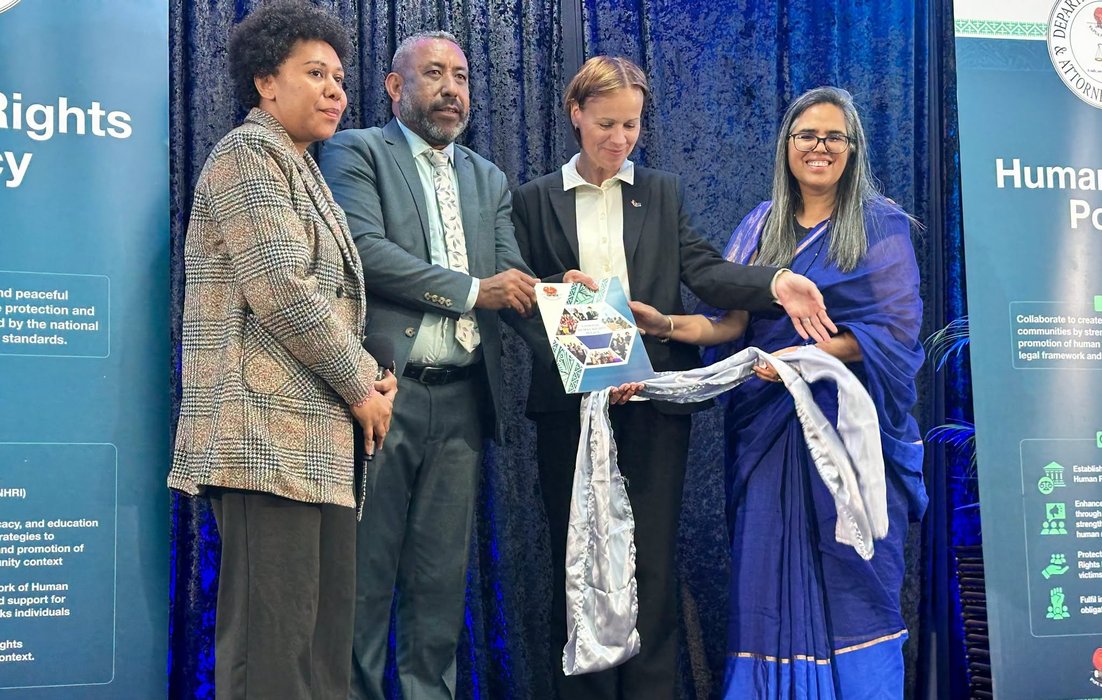
In July 2026, PNG launched the long-awaited National Human Rights Policy in Port Moresby, ending a nearly 30-year wait for a national oversight framework. The human rights policy was launched in partnership with the European Union and the UN. The policy aims to translate constitutional guarantees into practical protections for citizens across the country, with a focus on law and order, gender-based violence [GBV], land rights, and access to public services. The EU has committed to support the setup of a future National Human Rights Commission as part of the initiative, which the government has also committed to.
In August 2026, members of PNG’s parliament delayed a vote on Bougainville's independence. On the brink of statehood, the verdict on the autonomous region's future could now be several months away. PNG's constitution and the Bougainville Peace Agreement require parliament to make the final decision, but do not spell out a procedure for how parliament may deliberate and vote on the region's overwhelmingly pro-independence 2019 referendum result.
In recent months, there have been concerns on the continued use of the Cyber Crime Act 2016 to criminalise expression, while new laws are being proposed to deal with AI-generated content that could impact on expression. An energy worker union is being suppressed by management.
Expression
Man arrested for social posts to block a mine
There are concerns that the cyber crime law has been misused to criminalise an individual for his expression calling for a mine to be blocked.
In June 2026, it was reported that a 34-year-old man had been arrested and charged for his posts on Facebook calling to block the highway and stop a pump station leading to OK Tedi Mine, an open-pit copper and gold mine.
Police said the Executive level of the OK Tedi Mining Ltd., especially the Manager of Community Relations, felt offended and reported the matter to the police.
The man was detained under Section 23 (4) of the Cyber Crime Act 2016 and taken to the Kiunga police station cells.
The 2016 Cybercrime Act has been used to silence criticism and creates a chilling effect. The law has been criticised by the opposition, journalists and activists for its impact on freedom of expression and political discourse.
Calling for a mine to be blocked without inciting violence cannot be considered a crime. It is an exercise of freedom of expression that is protected under the International Covenant on Civil and Political Rights (ICCPR), which PNG has ratified.
Law criminalising harmful use of artificial intelligence could impact expression
In July 2026, Acting Minister for Information and Communications Technology, Hon. Peter Tsiamalili Jr., announced that the Department of Information and Communications Technology has begun drafting laws to protect citizens from harmful misuse of artificial intelligence, including deepfakes, voice cloning and digital impersonation.
While governments have an obligation to protect individuals from the negative and harmful impact of AI, such as AI‑generated or manipulated sexual material, content involving child exploitation or fraudulent voice cloning and impersonation, among others, it must also ensure that freedom of expression is not curtailed by such a law.
AI and deepfakes can and have been used for activism or artistic, creative, satirical, fictional works and therefore any law must ensure these forms of expression are protected. Any law proposed must ensure it is consistent with international law and standards on freedom of expression and there is adequate consultation with UN experts and civil society.
Laws must also be complemented with regulations around labelling AI-generated content, holding tech platforms accountable, support for survivors and digital literacy.
Association
Energy worker union being suppressed by management
In July 2026, Public Services International (PSI) issued a statement of solidarity to the members of the PNG Energy Workers Association.
This was due to plans for privatisation and liberalisation of PNG Power Limited - a state-owned authority - that could mean organisational restructuring including job layoffs.
In the statement PSI said that management appeared to be using a legal mechanism to suppress the Energy Workers Association leadership and prevent them from undertaking legitimate trade union activities at PNG Power Limited.
PSI called on the Marape government to ensure that the PNG Energy Workers Association leadership and members can freely undertake trade union activities without undue interference, intimidation or harassment.
PSI brings together more than 700 trade unions representing 30 million workers in 154 countries and territories. They are a global trade union federation dedicated to promoting quality public services in every part of the world.