Introduction
Unprecedented move opens path to trial against President Rodrigo Chaves
On 1st July 2025, the Supreme Court of Justice of Costa Rica issued an unprecedented decision allowing the Legislative Assembly to vote on lifting the immunity of President Rodrigo Chaves. Opposition parties hold a majority in the 57-member legislature and could vote to lift the president’s immunity.
If legislators proceed, the president could face trial on charges of corruption involving funds from the Central American Bank for Economic Integration (Banco Centroamericano de Integración Económica (BCIE).
The Attorney General’s Office accused President Chaves and Culture Minister Jorge Rodríguez of abuse of authority for personal gain (“delito de concusión”), alleging that funds meant for presidential communications were diverted to benefit an adviser, Federico Cruz. According to prosecutors, Cruz improperly received USD 32,000 from a BCIE donation originally designated for public communication services.
The case comes as Chaves, who retains support from half of the population according to polls, intensifies attacks on the judiciary and electoral authorities ahead of the 2026 elections.
Civil society warns of conflict of interest in Supreme Court selection
The Legislative Assembly is currently selecting a new magistrate for the Third Chamber of the Supreme Court of Justice, which is responsible for adjudicating cases involving members of the highest state authorities. Several deputies are under criminal investigation, and some face formal requests to lift their immunity.
According to the Centre for Justice and International Law (CEJIL) and other civil society organisations, serious concerns have been raised about conflicts of interest, as the magistrate to be appointed may later decide on proceedings involving those same deputies.
On 22nd July 2025, they called on deputies under criminal investigation—particularly those facing requests for the lifting of immunity—to abstain from participating in the nomination process and subsequent plenary vote. The organisations further urged the Assembly to conduct a transparent and impartial selection process.
Costa Rica’s quiet role in the United States of America deportations sparks rights concerns
In May 2025, a new report by CEJIL, the Jesuit Migrant Service Costa Rica (SJM-CR), and the American Friends Service Committee (AFSC) revealed that Costa Rica’s agreement with the United States of America (USA) turned the country into a reception and transit “bridge” for the collective expulsions of at least 200 people. Among them were children and adolescents, many of whom faced a series of human rights violations.
The report explains that Costa Rican authorities held migrants expelled from the USA in arbitrary detention for more than two months, denied them information in their own languages, and failed to provide adequate access to health care, psychosocial support, or international protection. It also highlights violations of the principle of non-refoulement, noting that officials sent some people back to countries where their lives or safety were at risk without carrying out the required assessments.
Although the government introduced a temporary regularisation procedure in April 2025, the organisations underscored that this step does not undo the damage or guarantee access to rights and dignified integration. They urged Costa Rica to provide humanitarian assistance, work permits, and enhanced protection for those in vulnerable situations.
In late June 2024, the Constitutional Chamber (Sala IV) partially upheld a habeas corpus petition brought by civil society on behalf of migrants deported from the USA and detained at the Corredores migration centre. In its judgment, the Court ruled that although their admission on humanitarian grounds did not breach rights, their subsequent detention did, citing lack of individualised decisions, restricted communication, and absence of information on migratory status and asylum options. It ordered the authorities to release the migrants, define their legal status within 15 days, ensure access to health, education and housing support, and awarded costs and compensation.
Association
Exiled Nicaraguan opposition figure shot dead in San José after reporting death threat
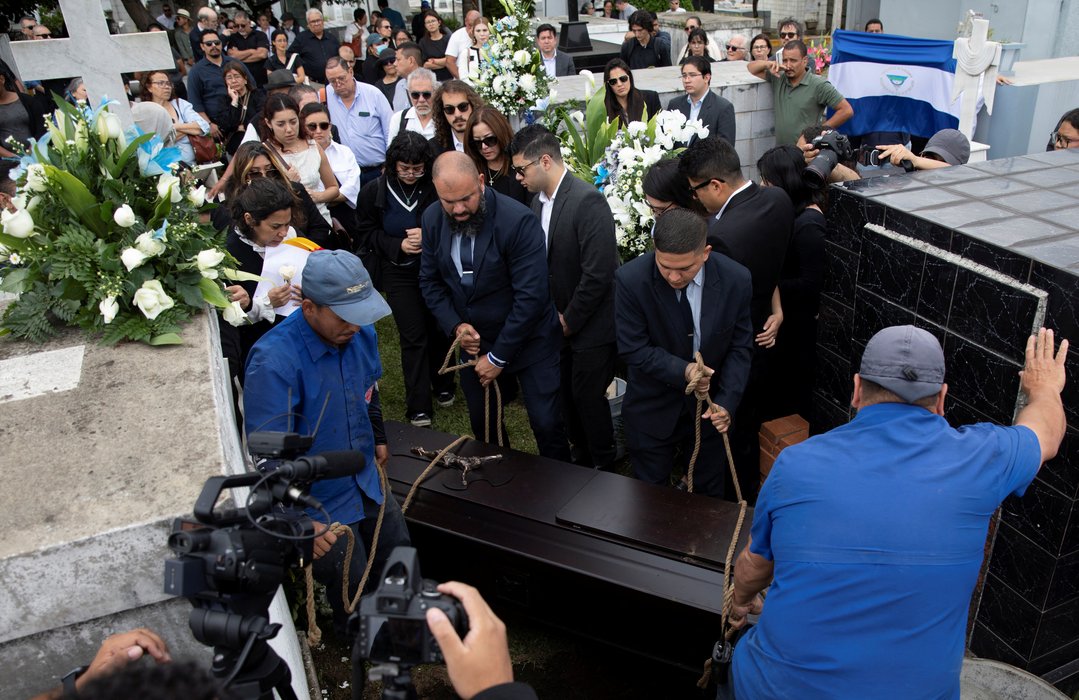
On 19th June 2025, an unidentified assailant shot and killed retired Nicaraguan army major and opposition figure Roberto Samcam Ruiz at his residence in San José. Samcam had lived in Costa Rica as a refugee since July 2018 and had reported death threats to the Directorate of Intelligence and Security.
He had publicly criticised the Nicaraguan Army’s role in serious human rights violations since 2018. The Government of Nicaragua stripped him of his nationality in February 2023, and Spain granted him nationality in July 2023.
According to human rights organisations, the circumstances of the crime, the victim’s profile, and prior threats strongly suggest that this was a politically motivated attack. This killing occurs within a documented pattern of surveillance, threats, harassment and attempted assassinations against Nicaraguan exiles in Costa Rica. Previous cases include the attacks against Joao Maldonado in 2023 and the killings of Jaime Luis Ortega in 2024 and Rodolfo Rojas in 2022.
Costa Rica’s president, Rodrigo Chaves, has remained silent. Lawmakers passed a motion demanding the government condemn the killing and explain why intelligence agencies ignored Samcam’s warnings. Former president Laura Chinchilla said it was “inadmissible” that Nicaragua’s sicarios operate with freedom in Costa Rica.
The Colectivo Nicaragua Nunca Más, among 18 other organisations, urged the international community to demand that the Nicaraguan State immediately cease all forms of persecution, surveillance and violence against dissidents in exile. They also requested stronger political, technical, and financial support for protection mechanisms for human rights defenders in exile. Finally, they urged international human rights organisations to urgently follow up on these cases as part of a systematic pattern of transnational repression and to ensure justice and truth for the victims.
An environmental defender faces judicial harassment
On 31st July 2025, environmental activist Juan Bautista Alfaro Rojas reported that a court had ordered the freezing of his bank accounts following a request by Enjoy Hotels & Resorts S.A., developer of the Bahía Papagayo tourism project in Guanacaste. According to media reports, the company alleged that Alfaro disseminated false information that harmed its reputation. The interim order affected his severance funds and personal savings, leaving him without access to resources he relied on for his subsistence and family support.
Alfaro, a member of the civic platform Salvemos Playa Panamá, characterised the measure as an attempt to silence dissent and restrict his activism. His lawyer argued that the freezing order was disproportionate and appeared intended to intimidate rather than to safeguard assets.
Enjoy Hotels & Resorts S.A., represented by the law firm Business Law Partners (BLP), maintains that Alfaro’s statements caused serious reputational harm and reduced investor confidence. The company posted a guarantee as required and must now proceed with a civil lawsuit or risk forfeiting the guarantee.
Civil society organisations supporting Alfaro described the action as “a shameful act by a powerful company against a working person, who has publicly and with documentation raised concerns about the environmental permits granted by the Environmental Technical Secretariat (SETENA) to the Bahía Papagayo project”. They stressed that the project could affect forests that belong to Costa Rican society as part of the State’s natural heritage:
“We cannot but expose to the public these deplorable and disproportionate acts that aim to silence legitimate criticism and denunciations in defence of our commons, the forests of Playa Panamá from which the company seeks to profit. They pursue financial punishment against individuals who defend what by law belongs to all Costa Ricans.”
Nicaraguan activist Reynaldo Picado freed after refugee status granted
On 25th May 2025, authorities released Nicaraguan activist Reynaldo Picado Miranda after the Administrative Migration Tribunal recognised him as a refugee, ending 32 months of detention. Picado, who participated in protests against President Daniel Ortega in 2018, fled to Costa Rica that year. In late 2022, Nicaraguan authorities accused him of serious crimes, including aggravated murder and organised crime, and formally requested his extradition.
Costa Rica initially rejected his asylum application, despite his claims of political persecution. In November 2024, the Inter-American Commission on Human Rights granted precautionary measures in his favour, requesting Costa Rica to protect his life and integrity and to refrain from extradition, deportation or expulsion.
The Movimiento Campesino de Nicaragua welcomed the ruling, noting that it prevented his transfer to Nicaragua, where he faced risks of ill-treatment and denial of due process. The organisation described the decision as consistent with Costa Rica’s obligations under international law and expressed gratitude to civil society, media and citizens who supported Picado’s release.
Peaceful Assembly
Clashes at Costa Rica’s top university over protests
On 16th May 2025, members of the student movement Alianza Estudiantil blocked access to the Rodrigo Facio campus as part of their campaign demanding the resignation of the student federation’s leadership (Federación de Estudiantes de la UCR, FEUCR) and the temporary suspension of Rector Carlos Araya over alleged administrative mismanagement. Protesters said a university security officer told them he carried a firearm while attempting to prevent the closure of gates.
On 30th May, a second confrontation took place at the School of General Studies, where students alleged that the school’s administrative chief, Minor Agüero Álvarez, deliberately accelerated his vehicle towards them, while students were peacefully protesting and holding banners and posters. A legal challenge (recurso de amparo) submitted to the Constitutional Chamber claims the incident resulted in injuries to at least two students. Agüero denied wrongdoing, saying he had been reversing slowly and did not hit anyone. Witnesses also accused him of returning to the site visibly agitated, tearing down posters and telling students: “I am not afraid of anything, least of all you.”
A few days later, on 3rd June, former interim director of the School of General Studies, Marlen Calvo, filed a separate disciplinary complaint against five students, citing “serious offences” including deprivation of liberty and psychological harm during a demonstration. According to her filing, on 30th May, a group of students gathered outside her office with megaphones, drums and banners. Calvo alleged that the protest was “designed and executed to deprive her of her freedom of movement, while undermining her dignity as a woman, an older person and a university authority”.
The disciplinary proceedings have provoked widespread concern. The Student Superior Council condemned the measures as an “inadmissible attempt at institutional repression” and warned they set “a serious precedent threatening freedom of expression, organisation and mobilisation”. The university’s Centre for Research on Women’s Studies (CIEM) described the actions as examples of “authoritarian strategies” including the creation of internal enemies and the criminalisation of protest. The university workers’ union (Sindeu) echoed those concerns, warning of a “serious deterioration in the legitimacy” of the institution.
@centralnoticiascr #Nacionales Desde las 4:00 a.m. de este viernes, el movimiento Alianza Estudiantil bloqueó varios accesos del campus Rodrigo Facio de la Universidad de Costa Rica, incluyendo los ingresos por la Facultad de Derecho, la Rectoría y el Consejo Universitario. Según el Departamento de Seguridad y Tránsito, también se cerraron los portones de Calle Villalobos y el peatonal de Agronomía, quedando habilitado únicamente el acceso por la antigua Facultad de Ingeniería. El movimiento exige la renuncia total del directorio de la FEUCR y que el rector Carlos Araya se inhiba de su cargo mientras se investigan denuncias por presunto mal manejo administrativo. Además, denunciaron haber sido excluidos del último Consejo de Rectoría Ampliado, lo cual consideran una violación al principio de cogobierno universitario. 📺 Recuerde sintonizar #CentralNoticias de lunes a viernes a las 2 p.m. en Central Ahora y nuestra edición estelar a las 8 p. m. por Gente Opa #Canal38. Nos encuentra en 20 digital de Liberty, 20 análogo y 701 digital de Telecable, 038 TIGO, 38 KaTV y 2110 digital de Kölbi, 38 digital de Metrocom y 38 en Claro IPTV y en Cable Caribe análogo 54 y 277 IPTV, en KTV-IPTV canal 38 y en Cable Plus canal 10 y digital canal 49.1. #CostaRica #UCR #FEUCR #Renuncia#Rectoria #Protesta #CarlosAraya ♬ sonido original - CentralNoticiasCR
Expression
Top court finds government violated journalists’ rights at presidential events
On 3rd June 2025, the Constitutional Chamber ruled that the government violated journalists’ rights when top officials silenced and mocked them at presidential events in 2024. The decision stems from two cases. In the first, journalists reported being silenced by presidential security, interrupted by President Rodrigo Chaves himself, and having microphones disconnected during press conferences. In the second, the Ministry of the Presidency failed to respond to requests for records on the adoption of exceptional “4×3” work shifts.
The Court found both actions unconstitutional, ordering compensation in the first case and reaffirming that access to public information is protected under the Constitution. According to the Freedom of Expression and Right to Information Programme at the University of Costa Rica (PROLEDI), both cases highlight a broader struggle against the erosion of transparency and open debate in Costa Rica.
Constitutional Chamber affirms satire is protected speech
On 9th July 2025, the Constitutional Chamber ruled that the withdrawal of state advertising from the television programme El Chinamo by the Instituto Costarricense de Electricidad (ICE) and Banco Popular (BP) constituted censorship and a violation of freedom of expression.
Satire, the judges emphasised, is a form of protected speech in a democracy. Yet President Rodrigo Chaves blasted the decision, saying public institutions had the right to protect their image. Examining magistrate Ingrid Hess observed that the decision by BP and the ICE stemmed from their disagreement with the content of three “Chinaoke” segments broadcast on the programme.
The magistrate emphasised that such practices constitute indirect censorship, as recognised in prior rulings of the Constitutional Chamber and international human rights courts. She underscored that the videos, intended as humorous commentary and political and social criticism, fell squarely within the scope of protected expression. In her view, the case clearly related to freedom of expression, pluralism and the foundations of a democratic system.
The case involved El Chinamo, broadcast by Teletica, which ran a satirical segment known as Chinaoke. Following the broadcast, ICE and Banco Popular withdrew their advertising contracts in December 2024, as previously reported by the CIVICUS Monitor.
Costa Rica slides to worst press freedom ranking in two decades
Costa Rica dropped ten places in the 2025 World Press Freedom Index published by Reporters Without Borders (RSF), moving from position 26 to 36, its worst performance since 2005. The report highlights a concerning deterioration in the political environment. Journalists have faced verbal attacks from President Rodrigo Chaves and other authorities, as well as restrictions on access to public information.
While the country continues to benefit from a robust legal framework, including constitutional guarantees, ratification of the American Convention on Human Rights, and the adoption of the 2024 Framework Law on Access to Public Information, economic pressures remain a serious challenge.
The decline is consistent with findings from the 2024 Report on Alerts of Violations of Freedom of Expression, published by the Press and Freedom of Expression Institute (Instituto de Prensa y Libertad de Expresión, Iplex) on 7th May 2025. The report documented 32 incidents and 40 victims of press freedom violations in 2024, a 14 per cent increase compared to the previous year. Most of these incidents originated from the Executive Branch, including nine directly attributed to President Rodrigo Chaves.
Documented violations included stigmatising speech, physical and verbal assaults, and restrictions on access to information. Iplex also highlighted the emergence of judicial harassment through baseless civil and criminal proceedings, and legislative initiatives incompatible with international standards, such as Bill 24.457 aimed at restricting so-called “narconovelas.”
#INFORME/ 🇨🇷 Costa Rica / El Informe 2024 sobre violaciones a la libertad de expresión elaborado por @IPLEXcr muestra un incremento: en 2023 hubo 28 alertas y 38 víctimas, en el 2024 la cifra ascendió a 32 alertas y 40 víctimas: un aumento del 14,28%.
— Voces del Sur (@VDSorg) May 15, 2025
↪️https://t.co/18ENELHzU6 pic.twitter.com/aldrBrt40w