Freedom of association
Reports: Environment for civil society in Moldova is stable, but financial sustainability and public participation remain challenges
According to the CSO Meter 2025 country report for the Republic of Moldova, published by Promo-LEX in December 2025, the environment for civil society organisations remains broadly stable despite systemic pressures and challenges. According to Promo-Lex’s assessment, the overall score remained unchanged at 4.8, although six of 11 areas recorded changes. Improvements were noted in privacy, state–CSO cooperation and participation in decision-making, while scores declined for equal treatment and freedom of peaceful assembly. The report highlighted the impact of the withdrawal of USAID funding on Moldovan civil society and concerns over a proposed “foreign agents” law, while also noting progress in areas including public participation, the protection of human rights defenders and efforts to combat strategic lawsuits against public participation (SLAPPs).
An interim analysis of the implementation of the government’s 2024–2027 National Civil Society Development Programme, presented in February 2026 by the Centre for Training and Organisational Consulting (CICO), similarly found that, while the programme is relevant and necessary, it lacks several elements needed to deliver sustainable change. According to the analysis, only around 57% of actions planned for 2024–2025 had been implemented, with greater progress on civic participation than on sustainable financing and organisational capacity. In their analysis, CICO also highlighted the sector’s continued reliance on external donors and called for dedicated public funding and stronger coordination.
ECtHR rules against Russia over ban on Moldovan human rights defender
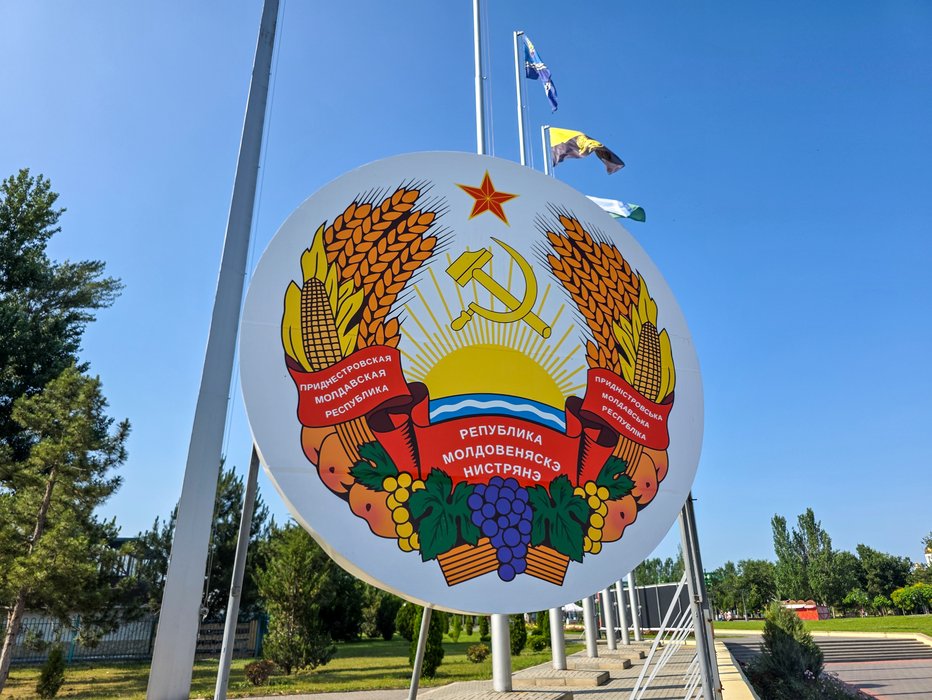
On 19th February 2026, the European Court of Human Rights (ECtHR) ruled that an entry ban imposed by Transnistrian de facto security structures on Moldovan human rights defender Alexandru Zubco in 2014 had violated his rights under the European Convention on Human Rights. The case, Zubco and Others v. the Republic of Moldova and Russia, concerned complaints by Russian and Moldovan nationals about restrictions on their freedoms of expression and peaceful assembly imposed by the de facto Transnistrian authorities, which they had been unable to challenge successfully before local courts. One of the cases addressed in the same judgment concerns six people from the Transnistrian region who were sanctioned for participating in a peaceful assembly in Tiraspol in 2018, and is discussed further in the section on freedom of peaceful assembly.
Moldova was not found responsible, as the Court reiterated that its authorities do not exercise effective control over Transnistria, an unrecognised breakaway region bordering Ukraine that has operated under de facto separate control since a brief armed conflict in 1992. The Court found Russia responsible for violations of freedom of expression, private and family life, freedom of movement, and the rights to a fair trial and an effective remedy, having determined that Russia exercised effective control over Transnistria during the period in question. Russia was ordered to pay EUR 9,000 in damages and EUR 1,920 in legal costs.
Before the ban was imposed, Zubco, who was born in Transnistria and has family there, worked with the CSO Promo-Lex to document human rights violations in the region and contributed to high-profile cases brought by the organisation before the ECtHR. Commenting on the judgment in an interview with RFE/RL, Zubco said it was important for other human rights defenders working in Transnistria and other contested territories, adding that it had created a path for them to pursue similar cases.
Freedom of peaceful assembly
Bus drivers fined after protest over improvised station
On 12th February 2026, transport operators from northern Moldova protested outside the National Agency for Motor Transport (ANTA) in Chisinau, accusing the authorities of failing to act against unauthorised passenger routes operating from an improvised station near the North Railway Station, which they claim has a negative effect on fair competition and road safety. The protest, organised by the Association of Auto Transport Operators (APOTA), saw dozens of drivers park their buses outside the ANTA building. Several participants were fined for illegal parking after the demonstration. APOTA representatives said they consider the sanctions unjustified as authorities had been informed about the protest in advance.
Political dispute over Chisinau’s budget
On 29th January 2026, councillors from the National Alternative Movement (MAN) protested outside Chisinau City Hall, displaying portraits of councillors from the Action and Solidarity Party (PAS) and Party of Socialists (PSRM). MAN, which holds a plurality of seats on the council, accused the two opposition factions of repeatedly obstructing approval of Chisinau’s 2026 budget by withdrawing budget proposals from the agenda and failing to attend council meetings. PAS and PSRM rejected the accusations, saying the municipal executive had failed to present the budget in a timely manner and accusing MAN of pressuring municipal employees.
Protest against annulment of Gagauzia elections
On 25th January 2026, dozens of people protested in central Comrat, the capital of the autonomous Gagauzia region in southern Moldova, against the Supreme Court of Justice’s decision of 20th January to annul elections for the People’s Assembly of Gagauzia scheduled for 22nd March. The protest was organised at the initiative of Mihail Vlah, an adviser to Gagauzia’s Bashkan (governor), Evghenia Guțul. In August 2025, Guțul was sentenced at first instance to seven years in prison in a case concerning alleged acceptance of illegal financing by the former Shor Party, where she served as a secretary. Her detention in March 2025 had previously sparked protests in Comrat, as reported by the CIVICUS Monitor.
‘Rave-protest’ over alleged police abuses
On 20th February 2026, a ‘rave-protest’ was held outside the Ministry of Internal Affairs in Chisinau to denounce alleged police abuses during an anti-drug raid at an electronic music event on 14th February. Protesters said police had subjected hundreds of young people, artists and students to unnecessary intimidation and stigmatisation. Organisers alleged that officers carried out body searches on more than 100 participants without individual suspicion, including searches down to their underwear. They also said that, of the more than 100 people searched and 19 taken for drug testing, only three tested positive. Police said the intervention followed operational information about drug use and was conducted in accordance with the law.
ECtHR finds violations over 2018 protest in Transnistria
On 19th February 2026, the European Court of Human Rights (ECtHR) ruled that Russia had violated the rights of six people sanctioned after participating in a peaceful social protest in Tiraspol, Transnistria, in June 2018. The participants, most of them pensioners, had criticised the social situation in the breakaway region. The following day, de facto Transnistrian authorities charged them with participating in an unauthorised assembly. A Tiraspol court fined all six, while three were detained for up to 14 days in conditions the Court found inhuman and incompatible with the European Convention on Human Rights.
The ECtHR found violations of their rights to peaceful assembly, liberty, a fair trial and an effective remedy, as well as of the prohibition of inhuman treatment due to their detention conditions. As outlined in the section on freedom of association, the case formed part of Zubco and Others v. the Republic of Moldova and Russia, in which the ECtHR jointly examined a series of complaints concerning violations of freedom of expression and peaceful assembly by de facto Transnistrian authorities. Finding that Russia had exercised effective control over the region at the time, while Moldovan authorities had not, the Court ordered Russia to pay between €9,000 and €15,000 to each applicant.
Freedom of expression
Public broadcaster head criticised over comments on investigation
On 30th December 2025, Moldovan media rights organisations criticised Vladimir Țurcanu, general director of public broadcaster Teleradio-Moldova, for publicly discrediting an investigative report by independent media project Cu Sens as “a disgrace to the profession of journalism”. The investigation examined alleged irregularities in the management of public resources at the broadcaster. The organisations said Țurcanu’s comments were defamatory and unsupported by evidence, and could contribute to a hostile environment for investigative journalism. They called on him to apologise publicly and stressed that good-faith, public-interest journalistic criticism is protected under Moldovan law and European human rights standards.
Media organisations condemn intensifying online harassment and smear campaigns
On 19th January 2026, a group of media organisations coordinated by the Centre for Independent Journalism (IJC) condemned what they described as intensifying online harassment and smear campaigns targeting independent journalists and media outlets in Moldova. The organisations highlighted recent attacks against TV8 journalist Mariana Rață and called on law enforcement agencies to investigate and hold those responsible accountable. They also urged journalists targeted by such campaigns to pursue legal remedies and reminded the public that complaints about journalists or media outlets can be addressed through the Press Council’s self-regulatory mechanisms.
The statement followed a death threat sent to Rață on 30th October 2025, shortly after a political talk show she hosted featuring politician Renato Usatîi. The sender, who identified himself as a supporter of Usatîi, said in a Facebook voice message that Rață should be stabbed in the street over questions she had asked during the interview. Rață said she regularly receives abusive messages following her broadcasts and investigations but made the threat public because of its explicit nature. She said she did not believe Usatîi was directly involved and announced that she would report the incident to police. On 31st October, the IJC and other media organisations condemned the threat and called for the perpetrator to be identified and prosecuted.
Moldova prepares new media law to align with EU standards
Moldova is currently preparing a new media law to replace legislation adopted in 1994 and bring the regulatory framework closer to EU standards. According to an analysis published by Media Azi, a platform run by the Center for Independent Journalism, in February 2026, the draft is intended to address gaps created by the rapid shift towards online media and social networks. It would establish common rules for traditional and online media and provide a clearer framework for journalists’ rights and responsibilities. The legislation would also introduce greater transparency requirements for media ownership and funding, addressing recommendations from the European Commission and Venice Commission.
However, the analysis points out unresolved issues concerning media pluralism, ownership transparency and protection of journalists. In particular, they note the definition of “journalist” should encompass people producing media content independently of established editorial structures. Moldova has committed to adopting the legislation by June 2026.
Moldovan investigative media declared “undesirable” in Russia
On 10th February 2026, Russia’s Ministry of Justice declared Moldovan investigative outlet RISE Moldova an “undesirable organisation”, following a decision by the Prosecutor General’s Office on 29th January. The designation prohibits the outlet’s activities in Russia, while Russian citizens who collaborate with or financially support it may face fines or imprisonment. Speaking to Media Azi, RISE Moldova director Iurie Sanduța described the decision as an abuse of authority and a tool to intimidate independent media. He said it could also discourage sources in Russia from cooperating with the outlet. RISE Moldova is the first Moldovan organisation to receive such a designation in Russia.
Former president discredits female journalists
On 17th February 2026, former Moldovan president and current MP Igor Dodon engaged in degrading and intimidating behaviour towards several female journalists covering a court hearing in Chișinău. According to media reports, Dodon dismissed questions from TV8 journalist Camelia Ciornocan, addressed her in diminutive terms and grabbed her hand while she was questioning him. He also reportedly placed his coat in the arms of CU SENS journalist Doina Onofrei and asked her to hold it as a “guarantee” that he would answer her questions.
In a statement, the Centre for Independent Journalism (CJI) and other media organisations said the incidents were incompatible with responsible public behaviour and showed disrespect and intimidation towards journalists. They reminded Dodon that journalists have a legitimate role in questioning public officials and urged newsrooms to strengthen reporters’ preparedness for intimidation through training and clear response protocols.