General update
Libya’s human rights record was reviewed during its fourth Universal Periodic Review (UPR) at the UN Human Rights Council in November 2025, where both government and civil society inputs were considered. International observers and NGOs highlighted ongoing challenges, including restrictions on freedom of expression and association, the harassment and detention of journalists and activists, and barriers to peaceful assembly. The review stressed the need for stronger legal protections, accountability, and respect for civic freedoms, drawing attention to persistent impunity and structural obstacles that continue to limit independent media and civil society activity in the country.
Libya’s political track gained renewed activity on 14th–15th December 2025 when the United Nations Support Mission in Libya (UNSMIL) convened the first session of a nationwide consultative process in Tripoli aimed at fostering consensus ahead of elections and institutional unification. Framed as an advisory mechanism rather than a body empowered to appoint authorities, the initiative seeks to generate practical proposals to ease political fragmentation and improve governance conditions. In January 2026, thematic working groups, including governance, security, the economy, reconciliation, and human rights, began substantive discussions, with the governance track examining arrangements for a pre-election framework, the role of an interim executive, and safeguards for electoral credibility.
Amid persistent challenges to the rule of law and accountability in Libya, the Committee for Justice (CFJ) reported to the United Nations Human Rights Council during its 61st session on 14th March 2026 that arbitrary arrests and detention without judicial oversight remain widespread. Many individuals continue to be held without warrants or access to legal procedures, often in facilities controlled by armed actors, while authorities repeatedly fail to enforce orders for their release. CFJ emphasised that these practices undermine the rule of law and perpetuate impunity, and called on Libyan authorities to ensure that all detentions comply with legal standards and respect fundamental rights.
Peaceful Assembly
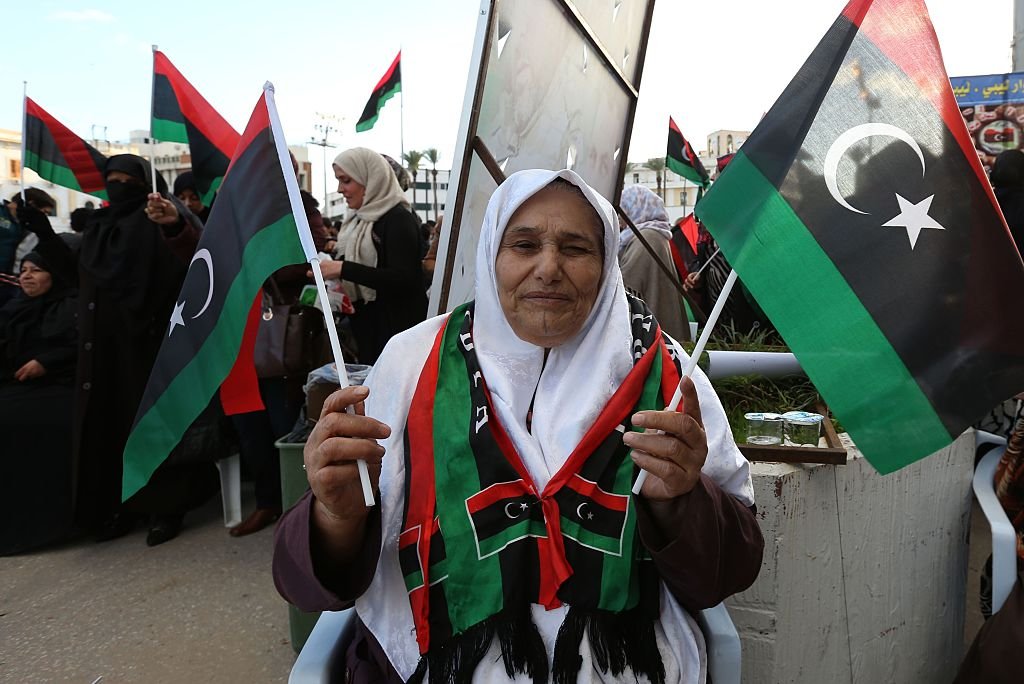
Peaceful protests to demand immediate presidential elections took place on 28th November 2025 in eastern and southern cities, including Benghazi, Derna, Tobruq, Al‑Bayda, Al‑Marj, Ajdabiya, and Al‑Jawf/Kufra. Citizens gathered to call for a swift electoral process to end years of political deadlock, stressing the importance of inclusive and transparent elections. The demonstrations remained peaceful, with local authorities deploying security forces to ensure order while allowing citizens to exercise their right to protest.
More protests were held on 27th December 2025, when citizens in Tripoli and Misrata held peaceful demonstrations calling for political reform and timely elections. Protesters demanded a constitutional referendum, an end to the transitional phase, and the resignation of the Government of National Unity (GNU), the interim executive managing Libya’s transition since the 2021 ceasefire. They voiced frustration over corruption, slow reforms, and worsening economic and security conditions. In early January 2026, these protests continued and spread to other cities, including Zawiya, as citizens mobilised to challenge the GNU’s legitimacy and press for concrete progress toward elections.
Concerns over Libya’s sovereignty prompted a peaceful protest on 5th January 2026 outside the United Nations Support Mission in Libya (UNSMIL) headquarters in Janzour. Demonstrators criticised the UN mission for perceived interference in domestic affairs, blaming the mission for prolonging political deadlock and obstructing electoral processes, and called for respect for Libya’s independence, while urging international actors to allow Libyans to manage their own political and economic decisions. In December 2025, Libya’s parliament had confirmed that the first presidential election would not go ahead as planned, leaving the peace process hanging in the balance.
Separately, on 5th February 2026, displaced residents and youth from eastern Libyan cities staged a peaceful sit‑in in front of the High Council of State headquarters in Tripoli, calling for redress and accountability for violations affecting their communities. The protesters demanded their right to a dignified life, improved living conditions, concrete measures guaranteeing their return to their towns and villages, and fair and adequate compensation for violations suffered.
Expression
Several Libyan and international human rights organisations have called for an independent and impartial investigation into violations committed against journalists in Libya, denouncing the persistent impunity surrounding attacks on the press. In a joint statement issued on 8th November 2025, the groups urged the immediate release of media professionals detained for their reporting or for their political opinions and demanded accountability for those responsible for restricting press freedom. The statement further noted that more than 40 journalists and bloggers were killed in Libya between 2005 and 2025, with others subjected to abduction and torture, while perpetrators have largely escaped justice.
Growing concerns about press freedom intensified in Libya in early December 2025 when journalists in Tripoli reported receiving direct warnings from the Foreign Ministry that their accreditation could be revoked if they did not cover all official government activities scheduled for 2026. The message, reportedly sent by Badr Shaniba, Director of the Foreign Information Department at the Libyan Foreign Ministry, was conveyed through an official WhatsApp communication channel and was widely interpreted by media professionals as an attempt to compel coverage of government announcements and limit independent editorial judgment.