Malaysia’s civic space continues to be rated as ‘obstructed’ by the CIVICUS Monitor. Among ongoing concerns are the array of restrictive laws, especially the Communication and Multimedia Act 1998 (CMA) and the Sedition Act, that have been used to silence online dissent and to harass human rights defenders. Critical news websites and blogs have been blocked. Peaceful protesters have been hauled in by the police for questioning under the Peaceful Assembly Act. Malaysia has also yet to ratify the International Covenant on Civil and Political Rights (ICCPR).
The government has failed to address the rise in online hate speech, harassment, and threats targeting refugees, undocumented migrants, stateless persons, and other marginalised communities, including calls for the expulsion of Rohingya refugees from the country. In July 2026, the deputy foreign minister informed parliament that 5,000 Myanmar nationals in immigration detention would be sent back to Myanmar, where they could face persecution and other rights abuses
In recent months, podcasters have been arrested, and an environmental activist and student activist were questioned. There are concerns over the cybercrimes law and Freedom of Information (FOI) Bill that are inconsistent with international human rights standards. Activists have been barred from travel and had their accounts frozen. Land rights activists are facing prosecution.
Expression
Student activist investigated for statement
Brendon Gan akan disiasat di bawah Seksyen 506KK dan Seksyen 233 AKM, 5 Jun ini di IPD Brickfields.
— Mandiri - Pusat Pembangunan Rakyat (@MandiriMY) June 3, 2026
Mandiri berdiri bersama saudara Brendon Gan dan menegaskan bahawa hak untuk bersuara tidak boleh dikompromi oleh sebarang bentuk tekanan.#solidaritibrandon #mandirimy pic.twitter.com/6CXN5hBAHp
A student activist was investigated in June 2026 for a statement he issued critical of the government.
Activist Brendon Gan, the Himpunan Advokasi Rakyat Malaysia chairman, said the investigation centred on a statement he issued after meeting higher education minister Zambry Abdul Kadir and other ministry officials. He said his remarks focused on purported weaknesses in the Universities and University Colleges Act (AUKU), which he claims “codifies corruption” and restricts student freedoms. He also pointed to procurement and tender irregularities at Universiti Kebangsaan Malaysia (UKM), including direct negotiations and approvals allegedly made without proper oversight.
Gan, a third-year law student at UKM, is being investigated for criminal intimidation (Section 506 of the Penal Code) and the improper use of network facilities (Section 233 of the Communications and Multimedia Act 1998).
The University Malaya Association of New Youth (UMANY) condemned the probe, claiming it was part of a wider pattern of action against student activities. UMANY maintained that criticism of university governance should not be treated as a criminal matter.
Two podcasters arrested by police
Podcasters arrested over 'liberal' views: Where does M'sia draw the line on free speech? https://t.co/3ATqpzb1XL
— malaysiakini.com (@malaysiakini) August 11, 2026
In August 2026, two podcasters were arrested following a report received regarding a podcast episode that aired on 2nd July 2026 discussing issues of race and religion.
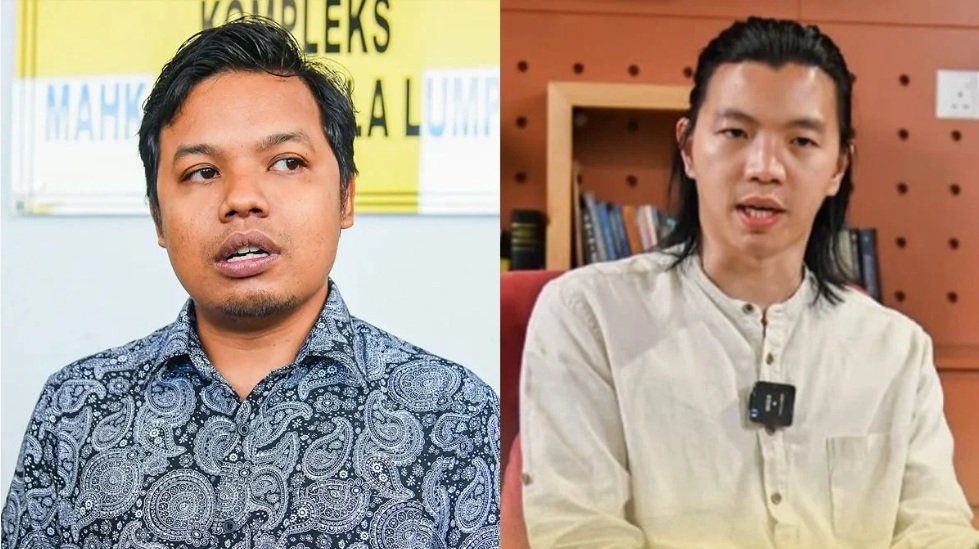
Bryan Kong, host of the “Let’s Get It” podcast, and Shamsul Saad of “The Gut Shot” podcast were arrested on 6th August after police launched an investigation into Episode 141 of Kong’s podcast. Police said the pair were arrested over a video clip of the two men discussing ‘secularism and liberalism’.
Bryan was arrested at his home by a team of police officers and later taken to the North Klang District Police Headquarters for questioning. Several electronic devices, including his laptop and mobile phone, were seized for forensic examination. Shamsul was detained when he arrived at the police station, accompanied by his lawyer Siti Kasim.
The case was investigated under Sections 298 (uttering words with the intent to wound religious feelings and causing disunity on grounds of religion), 504 (intentional insult with intent to provoke a breach of the peace), and 505(c) (intent to incite or which is likely to incite any class or community of persons) of the Penal Code, Section 233 (improper use of network facilities) of the Communications and Multimedia Act 1998, and Section 4(1) of the Sedition Act 1948.
They were remanded for two days before being released.
Human rights group HAKAM called for the investigations to cease, stating that “continuing to pursue individuals for their participation in public discourse, when clear evidence of a criminal offence is absent, would further undermine the government’s commitment to freedom of expression.”
Environmental activist facing investigation
Environmental activist Shakila Zen has been summoned by the police over a social media posting which allegedly defamed the Pahang royal institution.
— malaysiakini.com (@malaysiakini) July 28, 2026
Persatuan Aktivis Sahabat Alam (Kuasa) said the probe against Shakila (above) is being conducted under Section 500 of the Penal… pic.twitter.com/P6GoxZMIMr
In August 2026, environmental activist Shakila Zen was summoned by police over a social media posting which allegedly defamed the Pahang state royal institution.
The probe against Shakila is being conducted under Section 500 of the Penal Code (intentional insult with the intent to provoke a breach of the peace) and Section 233 of the Communications and Multimedia Act 1998 (CMA). According to reports, the probe was related to a post on 10th May 2026, in which she was alleged to have linked the Pahang royalty to sand mining activities.
Shakila alleged that when she was questioned on 7th August 2026, she was initially prevented from having her lawyers accompany her. She claimed police had told her that barring lawyers from entering was a standard procedure and she alleged that her lawyer was even threatened with having his statement recorded as a witness.
Police also attempted to prevent a planned solidarity gathering for Zen by civil society at the police station by trying to change the date for questioning at the last minute.
Journalist faces lawsuit from company for opinion piece
In July 2026, the Malaysian Resources Corporation Berhad (MRCB) and its executive vice-chairperson, Salim Fateh Din, filed a an excessive RM100 million (USD 24.45 million) defamation lawsuit against veteran journalist P. Gunasegaram over an opinion piece on an urban rail project.
According to the Committee to Protect Journalists (CPJ), the lawsuit, filed in the Shah Alam High Court on 29th July 2026, stems from a 3rd July post on Gunasegaram’s Facebook page that linked to an opinion piece he wrote for KINIBIZ, titled “LRT3 Shah Alam line welcome but questions on costs, delays remain.”
The claim said Gunasegaram’s article had implied that the company had “obtained the LRT3 Project through the practice of cronyism, political patronage and political connections,” and that these factors contributed to cost overruns and delays in the project’s implementation.
Gunasegaram, an independent journalist who co-founded KINIBIZ in 2013 and is published in outlets such as Malaysiakini, has defended the article as constituting fair comment on a matter of great public interest.
CPJ’s Asia-Pacific Program Coordinator Kunal Majumder said: “The massive civil defamation lawsuit against veteran journalist P. Gunasegaram is unreasonable and an attack on press freedom. Companies involved in public projects must respect news commentary and should settle legitimate grievances through the Malaysia Media Council’s dispute resolution mechanism, rather than intimidating journalists through the courts.”
Concerns over the cybercrimes law
In June 2026, ARTICLE 19, the Centre for Independent Journalism (CIJ), and Sinar Project raised concerns over the Cybercrimes Bill 2026, warning that it could pose significant threats to freedom of expression online and have adverse implications for media organisations, journalists, and broadcasters in Malaysia. Despite these concerns, the bill was passed on 1st July 2026.
The proposed legislation replaces the Computer Crimes Act 1997 and introduces offences covering, among others, identity theft, computer-related fraud and forgery, the transmission of manipulated content, and the dissemination of intimate images.
Although Malaysia is a signatory to the United Nations Convention against Cybercrime, the law does not adequately incorporate the Convention’s human rights safeguards and procedural guarantees. In particular, Article 6 of the Convention requires States Parties to ensure that the implementation of their obligations is consistent with international human rights law. The organisations therefore expressed concern that the law fails to provide sufficient safeguards for human rights and fundamental freedoms, particularly the rights to freedom of expression and privacy.
The groups raised concerns that the law would enhance the powers of both the Malaysian Communication and Multimedia Commission (MCMC) and the communication minister, allowing them to operate without adequate oversight and effectively control and enforce censorship.
In a preliminary analysis, they identified several areas of serious concern and also the lack of adequate human rights and procedural safeguards, such as: it lacks prior judicial authorisation for surveillance and data access, search and seizures, there are no clear limits on data retention, and it does not provide explicit protection for privileged communications, such as journalists’ sources.
Additionally, the investigative powers are disproportionate and excessive, the sanctions regime is inflexible, and there is no independent oversight to prevent state overreach and censorship. Collectively, these provisions risk undermining freedom of expression, privacy, due process and media freedom while exceeding what is necessary and proportionate to address legitimate cybercrime.
FOI bill promotes secrecy rather than openness and transparency
In July 2026, human rights groups raised concerns over the Freedom of Information (FOI) Bill that was tabled in parliament.
The Centre for Independent Journalism (CIJ), ARTICLE 19, Center to Combat Corruption and Cronyism (C4 Center) and other civil society organisations (CSOs) said the bill was deeply flawed and regressive and appears designed to promote secrecy rather than openness and transparency.
According to civil society, the bill excludes key principles essential to any comprehensive FOI framework: it fails to specify the primacy of the right to information and omits the presumption of maximum disclosure. Instead, it creates only a tightly controlled administrative procedure for requesting information while preserving virtually every existing barrier to disclosure.
Instead of creating a right of access and presumption of maximum disclosure, the FOI Bill preserves the Official Secrets Act 1972 (OSA) in its entirety and excludes from its operation every document or category of information protected under any other written law.
The FOI Bill limits access to prescribed purposes and, in many cases, requires applicants to demonstrate a ‘proper and tangible interest’. The Bill further compounds this by creating criminal liability for applicants who use information for a purpose different from the one originally stated in their request.
The most alarming provision is Clause 22, which declares that nothing in the Act shall be construed as constituting a fundamental liberty under Part II of the Federal Constitution. The oversight body lacks independence and authority.
The FOI Bill has since been referred to a parliamentary special select committee for further scrutiny.
Association
NGO executive director barred from entering Sabah state
When Asraf Sharafi Azhar boarded a flight headed to Kota Kinabalu yesterday evening, he was looking forward to one thing: reuniting with his wife and two children, all three of whom are Sabahans.
— malaysiakini.com (@malaysiakini) July 1, 2026
However, upon arriving at the airport at 7pm, the Bersih director - who is from the… pic.twitter.com/01kQlWmNDX
On 30th June 2026, the executive director of the Coalition for Clean and Fair Elections (BERSIH) and human rights defender Asraf Sharafi Mohammad Azhar was restricted entry to the state of Sabah and placed under a Sabah Warning Notice (NAS).
Asraf had travelled to Sabah to visit his wife and children in Kota Kinabalu, the capital of Sabah state. Prior to this he was involved in submitting a memorandum to the government calling for the establishment of a Royal Commission of Inquiry (RCI) into alleged corruption in the Malaysian anti-corruption commission. The ban came four days before an anti-corruption rally in the state.
As of August 2026, despite relentless attempts, Asraf has failed to get an answer from the Sabah Chief Minister’s Office and the state immigration authorities.
Activists targeted with travel bans and frozen bank accounts
📍MALAYSIA
— Front Line Defenders (@FrontLineHRD) September 17, 2026
🚨HRDs Amir Abd Hadi & Chew Chuan Yang and their organisations MANDIRI & HAYAT face frozen bank accounts and travel bans in reprisal for their human rights work.
FLD calls for the restrictions to be lifted.
🔗https://t.co/g88o9SQYFi pic.twitter.com/tn1QtbVUZE
In early September 2026, a youth-led NGO was hit with travel bans and frozen bank accounts.
On 3rd September 2026, MANDIRI executive director Amir Hadi said he was barred from leaving the country after checking his status through the MyBorderPass app. He did this after MANDIRI finance director Dobby Chew encountered difficulties returning from Jakarta. Chew was told there was a restriction imposed by the Bukit Aman police headquarters but eventually he was allowed to enter Malaysia.
Subsequently, about a week later, Amir found out that his personal bank account was frozen under the Anti-Money Laundering, Anti-Terrorism Financing and Proceeds of Unlawful Activities Act 200 (AMLA). He also said he had not been summoned by the police in connection with any investigation.
Amir also found out that MANDIRI’s accounts had been frozen, together with the personal bank account of MANDIRI finance director Dobby Chew and that of HAYAT, managed by Chew.
The authorities’ harassment of MANDIRI started in May 2026 after a call by Kamil Munim, political secretary to the finance minister and chief of the youth wing of the People’s Justice Party (PKR), for an investigation into alleged foreign funding that had been channelled to organisations, individuals, and politicians. Munim urged the authorities to carry out the investigations in the interest of protecting national security from political activities.
MANDIRI is a youth-led civil society organisation founded in 2024 to empower young people and strengthen democratic participation in Malaysia. They have been at the forefront of protests calling for accountability from the government.
HAYAT is an organisation advocating for rehabilitative and restorative justice, with a focus on decarceration, drug policy reform, and the total abolition of the death penalty.
Government plans to repeal restrictive university law
In August 2026, the government said it would repeal the Universities and University Colleges Act 1971 (UUCA or AUKU) after 55 years.
The law, which allows for governmental control over universities, has faced persistent calls for abolition due to its restrictions on student rights and autonomy. Despite amendments over the years to relax certain restrictions, students and advocacy groups continue to demand further reforms for greater freedom of expression.
The UUCA was legislated following a wave of student unrest in the early-to-mid 1970s, when university students were among the country’s most vocal critics of poverty and inequality.
The law allowed for the summary suspension or expulsion of students and granted the education minister sweeping powers on the appointment of vice-chancellors and the direct appointment of university council members.
Successive governments began relaxing these constraints starting in 2009. Criminal penalties were removed, and a 2012 amendment allowed students to join political parties. By 2018, students were permitted to participate in political activities within their own campuses.
Despite these concessions, the UUCA remained punitive. Vice-chancellors still held broad powers to dissolve student groups or punish those deemed to be acting against the university’s interests.
While student leaders have welcomed the announcement, the mood remains one of cautious optimism. Groups are now pushing for concrete legislative action rather than verbal promises.
The national human rights body, SUHAKAM said that this marks an important step towards a higher education environment that upholds academic freedom, institutional autonomy, freedom of expression and association, and meaningful student participation.
Peaceful Assembly
Land rights activists facing prosecution
Instead of granting farmers land they were promised, authorities evicted and brought criminal charges against them.
— ARTICLE 19 (@article19org) August 6, 2026
Malaysia must support people standing up for food security, community livelihoods, human rights + land rights – not try to silence them.https://t.co/7FkNCvIg23
The authorities are planning to pursue criminal charges against three human rights defenders and a local farmer in connection with their peaceful opposition against a forced eviction by the Perak state government in October 2023.
According to ARTICLE 19, on 28th July 2026, police reportedly informed Malaysian Socialist Party (PSM) chairperson Dr Jeyakumar Devaraj, PSM Sungai Siput branch secretary Karthiges Manickam, PSM Hulu Kinta branch secretary Kesavan Parvathy, and farmer Ho Pon Tien that they were required to appear in court on 31st July.
They were further informed they were to be charged under Section 186 of the Penal Code for allegedly obstructing public servants from discharging their duties – a clause that carries a penalty of up to two years’ imprisonment and/or a maximum fine of RM10,000 (approximately USD 2,446). The court appearance has since been postponed, with a new date yet to be fixed.
As previously documented, the pending charges stem from an incident on 24th October 2023, where officials from the Perak State Land and Minerals Office (PTG) forcibly evicted farmers from the Kanthan area in the state of Perak using bulldozers and excavators. When the farmers, supported by human rights defenders from PSM, tried to prevent them from entering the area, the police arrested four individuals, and activists and farmers were injured during the eviction process.
In a related case, PSM activist Yee Shan’s trial began in August 2026. Yee Shan was charged under Section 186 for also trying to block a forced eviction of farmers by the Perak state government in October 2023. She was shoved by an officer from the Land and Minerals Office when she tried to stop the eviction. The incident was captured on video. She suffered injuries to her nose and mouth, as well as wounds on her legs and hands and required medical treatment.
Activists call for clear timeline to amend Peaceful Assembly Act
In August 2026, around 20 activists gathered outside the home ministry to protest what they described as the government’s slow progress in reforming the Peaceful Assembly Act 2012 (PAA).
The activists were members of civil society groups including MANDIRI, Himpunan Advokasi Rakyat Malaysia (HARAM), SUARAM and BERSIH.
MANDIRI programme officer Wong Kueng Hui said the groups submitted a memorandum and met home minister Saifuddin Nasution Ismail in September 2025, at which point they were promised further engagement with stakeholders on the proposed reforms. However, he claimed there had been no meaningful follow-up since then.
In their memorandum, the activists called for a stakeholder engagement committee on PAA reforms and the adoption of 10 UN principles and guidelines on peaceful assemblies, among other measures.
As previously documented, in July 2025, the Federal Court declared Section 9(5) of the PAA unconstitutional for criminalising peaceful assembly organisers who fail to give five days’ notice to the police. The Court found the provision inconsistent with the constitutional right to peaceful assembly under Article 10(2)(b) of the Federal Constitution (FC) read together with Article 8(1) of the FC. It found the provision to be disproportionate, discriminatory, and tantamount to a prohibition rather than a restriction.
In January 2026, the government agreed to amend a provision in the Peaceful Assembly Act (PAA).