This update covers developments relating to the freedoms of expression, association and assembly in Honduras from November 2025 to February 2026.
Context
Political violence, deep polarisation and institutional crisis mar electoral process
On 30th November 2025, Honduras held general elections to elect the president and three presidential designates (vice presidents), the 128 members of the National Congress, the councils of 298 municipalities, and indirectly, the country’s 20 representatives to the Central American Parliament (PARLACEN). The vote took place amid public accusations of fraud, deep political polarisation and longstanding mistrust in electoral institutions, rooted in part in the 2009 coup and the disputed 2017 elections. The presidential race centred on Rixi Moncada of the ruling Liberty and Refoundation Party (LIBRE), Nasry Asfura of the conservative National Party (PNH) and Salvador Nasralla of the centrist Liberal Party (PLH).
According to International IDEA, four major risks shaped the electoral cycle: political capture and paralysis within electoral institutions, disinformation and foreign interference, political violence and pressure from organised crime, and technical failures compounded by the exceptionally narrow presidential margin. International IDEA identified interference by US President Donald Trump as a significant concern.
Shortly before the elections, Trump publicly endorsed National Party candidate Nasry Asfura and suggested that future US financial support for Honduras could depend on an Asfura victory. He also announced plans to pardon former President Juan Orlando Hernández, who was then serving a 45-year prison sentence in the United States following his conviction on drug-trafficking and firearms charges. Trump granted the pardon on 1st December 2025, raising concerns among human rights defenders and civil society organisations that the decision could further entrench impunity in Honduras, given the longstanding allegations of corruption, links to organised crime and human rights violations associated with Hernández’s presidency.
Political pressure on electoral authorities intensified in the weeks before the vote. For example, on 10th November 2025, the Public Prosecutor’s Office initiated criminal proceedings against Electoral Justice Tribunal (TJE) magistrates Miriam Suyapa Barahona Rodríguez and Mario Alberto Flores Urrutia for alleged judicial prevarication linked to decisions ordering the registration of congressional candidates. Prosecutors accused them of issuing unlawful decisions that ordered the registration of Jorge Cálix and Cristian Villalobos as congressional candidates without following the required internal procedure. Human Rights Watch raised broader concerns about prosecutorial actions and political disputes that affected the independence and functioning of both the TJE and the National Electoral Council (CNE).
These pressures unfolded alongside political violence. The human rights organisation Cristosal, which monitored the period from September 2024 to January 2026, documented 82 acts of political violence affecting 68 victims, including candidates, members of Congress, electoral authorities and observers, and journalists (see Expression). The incidents included attacks on life and physical integrity, electoral coercion, manipulation of judicial proceedings, gender-based violence and symbolic violence. Cristosal attributed eight deaths to political violence, including six male candidates for municipal or congressional office from the National and LIBRE parties, a six-year-old boy taking part in a LIBRE supporters’ caravan, and one female activist (see Association).
Women also faced gender-based violence and intimidation throughout the electoral cycle. The Electoral Early Warning System (SAT-E), led by the National Commissioner for Human Rights of Honduras (CONADEH), registered 61 reports of electoral violence with a gender dimension, of which it verified 52, including cases of intimidation, threats and institutional pressure. Research by Conexihon, a platform of Honduran press freedom organisation C-Libre, also found that women accounted for 57.6 per cent of victims in politically motivated incidents in which the victim’s gender was identified. None of the incidents documented during the electoral period resulted in sanctions.
Election day itself was comparatively peaceful and orderly, with a turnout of 60.19 per cent. In early December 2025, the EU Election Observation Mission (EU EOM) concluded that voting was peaceful and rated procedures as good or very good in 97 per cent of the polling stations it observed. The Organisation of American States (OAS) Electoral Observation Mission similarly found that voting generally proceeded normally, with some exceptions (see Expression).
Preliminary results released on election night placed Asfura in the lead with around 41 per cent of the vote, ahead of Salvador Nasralla on approximately 39 per cent. The margin later narrowed, and the lead changed hands during the weeks-long count. Delays, technical failures and institutional disputes disrupted the counting process, while the special scrutiny triggered escalating confrontation and several incidents of violence (see Peaceful Assembly).
The OAS documented additional incidents around the counting facilities that forced its observation teams to withdraw temporarily on 15th, 20th and 23rd December. The Mission also condemned harassment and violence directed against women working as polling officials during the special tally. The EU EOM similarly reported that protests, occasional acts of violence, boycott and sabotage repeatedly disrupted the special scrutiny, with some recounts taking many hours longer than anticipated.
On 24th December, the CNE declared Asfura the winner with 40.27 per cent of the vote, narrowly ahead of Nasralla with approximately 39.53 per cent, while Moncada finished third with 19.19 per cent. On 30th December, the results of the municipal elections and the National Congress were announced. LIBRE increased the number of municipalities it controlled from 48 to 69. In Congress, the PNH and PLH together hold 90 seats, above the 86-vote threshold required for a qualified majority in key institutional decisions and high-level appointments.
Tensions continued after the CNE certified the presidential result. On 8th January 2026, a homemade explosive device injured National Party lawmaker Gladis Aurora López in the head and back near Congress during continuing disputes over the election. Although LIBRE supporters were demonstrating outside, available information did not identify who threw the device.
Despite these incidents and significant technical and institutional shortcomings, the EU and OAS missions said they found no evidence that the problems compromised the integrity of the election. In March 2026, the EU EOM issued its final report with 24 recommendations to strengthen future electoral processes.
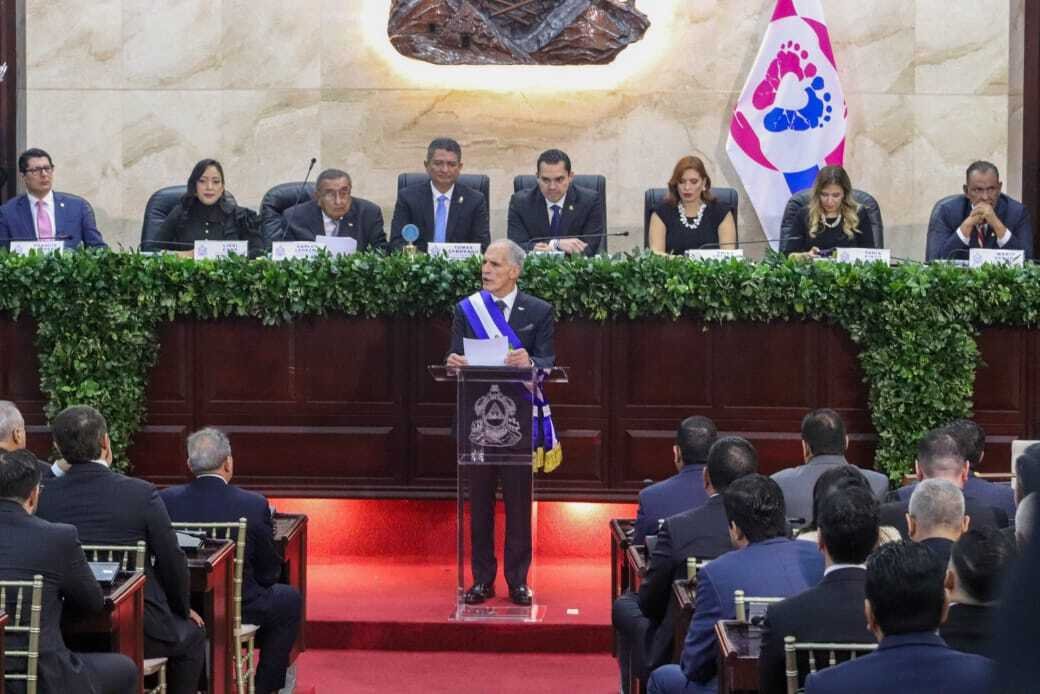
On 27th January 2026, Asfura was sworn in as president of Honduras.
Honduras election faces uncertainty as officials review disputed tally sheets, with outgoing President Xiomara Castro calling the situation an ‘electoral coup’ https://t.co/ngHHV7bTKY pic.twitter.com/qYlzAzRX4D
— Reuters (@Reuters) December 11, 2025
Three-year state of emergency ends amid reports of serious human rights violations
On 26th January 2026, the state of emergency ended (Executive Decree No. PCM-039-2025) after over three years in force through 25 successive renewals. As previously reported, it was introduced by the President of Honduras on 6th December 2022 as a key strategy to combat extortion and organised crime violence, particularly in urban areas affected by gangs. It suspended constitutional guarantees, including rights relating to personal liberty, association, peaceful assembly and movement, while allowing security forces to carry out arrests and searches without judicial warrants. The government maintained that the measure was necessary and effective, pointing in particular to a decline in homicides.
In February 2026, the Office of the UN High Commissioner for Human Rights (OHCHR) reported that authorities increasingly treated it as their principal strategy for combating crime, and that during 2025 alone, the executive adopted eight decrees extending the state of emergency, none of which were approved by the National Congress. OHCHR concluded that the measure had consequently lost its exceptional and temporary character and found no clear causal link between the emergency powers and declining levels of violence and crime rates.
The prolonged use of emergency powers also raised concerns over legality, necessity, proportionality and effective oversight. Honduras’s national human rights institution, the National Commissioner for Human Rights (CONADEH), repeatedly identified significant weaknesses in legislative and judicial scrutiny and found that the authorities had not sufficiently demonstrated that successive extensions remained necessary and proportionate when less restrictive alternatives were available. CONADEH received over 1,000 complaints against members of the security forces between December 2022 and November 2025, including cases of enforced disappearances, extrajudicial executions and arbitrary detentions.
Association
Land defenders killed, attacked, and threatened as violence escalates in Bajo Aguán
On 12th December 2025, unidentified assailants killed Roger Alexis Castillo Fuentes, a land rights defender and member of the Cooperativa Camarones, in the Bajo Aguán region of Colón. The Agrarian Platform (Plataforma Agraria)—a network of organisations working on access to land, food sovereignty and agrarian reform—and the Coordination of Popular Organisations of the Aguán (Coordinadora de Organizaciones Populares del Aguán, COPA)—a coalition of labour unions, community organisations and campesino collectives—attributed the killing to people linked to the organised crime group known as ‘Los Cachos’ gang, which they allege operates on behalf of private interests. The group had occupied land claimed by Cooperativa Camarones as part of an ongoing agrarian dispute.
Castillo’s killing followed a failed attempt on 8th December 2025 to enforce a judicial eviction order against members of ‘Los Cachos’ occupying the cooperative’s land. More than 1,000 police officers took part in the operation in Quebrada de Arena, while around 400 campesinos, including members of the Camarones, El Chile and El Tranvío cooperatives, travelled to the area expecting that the authorities would restore possession of the land to the displaced families. According to media reports, people supporting the occupying group attacked the convoy with stones and other weapons, injuring over 20 people, including Wendy Castro, deputy coordinator of the Agrarian Platform. Police subsequently withdrew, and the displaced families remained unable to return to their land. Although the National Police maintained that officers had secured the property, local organisations disputed this account and criticised the authorities for failing to protect the families and enforce the judicial order.
The failed operation occurred nearly a year after forced displacement affecting Cooperativa Camarones. In December 2024, armed individuals reportedly expelled more than 160 families from their land, preventing them from safely returning to their homes and farms. In May 2025, the Public Prosecutor’s Office filed criminal charges against 15 alleged members of ‘Los Cachos’ for offences including forced displacement, unlawful deprivation of liberty, aggravated assault and criminal association. Prosecutors stated that members of the affected cooperatives, affiliated with Plataforma Agraria and COPA, held land titles issued approximately 30 years earlier by the National Agrarian Institute (Instituto Nacional Agrario, INA). They also reported that the criminal group had subjected cooperative members to death threats, shootings, abductions and torture in an attempt to seize control of the land.
Campesino organisations repeatedly called on the authorities to enforce the judicial order and restore the families’ access to the land. For example, from 8th to 14th October 2025, over 170 people travelled from Tocoa to Tegucigalpa, where they established a ‘Camp for Justice and Land’ outside the Supreme Court. They demanded that the authorities enforce the eviction order and guarantee the safe return of Cooperativa Camarones families to their land.
On 31st December 2025, images circulated showing an effigy bearing the face and name of land rights defender Yoni Rivas, spokesperson for the Agrarian Platform, in Quebrada de Arena, accompanied by a sign reading ‘for going around invading land’ (“por andar invadiendo tierras”). People reportedly burned and destroyed the effigy during end-of-year festivities. In response, on 2nd January 2026, the Agrarian Platform denounced the incident as part of an ongoing campaign of death threats, incitement to violence and public stigmatisation targeting Rivas and other members of its leadership.
On 17th January 2026, members of the criminal group known as ‘Los Pechugas' reportedly killed Marvin Ramírez Ramos, a member of Cooperativa Nueve de Agosto, during an attack on the cooperative in Bajo Aguán. According to reports, armed men entered the cooperative and opened fire, forcing several residents to flee into the surrounding countryside. The assailants also reportedly threatened women and children at gunpoint and forcibly displaced dozens of families. Military Police officers later expelled the armed group from the area, allowing families to return to their homes the following morning. Residents, who had reported Ramírez missing during the attack, subsequently found his body.
The killing occurred days after the National Council for the Supervision of Cooperatives (Consejo Nacional Supervisor de Cooperativas, CONSUCOOP), the state institution responsible for overseeing cooperatives, granted legal personality to Cooperativa Nueve de Agosto alongside other campesino cooperatives in the region. The decision formally recognised the cooperative as a legal entity, strengthening its ability to pursue land claims arising from agrarian reform.
These incidents occurred amid a long-running and increasingly violent agrarian conflict in the Bajo Aguán, described as one of the most violent in Latin America. For decades, campesino cooperatives have contested land ownership with large landholders and agro-industrial interests. Civil society organisations have reported that the conflict has contributed to at least 200 killings since 2010, while campesino communities have also faced criminalisation, including prosecutions for alleged land usurpation and related offences. They have also reported extrajudicial evictions, attacks and threats involving armed criminal groups, private security personnel and other non-state actors, alongside allegations of state acquiescence and persistent impunity.
According to the UN High Commissioner for Human Rights’ 2025 report on Honduras, the Office documented 17 violent deaths, including 13 land defenders and their family members, two journalists, an environmental defender and his son. This represented a significant increase compared with 2024, when the Office documented seven violent deaths.
Miskito Indigenous rights defender attacked in La Ceiba
On 21st February 2026, several men attacked and seriously injured Modesto Morales, a Miskito Indigenous rights defender, in La Ceiba, Atlántida. According to media reports, the assailants beat Morales and inflicted a deep wound to his throat, causing a serious tracheal injury and significant blood loss. Doctors at Hospital Atlántida provided emergency treatment, and Morales subsequently underwent surgery. Morales demanded justice and protection for himself and his family.
At the time of the attack, Morales said he was in La Ceiba to assist with cases involving Miskito community members that government authorities were due to address. Morales is a representative of Muskiti Asla Takanka (MASTA) and a longstanding defender of the collective rights of the Miskito people, including territorial rights, environmental protection and access to justice in La Mosquitia, eastern Honduras.
A few days later, the Committee for Free Expression (C-Libre) condemned the attack and urged the Public Prosecutor’s Office to conduct a prompt, thorough, independent and impartial investigation, including any possible connection with Morales’ human rights activities. The Honduran Committee for the Defence of Human Rights (CODEH) also condemned the attack.
🔴#SanPedroSula | El CODEH condena ataque contra el defensor de derechos humanos de los indígenas, Modesto Morales. https://t.co/ohvWq5R8d4
— TSiHonduras (@TSiHonduras) February 22, 2026
COPINH faces armed attack and coordinated digital harassment amid threats against Indigenous rights defenders
On 24th November 2025, an unidentified individual opened fire at the Centro de Encuentros y Amistad ‘Utopía,’ a facility operated by the Civic Council of Popular and Indigenous Organisations of Honduras (Consejo Cívico de Organizaciones Indígenas y Populares de Honduras, COPINH) in La Esperanza, Intibucá, while members of the organisation were carrying out activities inside. No one reportedly sustained injuries. COPINH condemned the attack and called for an investigation.
On 28th November 2025, Front Line Defenders also condemned the incident and expressed concern about the risks facing COPINH, particularly as its members monitored the electoral process ahead of the 30 November general elections (see Context). COPINH is a Lenca Indigenous organisation that defends territorial rights. Its members have faced longstanding threats and intimidation linked to their human rights work.
The attacks occurred amid continued efforts to secure accountability for Berta Cáceres’s murder in March 2016. On 12th January 2026, the Independent Group of Experts (GIEI) concluded that her killing resulted from a planned criminal operation involving hired killers, intermediaries with military training and senior personnel of the company behind the Agua Zarca hydroelectric project. The investigation also identified state officials’ roles in facilitating impunity through acts of omission, tolerance and concealment. The GIEI found that authorities had received real-time information about the murder plot but failed to intervene, making the killing foreseeable and preventable. It further linked the violence to violations of the Lenca community’s collective territorial rights and the imposition of the Agua Zarca project without free, prior and informed consultation.
In a separate incident, on 26th February 2026, COPINH denounced a sustained campaign of digital intimidation, threats and defamation targeting the organisation and Cáceres’s daughters and son ahead of the tenth anniversary of her murder. COPINH alleged that members of the Atala family, allegedly linked to Cáceres’s murder, had participated in or promoted the campaign through websites, social media accounts, paid bots, AI-generated content, manipulated images and threatening videos. COPINH accused those involved of seeking to discredit its members, intimidate Cáceres’s family and undermine their efforts to secure justice for her murder. COPINH urged the authorities to investigate the allegations and identify those responsible.
On 3rd March 2026, independent media outlet Contra Corriente published an investigation into the campaign, identifying a network of approximately 72 X accounts, including one allegedly linked to the Atala family. Contra Corriente reported that the campaign had circulated at least 3,628 hostile posts on X and Facebook between December 2023 and April 2025. The investigation also documented at least 47 instances in which social media accounts disclosed confidential security information concerning COPINH and Cáceres’s family, including vehicle details and travel routes. The disclosures raised further concerns about the safety of the organisation’s members.
Territorial defender threatened
On 19th February 2026, C-Libre reported an act of intimidation against a member of the Alternativa de Reivindicación Comunitaria y Ambientalista de Honduras (ARCAH), an environmental and territorial rights organisation. According to the organisation, an unidentified person left a tied plastic bag containing a bird in an advanced state of decomposition on the windscreen of the defender's vehicle in a residential area.
The incident occurred three days after ARCAH published allegations concerning possible links between individuals associated with Honduras’s Zones for Employment and Economic Development (ZEDEs). Several reports have documented complaints involving lack of consultation with affected communities, territorial conflicts, environmental degradation, restrictions on access to land and the intimidation of people opposing ZEDEs.
C-Libre condemned the incident as an act of intimidation against a territorial defender and a potential restriction on freedom of expression and called for an independent investigation and protection measures.
ARCAH members have previously reported threats, harassment and intimidation linked to their opposition to ZEDE projects, including incidents involving Ciudad Morazán in 2022 and 2023. In August 2023, the Inter-American Commission on Human Rights (IACHR) granted precautionary measures to 11 ARCAH members after finding that they faced serious and urgent risks to their lives and personal integrity.
Maya Chortí defenders face criminal proceedings over opposition to mining expansion in Azacualpa
According to civil society organisations, in January 2026, the Public Prosecutor’s Office initiated criminal proceedings against Javier López Miranda, Antonio Hernández Pesquera, Higinio Caballero, Gerardo García Peréz, Efrain Pesquera Vásquez and Javier Madrid Rodríguez, six Indigenous and environmental rights defenders from Azacualpa, La Unión, Copán. They were accused of usurpation in connection with September 2025 protests over the expansion of mining activities at Cerro Los Hornillos. The six defenders had participated in efforts to protect the mountain from deforestation associated with the operations of Minerales de Occidente S.A. de C.V. (MINOSA), a subsidiary of Aura Minerals.
In 2025, the Honduran Institute of Forest Conservation (ICF) authorised a forest clearance plan involving approximately 6,093 trees across 41.39 hectares of Cerro Los Hornillos. Community members challenged the authorisation, arguing that the authorities had failed to consult them and that the expansion threatened water sources and Indigenous territory.
A review of administrative records by the Calan Institute for Transterritorial Justice found that the relevant mining concession had expired in 2023 and that applications for its renewal and for environmental authorisation remained unresolved. MINOSA, however, maintained that it could proceed under provisions concerning administrative silence. On 12th February 2026, community members reported that military and police personnel accompanied individuals carrying out logging activities on Cerro Los Hornillos, raising concerns that state security forces were facilitating the company's operations.
On 27th February 2026, the Criminal Court in Santa Rosa de Copán imposed non-custodial measures on the six defenders. These reportedly required weekly court appearances and prohibited them from communicating with MINOSA employees, attending certain meetings and returning to Cerro Los Hornillos. The Broad Movement for Dignity and Justice (Movimiento Amplio por la Dignidad y la Justicia, MADJ), which provided legal assistance to the defenders, denounced the restrictions as disproportionate and argued that they undermined the defendants’ freedom of association and ability to defend their ancestral territory.
The case forms part of a broader conflict over mining operations in Azacualpa, including the destruction of the community’s ancestral cemetery. In a constitutional judgment dated 27th November 2019, case SCO-0122-2019, the Supreme Court granted protection to the community and directed the relevant authorities to reject exhumation requests unless authorised by a court. Nevertheless, community organisations reported that MINOSA continued excavation and exhumation activities and that mining operations had largely destroyed the cemetery by 2022.
In November 2024, MADJ announced that the UN Committee on Economic, Social and Cultural Rights had registered an individual communication concerning the community’s rights and granted interim protection measures in August 2024.
Inter-American Court of Human Rights finds Honduras responsible for violating the collective rights of the Garífuna Community of Cayos Cochinos
On 20th November 2025, the Inter-American Court of Human Rights (IACtHR) ruled that Honduras is internationally responsible for violations of the rights to collective property, prior consultation, cultural identity, access to information, political participation, culturally adequate food, personal integrity, judicial guarantees and judicial protection of the Garífuna Community of Cayos Cochinos and its members. The case concerned the state’s establishment and management of a marine protected area encompassing the community’s ancestral territory, without ensuring its effective participation or conducting prior consultation in accordance with international human rights standards.
The dispute arose from a series of measures that Honduras adopted from 1993 onwards, including the designation of the Cayos Cochinos archipelago as a protected area, the establishment and subsequent expansion of a marine natural monument in 2003 and 2009, the adoption of successive management plans, fisheries legislation and the authorisation of tourism and reality television productions. These measures restricted the community’s access to traditional fishing grounds and marine resources, despite the central importance of artisanal fishing to its subsistence, cultural identity and spiritual practices.
In reparation, the Court ordered Honduras to adopt, within three years, the legislative and regulatory measures necessary to guarantee prior, free and informed consultation with Indigenous and tribal peoples in accordance with international standards. It also ordered the state to ensure the community’s effective participation in the preparation, review and implementation of the protected area’s management plan, as well as in its administration and decision-making, within two years. The Court further required Honduras to investigate outstanding complaints, publish the judgment and its official summary, including in Garífuna, and pay USD 700,000 in compensation for material and non-material harm to the community, as well as USD 20,000 in legal costs and expenses.
Expression
Journalists, media workers and electoral observers face attacks, intimidation and restrictions amid electoral crisis
From November 2025 to January 2026, journalists, media workers and electoral observers faced physical attacks, threats, intimidation and restrictions on access to information, while covering the 2025 November general election and the crisis that followed it.
Ahead of the election, journalists from Hable Como Habla (HCH), a national television and news outlet, reported repeated harassment linked to their political coverage. On 3rd November, journalist Daniela Mejía said people at the headquarters of the governing LIBRE party surrounded and threatened her before forcing her to leave while she covered an event involving presidential candidate Rixi Moncada. On 13th November, HCH presenter Cesia Mejía denounced repeated verbal attacks and threats against herself and colleagues, which she attributed to LIBRE supporters angered by the channel’s reporting. C-Libre documented both incidents as threats to press freedom.
On 20th November, members of Attorney General Johel Zelaya’s security detail pushed journalists who tried to interview him outside the Supreme Court in Tegucigalpa. C-Libre said journalist Vicente Turcios lost his balance on the courthouse steps and narrowly avoided falling. On 29th November, soldiers in Omoa, Cortés, tried to stop communicator Mauricio Ortega from filming the arrival and verification of electoral materials.
On 27th November, C-Libre documented complaints from at least 18 community radio stations, which said political figures had pressured or encouraged them to retransmit centralised programming from state and government-aligned media. Some stations also reported offers of payment to broadcast political content. Representatives of Radio Savia and Radio Cholula Triunfeña expressed concern that broadcasters refusing to participate risked political stigmatisation, while several community stations organised alternative election-day coverage.
On election day, journalists reported further incidents at polling centres. In Tegucigalpa, members of presidential candidate Salvador Nasralla’s private security team allegedly pushed and obstructed reporters as they covered him casting his vote. In Catacamas, Olancho, members of the Presidential Honour Guard reportedly pushed and insulted journalists seeking comments from then President Xiomara Castro. In San Marcos, Ocotepeque, soldiers questioned journalist Gustavo Armando Ramírez, restricted his filming and closely followed him.
In San Lorenzo, Valle, journalist Leandro Cuéllar, of Radio Cadena Voces (RCV) and Canal 50, reported that when he attempted to enter a classroom used for voting, a group including a LIBRE party supporter, an electoral observer, a polling-station official and a soldier from the 11th Battalion intercepted him and forced him to leave. Cuéllar said those present told him that he could not record because of an unspecified “order”, but did not identify its legal basis. They also photographed him while he was broadcasting live, which he interpreted as an attempt to profile and intimidate him. Likewise, the OAS Electoral Observation Mission documented cases in which military personnel photographed observers’ credentials and prevented some observers from witnessing vote counts without a legal basis.
Attacks and hostile rhetoric continued. On 4th December, journalist Henry Torres suffered serious injuries after San Marcos mayor Gerardo Antonio Mejía and his cousin, municipal employee Jester Cardona Mejía, allegedly entered his home and attacked him in San Marcos, Ocotepeque, western Honduras. According to the Committee to Protect Journalists (CPJ), the two men entered Torres’s home in the morning, threw him to the ground and repeatedly struck him in the head and neck before leaving.
Torres’s family linked the attack to his reporting on local politics. Torres publishes political commentary on Facebook and previously worked for HCH and TV Azteca. In the days before the attack, he had reported on alleged nepotism in the municipal administration and criticised aspects of the recent electoral process, including Mayor Mejía’s declaration that he had won the local election before electoral authorities announced the official results. C-Libre also reported that Mejía had previously threatened Torres on social media.
On 7th December, HCH journalist Luis Anariba and cameraman Kevin Herrera said people they identified as LIBRE supporters struck them with bottles and cans while they covered political events. Senior public officials also publicly insulted RCV news director Dagoberto Rodríguez over his reporting.
On 11th December, Strategic Planning Minister Ricardo Salgado publicly insulted Radio Cadena Voces (RCV) news director Dagoberto Rodríguez on social media, calling him a coward, opportunist and freeloader, and accusing him of spreading false information. This followed RCV’s publication of criticism directed at Salgado by a member of the LIBRE party.
On 15th December, police allegedly detained and severely beat Franklin Omar Peña Menjívar, a technician with state broadcaster Radio Nacional de Honduras (RNH), while he covered post-election protests in Tegucigalpa. The demonstration took place near the National Vocational Training Institute (INFOP), where authorities were safeguarding electoral materials following the 30th November general election. Peña said he sought shelter as people threw stones and that police officers later intercepted him and several other people, sprayed them with an irritant and took them inside the INFOP premises. Peña said the officers struck him despite his identifying himself as an RNH employee. He suffered injuries to his head, wrist, ribs, chest and back, and doctors placed stitches in wounds to his head and wrist. Several days after the attack, he continued to experience considerable pain. C-Libre also reported that Peña temporarily left his home because he feared for his safety.
On 16th December, journalist Renato Álvarez, director of the television news programme TN5 Estelar and presenter of current affairs programme Frente a Frente, reported comments attributed to General Roosevelt Hernández, then Chief of the Joint Staff of the Honduran Armed Forces, as a direct threat to his safety. According to information published by El Heraldo, a leaked military intelligence report allegedly documented a private conversation in which Hernández used insulting language towards Álvarez, describing him as subservient to business interests before stating that he would see “how he ends up”.
During his television programme, Álvarez publicly challenged Hernández to explain the remark, stating that he considered it threatening. On 17th December, human rights defenders from the Association for Democracy and Human Rights (Asociación por la Democracia y los Derechos Humanos, Asopodehu) and Young Promoters and Defenders of Human Rights (Jóvenes Promotores y Defensores de Derechos Humanos, Joprodeh) filed a complaint against Hernández with the Public Prosecutor’s Office, alleging abuse of authority and other offences relating to his conduct towards journalists.
On 18th December, during a ceremony marking his departure as head of the Armed Forces, Hernández denied having intended to harm Álvarez. The journalist subsequently welcomed the clarification, while questioning the impact of the general’s earlier statements on public confidence in the military.
On 23rd December, Manuel Díaz-Galeas, Procurator General, publicly disparaged Rodríguez, calling him a “pathetic reptile with a microphone”, after the journalist questioned a habeas corpus petition that Díaz-Galeas had filed concerning two members of the CNE. The Honduran Association of Journalists (Colegio de Periodistas de Honduras, CPH) and C-Libre condemned both incidents, warning that hostile statements by senior public officials could encourage further attacks against journalists.
🟡DENUNCIA PUBLICA🟡 El Colegio de Periodistas de Honduras (CPH) expresa su profunda preocupación y enérgica condena ante las expresiones ofensivas, estigmatizantes e intimidatorias emitidas por el Procurador General del Estado, Manuel Díaz-Galeas, contra el periodista Dagoberto Rodríguez, expresidente de este gremio y comunicador de amplia trayectoria profesional. Calificar públicamente a un periodista como “patético reptil con micrófono”, desde la investidura de máxima autoridad jurídica del Estado, constituye una grave violación a los estándares interamericanos de libertad de expresión, consagrados en el Artículo 13 de la Convención Americana sobre Derechos Humanos y desarrollados por la Relatoría Especial para la Libertad de Expresión de la CIDH. Estas expresiones no solo representan un acto de estigmatización y hostigamiento institucional, sino que además generan un efecto intimidatorio que vulnera el ejercicio libre del periodismo y la libertad de expresión e incrementa los riesgos contra la integridad del comunicador afectado y envía un mensaje de amenaza al conjunto de la prensa hondureña. El Estado, a través de sus más altos funcionarios, tiene la obligación positiva de garantizar, proteger y promover la libertad de expresión, no de socavarla mediante discursos de odio, desprecio o deslegitimación dirigidos a quienes ejercen la labor periodística. El CPH responsabiliza directamente al Procurador General por cualquier consecuencia que pueda derivarse de esta conducta y exhorta a: •La Relatoría Especial para la Libertad de Expresión de la CIDH •La Sociedad Interamericana de Prensa (SIP) •La Oficina del Alto Comisionado de las Naciones Unidas para los Derechos Humanos •Las organizaciones internacionales de protección a periodistas a tomar conocimiento de este grave incidente, que refleja el deterioro de las garantías para el ejercicio periodístico en Honduras. Sin prensa libre no hay democracia. Sin respeto a los periodistas no hay Estado de derecho.
— CPH Honduras (@ColegioPeriodi1) December 23, 2025
Between 13th and 15th December, three people working with independent digital outlet Reportar Sin Miedo faced armed intimidation, burglary and online harassment. On 13th December, an unidentified man on a motorcycle approached reporter Kevin Contreras in Tegucigalpa as he walked towards his car, recognised him and drew a handgun. A security guard and one of Contreras’s friends ran towards him, prompting the assailant to flee after taking a mobile phone that the friend had dropped. Contreras, who had previously received threats linked to his reporting, believed the man intended to kill him. Although he was a beneficiary of the National Protection Mechanism, Contreras said the mechanism merely informed him that it would record the incident, while a police liaison officer whom he requested never arrived. The threats continued on 18th December, when Contreras received anonymous death threats, according to Reportar Sin Miedo.
On 14th December, an unidentified man entered the San Pedro Sula home of Reportar Sin Miedo director Dunia Orellana, where the outlet maintained a workspace, while she was inside with relatives. Orellana and her family locked themselves in a room and called the police. The intruder stole a laptop, an iPad and two mobile phones used for journalistic work. On 15th December, an unnamed social media collaborator received abusive and threatening Instagram messages targeting her work and accusing the outlet of political bias. The messages included threats to publicly expose her through an online video.
On 20th December, C-Libre reported that protesters allegedly injured Ángel David Galo Sánchez, a journalist with television outlet HCH, while he covered a demonstration by supporters of the LIBRE party on Fuerzas Armadas boulevard in Tegucigalpa. Galo said that around 30 to 40 protesters insulted him and cameraman Arnold Aguilera and accused HCH of political bias. According to his account, several protesters then threw stones towards the reporting team, prompting Galo and Aguilera to leave the area. As they withdrew, a stone hit the road, ricocheted and struck Galo in the knee, causing bleeding and swelling. Galo sought medical treatment and later struggled to walk because of the injury. Aguilera left the area without injury.
On 6th January 2026, Argentine political consultant Fernando Cerimedo, who advised presidential candidate Nasry Asfura, publicly declared what he called a “personal war” against independent investigative outlet Reporteros de Investigación and its director, journalist Wendy Funes. Cerimedo made the statements after the outlet published an investigation into alleged international political interference and human rights during the November 2025 general election.
Denunciamos como @FerCerimedo_ok amenaza a la prensa hondureña. Su campaña sostenida de intimidación para periodistas se suma a la advertencia de @anagarciacarias @MP_Honduras @ColegioPeriodi1 @article19mxca @RELE_CIDH @WOLA_org @aciparticipa @UKinHonduras @brujachona @OACNUDH
— Wendy Funes (@wendyfunes7) January 6, 2026
On 20th January, Radio Cadena Voces (RCV) journalist Claudia Cáceres reported that masked individuals, whom she identified as supporters of the LIBRE party, surrounded and intimidated her as she left the CNE headquarters in Tegucigalpa. According to Cáceres, the individuals searched her bag and jacket without her consent, verbally abused her and threatened to physically assault her, accusing her of working for a politically biased media outlet. RCV and CPH condemned the incident.
On 23rd January 2026, an unidentified man, described in initial reports as a suspected LIBRE supporter, pepper-sprayed a female journalist and physically confronted a Tele País reporting team near the National Congress in Tegucigalpa, as they prepared to cover the installation of its new leadership. Journalists also reported that he threatened them with what appeared to be a firearm, although authorities did not recover a weapon at the scene. Military personnel intervened and detained the suspect, reportedly finding six containers of pepper spray among his belongings.
In response, on 3rd February 2026, the Public Prosecutor’s Office announced that a criminal court had issued an order for formal proceedings against Dennis Omar Galeas on charges of coercion and incitement to discrimination. Prosecutors identified the victims as journalists Yoselin Yissel Vallecido and Hieymy Jackeline Aguilera, and cameraman Cristhian Alexander Castro. According to the prosecution, Galeas physically and verbally assaulted the journalists, directed misogynistic insults at them, sprayed them with pepper spray and threatened further violence. The court imposed non-custodial measures, including periodic court appearances and a prohibition on leaving Honduras, while criminal proceedings continued.
By the end of January 2026, C-Libre documented 50 incidents against journalists, social communicators and media outlets during Honduras’s electoral cycle, with at least 60 per cent of the cases involving threats, intimidation, physical attacks, harassment and stigmatisation. The organisation identified government officials, members of the armed forces, political figures and party members. Women journalists also faced gender-specific forms of political violence, including threats involving their private and family lives, sexist comments, and campaigns questioning their professional competence. C-Libre concluded that the cases reflected a broader deterioration in conditions for press freedom during the 2025 electoral process rather than a series of isolated incidents.
Periodistas de Tele País registraron el momento del ataque que sufrieron este viernes. https://t.co/gEHp8fhlA5
— Proceso Digital (@ProcesoDigital) January 23, 2026
Dismissal of nurse raises concerns over political expression by public employees
On 11th December 2025, nurse Miriam Vásquez, who worked in the Madre Canguro maternal and neonatal care programme at Hospital Escuela, a major public hospital in Tegucigalpa, reported that hospital authorities had dismissed her because of a post on her personal Facebook account concerning the results of the November 2025 general election (see Context). She posted the following message on social media: “Nasry Asfura remains ahead of Salvador Nasralla, now by more than 6,000 votes, according to the latest figures released by the CNE at 2.30 am on this…”.
Vásquez said the hospital’s Human Resources Department notified her of her dismissal on 9th December 2025 without giving her a formal explanation. When she went to the Secretariat of Health the following day to seek clarification, officials allegedly showed her screenshots of Facebook posts sharing preliminary results from the CNE. According to Vásquez, officials initially accused her of publishing information about Hospital Escuela, which she denied. She maintained that her posts concerned the electoral process and did not affect her professional duties.
Julia Benítez, president of the Honduran College of Nursing Professionals (Colegio de Profesionales de Enfermería de Honduras, CPEH), the national professional association for nurses, condemned the dismissal as unjustified, urged health authorities to investigate the case and called for Vásquez’s reinstatement. At the time media outlets reported the case, the Secretariat of Health had not provided a substantive public explanation for the dismissal.
Community radio station remains off air amid allegations of political interference
On 12th January 2026, the Committee for Free Expression (C-Libre), a Honduran organisation that monitors freedom of expression, reported that community radio station Voces de Aramecina, in Valle department in southern Honduras, had remained off air since November 2025 after municipal authorities withdrew its access to the premises where it operated.
According to the station’s coordinating team and members of the Asociación de Jóvenes Productores de Frijoles, which manages the community broadcaster, a representative of the Municipal Women’s Office requested the keys to the premises without providing a formal explanation. Station volunteers subsequently removed the broadcasting equipment because they feared authorities might confiscate it and planned to relocate the station.
Station representative Brayan Morales alleged that municipal authorities acted after the station publicly called on the mayor to promote environmental education and forest-fire prevention, which he believed had caused dissatisfaction within the municipality. He also said municipal officials had not responded to requests for dialogue.
However, a representative of the Alianza de Medios Comunicando a Honduras (AMCH), a network of community media outlets, disputed the allegation of political interference and attributed the interruption primarily to internal organisational difficulties and reduced activity at the station.
C-Libre expressed concern that the suspension reduced the local community’s access to information through a community broadcaster and called on the authorities to investigate the circumstances.
Death threats target HCH journalists and their families
On 30th January 2026, journalists Cesia Mejía and Alex Cáceres of HCH reported receiving repeated death threats that they linked to their journalistic work. According to C-Libre, Mejía published screenshots of messages containing explicit threats to kill her, images of firearms and ammunition, and threats against her mother. Cáceres, meanwhile, reported receiving repeated calls and messages from several telephone numbers warning that he would be killed. The threats also extended to the journalists’ relatives. Unidentified individuals used multiple telephone numbers to send intimidating messages. Mejía and Cáceres had previously reported aggression connected to their work (see above).
Peaceful Assembly
Weeks of electoral protests amid mounting political tensions
Ahead of the election day, hundreds of supporters of the country’s main political parties held large mobilisations in Tegucigalpa amid growing concerns over electoral integrity (see Context). On 8th November 2025, supporters of the National Party marched peacefully through the capital after presidential candidate Nasry Asfura called on them to defend democracy, electoral transparency and respect for the vote. The following day, supporters of the ruling LIBRE party gathered at the Villa Olímpica after former president Manuel Zelaya called for mobilisation in support of presidential candidate Rixi Moncada and electoral transparency. LIBRE had previously announced plans for continuing mobilisation, citing leaked recordings that the party alleged revealed plans to manipulate the election.
Protests intensified after election day, as delays in processing results and allegations of fraud heightened political tensions. On 9th December, LIBRE supporters mobilised in Tegucigalpa and other parts of the country to demand an investigation into alleged electoral irregularities. Protesters gathered outside the National Institute for Vocational Training (INFOP), which the CNE was using as an electoral logistics and recount centre, blocked sections of Fuerzas Armadas boulevard, burned tyres and erected tents. Police and military personnel guarded the facility. Tegucigalpa mayor Jorge Aldana, who challenged the preliminary municipal results, joined the protests and demanded a recount. The following day, protesters chanting ‘No to fraud’ (“No al fraude”) gathered at several locations, including INFOP and the road connecting El Progreso and Tela.
On 14th and 15th December, supporters and representatives of different political parties mobilised around INFOP as the CNE prepared to begin a special recount of disputed tally sheets. According to the EU EOM, the recount scheduled for 14th December failed to begin, partly because Liberal Party recount personnel protested and demanded a full vote-by-vote count. The mission reported that a Liberal congressional candidate, who was also the wife of presidential candidate Salvador Nasralla, organised the protest. Meanwhile, LIBRE mayoral candidate Jorge Aldana called on his supporters to maintain a permanent protest outside the recount premises.
On 15th December, LIBRE protesters blocked part of Fuerzas Armadas boulevard, burned tyres and demanded a recount in support of Aldana, while a separate demonstration by Liberal Party supporters outside another INFOP entrance ended without reported incidents. That evening, the National Police dispersed LIBRE protesters outside INFOP using water cannon after approximately five hours of demonstrations. EFE reported that a protester sustained injuries to his forehead and an apparent broken nose, according to a woman accompanying him, while several motorcycles were damaged during the operation. A journalist covering the protest, Franklin Omar Peña Menjívar, was also injured (see Expression).
On 16th and 17th December, supporters and representatives of different political parties clashed outside INFOP, reportedly injuring at least 15 people. Protesters threw stones and other objects, while National Party, Liberal Party and LIBRE representatives gave conflicting accounts of who initiated the confrontation. On 17th December, LIBRE supporters joined another protest after President Xiomara Castro called for a vote-by-vote recount. EFE reported that unidentified individuals launched explosive devices from outside the facility, injuring a soldier in the eye and damaging another soldier’s helmet.
The special recount eventually began on 18th December, but further confrontations repeatedly disrupted the process. On 20th December, intimidation and clashes among recount personnel halted proceedings for more than 12 hours. On 22nd December, an attack involving explosive devices injured three National Party recount participants as they left the electoral logistics centre.
On 24th December, LIBRE supporters blocked the CA-5 highway near La Cuesta, on the northern outskirts of Tegucigalpa, burned tyres and disrupted traffic as the CNE prepared to announce the presidential result. Reports also described stone-throwing during the protest. Later that day, the CNE declared Nasry Asfura president-elect. Protests nevertheless continued, focusing on the disputed mayoral election in Tegucigalpa. On 29th December, LIBRE supporters peacefully gathered outside CNE headquarters in support of Aldana and demanded further scrutiny of contested municipal tally sheets.
Protests continued into January 2026. On 8th January, LIBRE supporters gathered outside the National Congress after congressional president Luis Redondo called on citizens to attend a session concerning the electoral results and a proposed review of polling-station returns. During the demonstration, an unidentified person launched an explosive device that struck National Party representative Gladys Aurora López, injuring her back and head. On 13th January, Aldana supporters began an indefinite blockade of the CA-5 highway at La Cuesta and demanded a recount of more than 400 disputed municipal tally sheets. Additional roadblocks affected several areas of Tegucigalpa and Comayagüela, including routes towards Valle de Ángeles, while protesters blocked the road towards Olancho on 15th January.
#HCHNoticias | ¡Lamentable! Simpatizantes de Libre que se encuentran apostados a las afueras del Consejo Nacional Electoral (CNE), agredieron este martes al diputado electo, Rolando Contreras, esto mientras el nuevo parlamentario se dirigía a retirar su respectiva credencial. El ataque quedó grabado en video, mientras elementos policiales resguardaron a Contreras mientras simpatizantes de Libre intentaban golpearle ɢɱ
— HCH Televisión Digital (@HCHTelevDigital) January 20, 2026
Peaceful protest denounces pardon of former Honduran president
On 4th December 2025, members of COPINH and campesino supporters held a peaceful protest outside the US Embassy in Tegucigalpa against US President Donald Trump’s pardon of former Honduran president Juan Orlando Hernández (see Context). The protesters marched from the hotel hosting the electoral vote-counting centre to the embassy, carrying placards rejecting the decision. COPINH members argued that the pardon undermined efforts to secure accountability for abuses committed during Hernández’s presidency.
Women’s Day march met with excessive force and disruptions
On 25th January 2026, thousands of women marched through central Tegucigalpa to mark Honduran Women’s Day, demanding stronger protection of women’s rights, an end to gender-based violence and justice for women who had been killed or disappeared. Protesters also expressed concern that the incoming administration of president-elect Nasry Asfura could weaken, merge or eliminate public institutions responsible for protecting women’s rights and supporting civil society participation.
The demonstration took place on the same day that the new National Congress was being inaugurated, amid a substantial security deployment in central Tegucigalpa. The National Police stated that it had deployed more than 600 officers from several police units around Congress to maintain public order and secure the surrounding area.
Protesters encountered a series of military and police checkpoints that blocked streets leading towards Central Park. According to La Vía Campesina Honduras, the march initially proceeded peacefully, but at the intersection with Avenida Miguel Cervantes military personnel prevented participants from continuing. After protesters were instructed to take an alternative route through El Arbolito, security forces reportedly moved to block that route as well.
The confrontation escalated after protesters objected to the restrictions on their route. Contra Corriente documented members of the Military Police using pepper spray and physical force against participants. Women’s rights organisations also reported that military and riot-police personnel pushed, struck women, sprayed chemical irritants directly towards their faces and necks, and temporarily detained around 10 women as they attempted to leave the protest. La Vía Campesina similarly recorded that over 150 security personnel surrounded the protesters during the confrontation.