The state of civic space in Japan is rated as ‘open’ by the CIVICUS Monitor, as civil society groups were able to undertake their work across the country without barriers, and peaceful protesters were also able to exercise their rights, in most cases, without restrictions. At the same time there are concerns about restrictions on press freedom and censorship. The government has also imposed tougher penalties for criminal defamation, and a draft law on the establishment of a human rights commission has been pending since 2012.
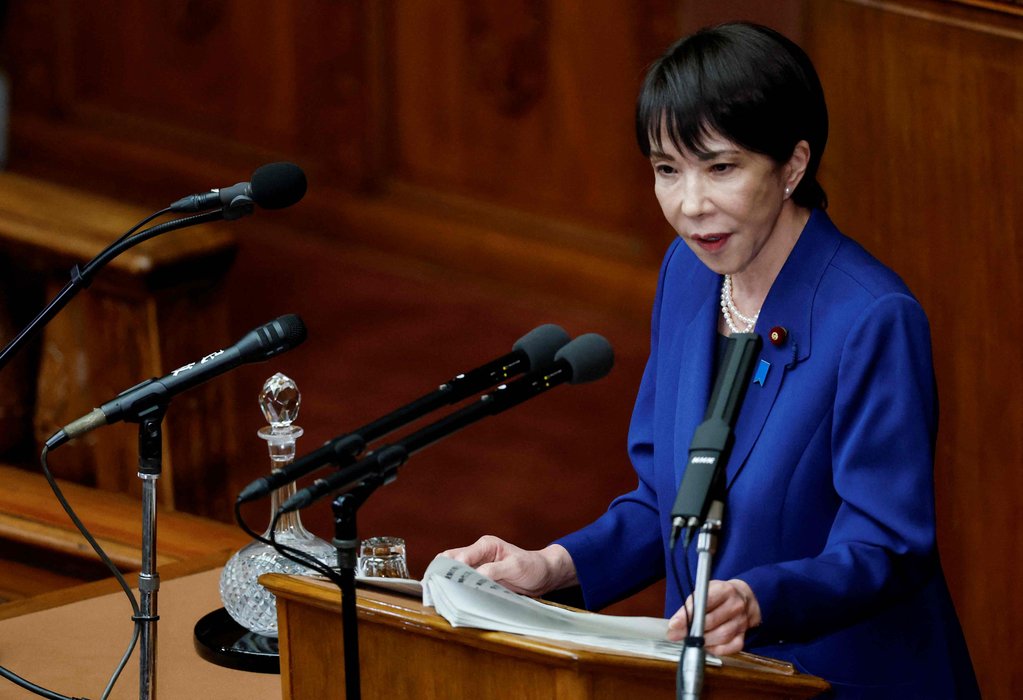
Sanae Takaichi was elected Japan's prime minister by its parliament in October 2025, making her the first woman to hold the office. She won a clear majority of 237 votes in the powerful Lower House and another 125 in the Upper House - as leader of the ruling Liberal Democratic Party (LDP). She is the fourth PM in just five years, after her predecessors' terms were cut short by plunging ratings and scandals.
In November 2025, Human Rights Watch called on Prime Minister Takaichi to take a leadership role in addressing rights abuses and promoting civilian democratic rule and the rule of law across Asia and the world. In particular, they highlighted the human rights situation in China, North Korea, Myanmar, and Cambodia, as well as Magnitsky-style sanctions, policy on trade and business, transnational repression, foreign assistance, and institutional reform.
Peaceful assembly
Protesters forcibly removed and arrested at memorial service
被爆80年の8.6広島
— ほらぐちともこ (@HoraguchiTomoko) August 5, 2025
反戦反核集会に襲いかかる機動隊の暴力こそ、新たな戦争に進む国家の姿 pic.twitter.com/fCUx5TyqFM
In August 2025, at least 30 protesters were forcibly removed and two were arrested around a memorial service in Hiroshima.
About 500 anti-war and anti-nuclear civic groups demonstrated near the Atomic Bomb Dome in Hiroshima on 6th August 2025, coinciding with an official ceremony commemorating the victims of the atomic bombing. The ceremony and demonstration were both significant due to their historical connection, as the date marked the 80th anniversary of the US attack on western Japan. The protestors are linked to the radical-left group Chukaku-ha.
Demonstrators peacefully protested US wars and Israel’s actions in Gaza, as well as nuclear states, calling for an end to all conflicts and emphasising their commitment to non-violent activism.
During the demonstration, at least two individuals were arrested and anti-riot police removed over 30 others from the venue for ‘forcible obstruction of business.’
According to reports, police raided the Tokyo and Hiroshima offices of Chukaku-ha two weeks later, in connection with the sit-in protest in Hiroshima.
Expression
Party submits bill to punish desecration of Japanese flag
In October 2025, the Sanseito party – which built its platform on a nationalist "Japanese First" agenda - submitted a bill to the Upper House for legal amendments to criminally punish acts of desecrating or damaging the Japanese flag with the intent to insult the country.
The party wants to introduce a new offence called “Nihon Koku Kokusho Sonkai Zai” (Crime of damaging the national emblem of Japan). The bill to revise the Criminal Code would impose a maximum two-year prison term or a fine of up to 200,000 yen ($USD 1,312) for acts of desecrating the Japanese flag.
The ruling Liberal Democratic Party and Nippon Ishin (Japan Innovation Party) agreed in their coalition policy document to establish the same offence during the regular Diet (parliament) session in 2026. The total number of Diet seats held by the three parties would be enough to pass the bill.
Such an offence may be inconsistent with the right to freedom of expression protected in the International Covenant on Civil and Political Rights (ICCPR), where such action could be considered a legitimate form of protest.
New anti-spy law proposed that could undermine expression
During a parliamentary session on 26th November 2025, Prime Minister Sanae Takaichi said that her Liberal Democratic Party (LDP) government would soon consider new legislation on “spy prevention.” Takaichi’s pledge to “speedily draft” such a law
However, according to Human Rights Watch (HRW), her party’s past legislative efforts raise serious concerns that the new legislation would endanger free speech rights, media freedom, and the protection of whistleblowers.
In 2013, Japan’s LDP government adopted the Act on the Protection of Specially Designated Secrets, which reclassified as “special secrets” information for which “leaks can cause a serious obstacle to national security” in the categories of defense, diplomacy, and so-called “harmful activities” and “terrorism.” That legislation also increased the penalties for releasing such secrets. Proponents of new anti-spying legislation claim the 2013 law is insufficient for preventing and punishing spies.
HRW said that “if the government decides to enact a new espionage law, it should ensure it is consistent with international law, notably the International Covenant on Civil and Political Rights (ICCPR). It is contrary to the ICCPR “to invoke such laws to suppress or withhold from the public information of legitimate public interest that does not harm national security or to prosecute journalists, human rights defenders, or others, for having disseminated such information.”
In any proposed law, those who collect information in the public interest, including whistleblowers, journalists, academics, activists, and independent observers, need to be explicitly protected.