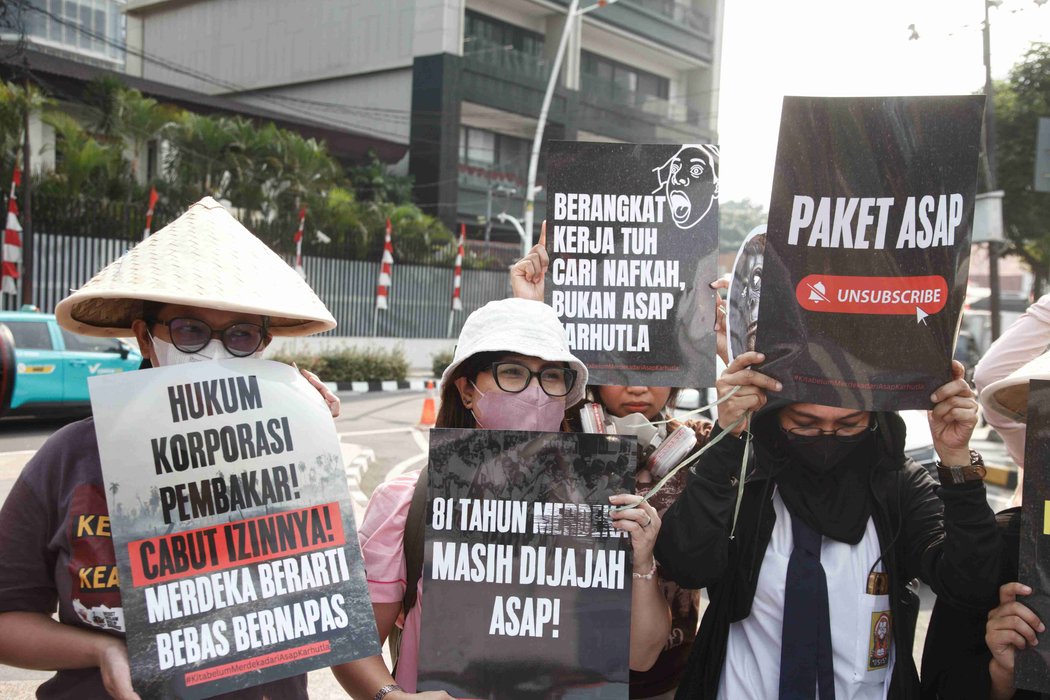
In Indonesia, civic space is rated as ‘obstructed’. Under President Prabowo Subianto, human rights groups have documented the criminalisation, harassment and attacks on activists and others for their activism. Journalists have been targeted for their reporting and there has been a brutal crackdown on protests, with arbitrary arrests, excessive force and ill-treatment by the security forces with impunity. Authorities have also criminalised Papuan activists for their peaceful expression and supressed demonstrations in the region.
On 28th September 2026, Indonesia rejected allegations of systematic human rights violations in Papua during its right of reply at the 81st session of the UN General Assembly. The response followed statements by representatives of the Solomon Islands and Vanuatu calling for greater international attention to the situation and independent verification of reported abuses, including through a visit by the UN High Commissioner for Human Rights. Indonesia maintained that credible allegations were addressed through national institutions and legal mechanisms, including the National Commission on Human Rights (Komnas HAM).
A significant legal development occurred on 15th October 2026 in dealing with violations by the military of civilians. Indonesia's Constitutional Court ruled that the Military Judiciary Law must be amended within two years to bring it into conformity with constitutional guarantees of judicial independence and equality before the law. The ruling requires Parliament and the government to clarify the division of jurisdiction between military and civilian courts, including the treatment of ordinary criminal offences allegedly committed by military personnel. Human rights groups highlighted the potential importance of the ruling for victims seeking accountability for alleged abuses by military personnel in Papua.
On 20th October 2026, CIVICUS published a report marking two years since President Prabowo Subianto came to power. It highlighted the regression of civic space, in particular the attacks, harassment, prosecutions and surveillance targeting human rights defenders, journalists and critics, as well as the crackdown on protests. On the same day, Amnesty International Indonesia gave the government a ‘failing grade’ on human rights. It said the government had not made progress in addressing serious past human rights violations. It also raised concerns on the shrinking civil space, the expanding military role in civil affairs, and several economic policies impacting community rights.
The Committee to Protect Journalists and CIVICUS also urged the government to end practices that undermine press freedom and take concrete action in protecting journalists, ending impunity, and fostering the conditions necessary for independent journalism.
In recent months, there have been allegations of censorship around the forest fires and Greenpeace activists briefly detained. A student activist was jailed, while an individual was criminalised for providing community internet access. The Advocacy Team for Democracy (TAUD) released their findings around the August 2026 anti-corruption protests while the crackdown on peaceful protests in Papua persisted. A student leader was assaulted, Papua activists targeted and reduced sentences for an attack on an activist raises’ accountability concerns.
Expression
Censorship of critical social media posts on the forest fires
Sejumlah pengguna medsos baru-baru ini mengeluhkan adanya pembatasan unggahan konten terkait karhutla di Kalimantan. Hal itu menandai dua tahun pemerintahan Prabowo-Gibran yang disebut masih diselimuti praktik pengekangan kebebasan berpendapat https://t.co/TYEk3PgeVF
— BBC News Indonesia (@BBCIndonesia) October 19, 2026
In October 2026, social media users, civil society organisations and public officials reported that posts discussing forest fires and the resulting haze, including criticism of the government’s response, had been removed, restricted or made less visible on platforms such as TikTok and Instagram.
On 15th October, the Nalar Rawat Institute published posts highlighting the health impact of wildfires and severe air pollution, using satellite imagery and pollution data. TikTok subsequently removed its video, citing violations of community guidelines, while Instagram suspended the organisation’s account. Although access to the Instagram account was restored following an appeal, TikTok rejected the appeal against the video’s removal.
International Animal Rescue Indonesia (YIARI) also reported that Instagram had labelled a post about the impact of wildfires on wildlife as sensitive content, blurred the images and muted its audio. On 20th October, TikTok removed a video by Siak district chief Afni Zulkifli showing tree-planting activities on burned land in Riau; the video was restored following an appeal later that day.
The reported restrictions prompted concerns about possible censorship and their implications for freedom of expression and access to information during Indonesia’s ongoing wildfire and haze crisis. Digital rights organisation SAFEnet called for greater protection of online freedom of expression, while raising concerns that existing regulations could encourage platforms to restrict content excessively.
Communication and Digital Affairs Minister Meutya Hafid denied that the ministry had requested the removal or restriction of content about wildfires.
Detention of Greenpeace activists
Dua tahun pemerintahan Prabowo-Gibran, bencana makin parah, biaya hidup makin mahal. Dari banjir, karhutla, sampai cuaca ekstrem, krisis iklim makin terasa di kehidupan sehari-hari. Tapi, apa kerja pemerintah? https://t.co/o2kk4pTdmF
— Greenpeace Indonesia (@GreenpeaceID) October 20, 2026
Six Greenpeace Indonesia activists and five others were taken into custody by police on 21st October 2026 after unfurling banners at a monument at the Hotel Indonesia roundabout in Jakarta. The banners criticised the government's handling of forest fires and the haze crisis.
The unfurled banners read: "Address the Climate Crisis, Lower Living Costs" and "Disasters Are Getting Worse, Life Is Getting Harder. What Is the Government Doing?" to express their demand for action on the climate crisis. The banners only remained up for two hours before police asked them to take them down.
Daniel Winarta, a representative from the Advocacy Team for Democracy (TAUD) at the Jakarta Legal Aid Institute (LBH), said that the detention lacked a clear legal basis. Chairperson of the National Commission on Human Rights (Komnas HAM) Anis Hidayah also called for the immediate release of the activists.
However, the police media outlet later denied an arrest, claiming the activists were brought to police headquarters solely for medical treatment after feeling weak and dizzy from descending the monument, and were released the same night.
Student activist Khariq Anhar sentenced over online expression
Majelis Hakim Pengadilan Negeri Jakarta Pusat memvonis Khariq Anhar lima bulan penjara atas tuduhan manipulasi informasi elektronik atau "timpa teks" pada unggahan di media sosial perihal demonstrasi Agustus 2025 silam. Puluhan pengunjung dan massa aksi solidaritas meluapkan amarah dan kekecewaan atas vonis bersalah terhadap Khariq. https://t.co/raUb6V8O5e
— BBC News Indonesia (@BBCIndonesia) October 7, 2026
On 7th October 2026, the Central Jakarta District Court sentenced student activist Khariq Anhar to five months in prison under Article 32(1) of Indonesia's Electronic Information and Transactions Law (ITE Law) over an altered screenshot of a news headline shared on social media in connection with demonstrations in August 2025. The edited headline changed a statement discouraging certain groups from joining a demonstration into one encouraging their participation. The verdict followed earlier proceedings in which the court had accepted a legal objection and declared the initial indictment invalid; prosecutors subsequently brought the case again.
The conviction drew criticism from the Advocacy Team for Democracy and Amnesty International Indonesia, which argued that the post constituted digital expression and criticism rather than a criminal act. Notably, the presiding judge issued a dissenting opinion, finding that the elements of the alleged offence had not been established. The case raises concerns about the application of the ITE Law to online expression, particularly where satire, memes, or altered images are used to comment on matters of public interest. It also highlights the potential chilling effect of criminal prosecution and imprisonment on young people exercising their right to freedom of expression.
Criminalisation of community internet access
Jaksa menuntut agar Yogi Gilang Arya Setia (39), penjual voucer internet Starlink di Kepulauan Mentawai, dinyatakan bersalah dan dijatuhi pidana penjara tiga bulan. #Polhuk #AdadiKompas https://t.co/yMOWeWg73h
— Harian Kompas (@hariankompas) October 9, 2026
On 15th October 2026, the Padang District Court in West Sumatra found Yogi Gilang Arya Setia, a 39-year-old resident of Sikakap District, Mentawai Islands, guilty of operating a telecommunications service without the required authorisation. However, the court spared him a prison sentence and fine, while ordering the confiscation and destruction of his Starlink equipment and other evidence.
Yogi’s case stemmed from his efforts to address limited internet access in Sikakap, where he began using Starlink satellite connectivity in 2024 and subsequently established a community internet service, Sikakap Online, selling internet vouchers to residents and extending connectivity to public facilities, including schools and health centres. Despite efforts to obtain the necessary business permits, he faced criminal proceedings under Indonesia’s Telecommunications Law. He was detained on 8th July 2026, and his trial began at the Padang District Court on 30th July 2026.
The case raised concerns about the criminalisation of community-led initiatives to expand internet access in remote and underserved areas of Indonesia. Yogi faced a potential sentence of up to six years’ imprisonment and a fine of IDR 600 million (approximately USD 36,000).
Digital rights organisation SAFEnet criticised the prosecution, highlighting the challenges faced by communities attempting to bridge connectivity gaps amid inadequate telecommunications infrastructure and regulatory barriers. Although the court’s decision spared Yogi imprisonment and a fine, the order to destroy his equipment could undermine community access to the internet and discourage similar initiatives. The case underscores concerns about the use of criminal law against community-based connectivity providers rather than pursuing accessible licensing procedures and proportionate regulations.
Peaceful Assembly
Arrests and excessive force around anti-corruption protest
Aksi pada 27 Agustus 2026 direspons dengan penangkapan dan tindakan represif sebelum, selama, dan setelah aksi demonstrasi berlangsung. Alih-alih menjadi penegak hukum, aparat tidak hanya lalai dalam menjamin tetapi juga ikut menghambat hak kebebasan berekspresi dan berkumpul https://t.co/LokzKzpwfE
— LBH JAKARTA (@LBH_Jakarta) August 31, 2026
Arrests and excessive force were reported around anti-corruption protests that took place on 27th August 2026 outside parliament, as previously documented.
The protesters demanded tougher action against corruption, including the seizure of corruptors’ assets and the death penalty for those convicted of graft. The protest was led by the United Pati People’s Alliance (AMPB), a group from Pati regency in Central Java.
Approximately 18,504 police and military personnel were deployed in Jakarta for the demonstrations. Authorities also reportedly restricted access routes into the capital, including roads and railway stations. Police said 65 people were detained pre-emptively beforehand.
The Advocacy Team for Democracy (TAUD) highlighted allegations of excessive use of violence, targeted sweeps, mobilisation of specific groups, and alleged arbitrary arrests by the police while handling the protest. A total of 387 people were arrested during the series of actions that began in front of the parliament complex.
Of the 322 people arrested, TAUD recorded that 22 people suffered injuries and one elderly person, Bambang Setiawan, 59, died. Bambang was a mirror seller who died after being assaulted by a mysterious mob that appeared after the protest subsided.
Monitoring results from TAUD revealed that the majority of the injured victims suffered bruises, stab wounds, cuts, cigarette burns, even broken bones, and burns from tear gas canisters.
After the protest, TAUD received 11 reports of persons missing for more than 24 hours during the series of demonstrations, reported by friends, relatives, or family members. 48 people were named as suspects in connection with alleged offences, including property damage, assault and possession of sharp weapons.
Two activists detained for their online activity ahead of anti-corruption protests
On 18th September 2026, TAUD called for the suspension of detention for two young activists identified as R and Z, who were arrested in connection with online activity ahead of demonstrations held in Jakarta on 27th August 2026.
The activists were reportedly targeted over digital activity associated with the social media account of the Independent Campus Committee (Komite Independen Kampus), which discusses local issues in Aceh, university affairs, democracy and human rights. R was arrested at his office in Jakarta on 19th August 2026, while Z was arrested in Medan one day earlier.
TAUD also questioned the continued detention of R and Z, noting that their detention period had reportedly expired on 9th September 2026, before investigators extended it by another 40 days.
Digital rights organisation SAFEnet argued that the case should never have been initiated. They warned that prosecuting young people for their online expression could set a dangerous precedent for digital freedom.
Crackdown on peaceful protests in Papua
There were reports of crackdowns on peaceful gatherings and protests documented by the Human Rights Monitor over the last two months.
On 15th September 2026, police reportedly used excessive force, detained students and school pupils, and obstructed access to legal assistance during protests against the Free Nutritious Meals Programme (Makan Bergizi Gratis, MBG) in Jayapura City and Jayapura Regency, Papua. The demonstrations were organised by the West Papua Student Solidarity under the slogan “Stop the MBG Programme and Provide Free Education”, amid concerns about food-poisoning incidents linked to the programme. Police reportedly dispersed protesters in Waena and Sentani, detained dozens of pupils and university students, and beat some demonstrators. At least 14 minors were identified among the detainees whose identities were recorded.
It is also reported that lawyer Imanus Komba of LBH Papua was allegedly choked, pushed and dragged by police officers while attempting to provide legal assistance to detained pupils at the Sentani Kota Police Station. Although most detainees were reportedly released on 15th September, six pupils remained in custody until 16th September. Police disputed aspects of the allegations, with the Jayapura District Police chief denying that pupils had been detained or beaten and describing the intervention as a measure to maintain order and keep children at school.
On 30th September 2026, Indonesian police disrupted a student protest at the Jayapura University of Science and Technology (USTJ) campus in Padang Bulan, Abepura District, Jayapura City, Papua Province. Hundreds of students reportedly participated in the peaceful political protest, during which they raised the Morning Star flag and delivered speeches concerning West Papua’s political history and the right to self-determination.
Following the events, police personnel entered the university grounds and reportedly fired dozens of tear gas canisters to disperse the gathering. According to reports, police detained three USTJ students.
Association
Assault on student leader related to planned protest action
Amnesty International Indonesia mengutuk keras atas kekerasan yang menimpa Koordinator Sosial Politik BEM UI, Hafidz Hernanda. Direktur Eksekutif Amnesty International Indonesia, Usman Hamid, menduga aksi kekerasan yang diterima Hafidz berkaitan dengan rencana aksi demonstrasi pada tanggal 20 Oktober 2026 mendatang. Sebab, Usman mengaku pernah bertemu Hafidz dalam sebuah peringatan September Hitam. Saat itulah, lanjut Usman, ia menyampaikan bakal menggelar aksi damai pada akhir Oktober. “Saya pernah bertemu Hafidz dalam suatu acara September Hitam, dan Hafidz juga sempat merencanakan unjuk rasa damai pada tanggal 20 Oktober nanti,” kata Usman, dalam keterangan video, Selasa (6/10/2026). Usman menduga, bisa saja serangan yang diterima oleh Hafidz berhubungan dengan rencana aksi yang akan dilaksanakan Hafidz bersama mahasiswa lainnya. "Bisa jadi serangan yang diterima Hafidz pada 4 Oktober sangat berhubungan dengan rencana Hafidz untuk menyampaikan aspirasi kepada pemerintah,” ujarnya. Terlebih selama ini Hafidz, kata Usman, cukup vokal dan kritis terhadap kebijakan pemerintah. Sebabnya, Usman mendesak agar pemerintah segera menangkap pelaku dan menyeretnya ke pengadilan. Usman juga menilai, kasus ini merupakan ujian pertama bagi Kapolri Jenderal Suyudi Aryo Seto dalam penanganan kasus kejahatan. Sebelumnya, Koordinator Sosial Politik BEM UI, Hafidz Hernanda dikabarkan diserang oleh orang tidak dikenal di kawasan Tebet, Jakarta Selatan. Saat melintas, Hafidz ditendang hingga terjatuh. Hafidz kemudian dipukul dan sempat diancam. Kemudian, barang berharga milik Hafidz, seperti ponsel pun langsung diambil pelaku. Sementara barang lain milik Hafidz yang berada di tas tidak diambil. Jadikan https://t.co/en8Xa9nh9s sumber berita: Klik https://t.co/Q6CsR9GSL6 & centang sebagai referensi pilihan. #HafidzHernanda #BEMUI #AmnestyInternationalIndonesia #UsmanHamid RF
— suaradotcom (@suaradotcom) October 6, 2026
The social and political affairs coordinator for the University of Indonesia Student Executive Board (BEM UI), Hafidz Hernanda, was assaulted by unidentified individuals while riding his motorcycle in the Tebet area of South Jakarta on 4th October 2026. The assault is suspected to be linked to plans for a peaceful protest.
Amnesty International Indonesia Executive Director Usman Hamid suspects that the attack on Hernanda was connected to his plans, along with several other university groups, to hold a peaceful demonstration on 20th October.
Amnesty Internnational condemned the attack, saying: "The act of violence against Hafidz is completely unjustifiable. He was kicked while riding his motorcycle until he fell, beaten and even threatened with death, even his mobile phone was seized and he was threatened with what appeared to be a weapon."
Arrest and harassment of activists in Papua
KNPB is a movement promoting the right to self-determination through peaceful action and is one of the most frequently targeted groups in Papua, through arrests and harassment.
According to the Human Rights Monitor, on 17th September 2026, officers of the Jayapura District Police reportedly detained six political activists, including a 17-year old minor, affiliated with the West Papua National Committee (KNPB) at Old Sentani Market in Jayapura Regency, Papua Province. They were transported to the Jayapura District Police Station in Doyo Baru and released after almost two hours in police custody.
According to the information received, members of the KNPB Sentani Weya Sector had gathered at Old Sentani Market to conduct a coffee bazaar. Police personnel reportedly arrived in the morning on three motorcycles and in a patrol vehicle. Officers then apprehended the six KNPB members and transported them to the Jayapura District Police Station in Doyo Baru.
Witnesses and those affected reportedly received no explanation at the place of arrest concerning the suspected criminal offence or other legal grounds for taking the men into custody. Representatives of churches and lawyers subsequently engaged with the police in an effort to secure their release. At approximately 9 pm, all six were released without criminal charges.
On 7th October 2026, two intelligence officers affiliated with the Strategic Intelligence Agency of the Indonesian Armed Forces visited the rented accommodation of the local Secretary-General of the KNPB Yoseph Novaris Wogan Apay, 42, in the Almasuh area, Merauke Regency. According to information provided by KNPB, the officers questioned him about KNPB activities, planned demonstrations and several individuals. They also requested his mobile telephone number and asked to take photographs with him. The KNPB representative regarded the visit as an act of intimidation directed against KNPB members and other activists advocating for the rights of Papuans.
Reduced sentences for attack on activist raises accountability concerns
#Indonesia: Appalling that a military court in Jakarta has reduced the prison sentences & overturned the dishonorable discharge for 2 of the 4 military personnel convicted for the March 2026 acid attack against rights activist Andrie Yunus. https://t.co/T0ZkktU371
— Elaine Pearson (@PearsonElaine) September 9, 2026
Concerns have been raised around accountability for the acid attack against Andrie Yunus, deputy coordinator of the Commission for Missing Persons and Victims of Violence (KontraS), in March 2026, following the military court appeal.
In June 2026, four military intelligence personnel were convicted by a military court for their involvement in the attack. However, an appellate ruling dated 20th August 2026 and reported on 5th September, reduced the prison sentences of two defendants by six months, bringing both sentences to less than three years. The court also overturned their dismissal from military service. The other two defendants retained their shorter sentences.
The decision prompted criticism from human rights organisations and civil society groups, which questioned the adequacy of the sentences and the handling of the case within the military justice system. Human Rights Watch called for an independent, civilian-led investigation to establish whether others, including those who may have ordered or financed the attack, were involved. The case underscores concerns about the independence and transparency of investigations into attacks on human rights defenders, as well as the ability of the military justice system to ensure accountability when military personnel are accused of crimes against civilians.