Hong Kong’s civic space is rated as ‘closed’ by the CIVICUS Monitor. The draconian 2020 National Security Law (NSL) has been used to prosecute activists, journalists and critics with heavy penalties, while sedition charges have been brought against activists and critics to silence dissent. A 2024 security law - Safeguarding National Security Ordinance (Article 23) or SNSO - added another layer of repression in the territory. Warrants have also been issued against exiled pro-democracy activists. Peaceful protesters have been convicted and some remain behind bars. The right to freedom of association has also been undermined by the introduction of the NSL, with civil society groups, unions and opposition parties ceasing to operate.
In September 2026, the European Parliament adopted a resolution urging the European Council to urgently impose sanctions, under the EU Global Human Rights Sanctions Regime, on Hong Kong officials responsible for the ongoing repression of civil liberties in Hong Kong.
MEPs strongly condemned the enforcement of the 2020 Hong Kong National Security Law and the 2024 Safeguarding National Security Ordinance, calling for their repeal. According to the European Parliament, more than 400 people have been arrested and over 180 convicted under these laws since the beginning of June 2026.
In recent months, the authorities have raided bookstores and arrested book sellers, arrested and prosecuted activists, journalists and critics for sedition and subversion. They also censored an NGO website and forced a student group to disband.
Association
Activists convicted and sentenced under security law for Tiananmen vigils
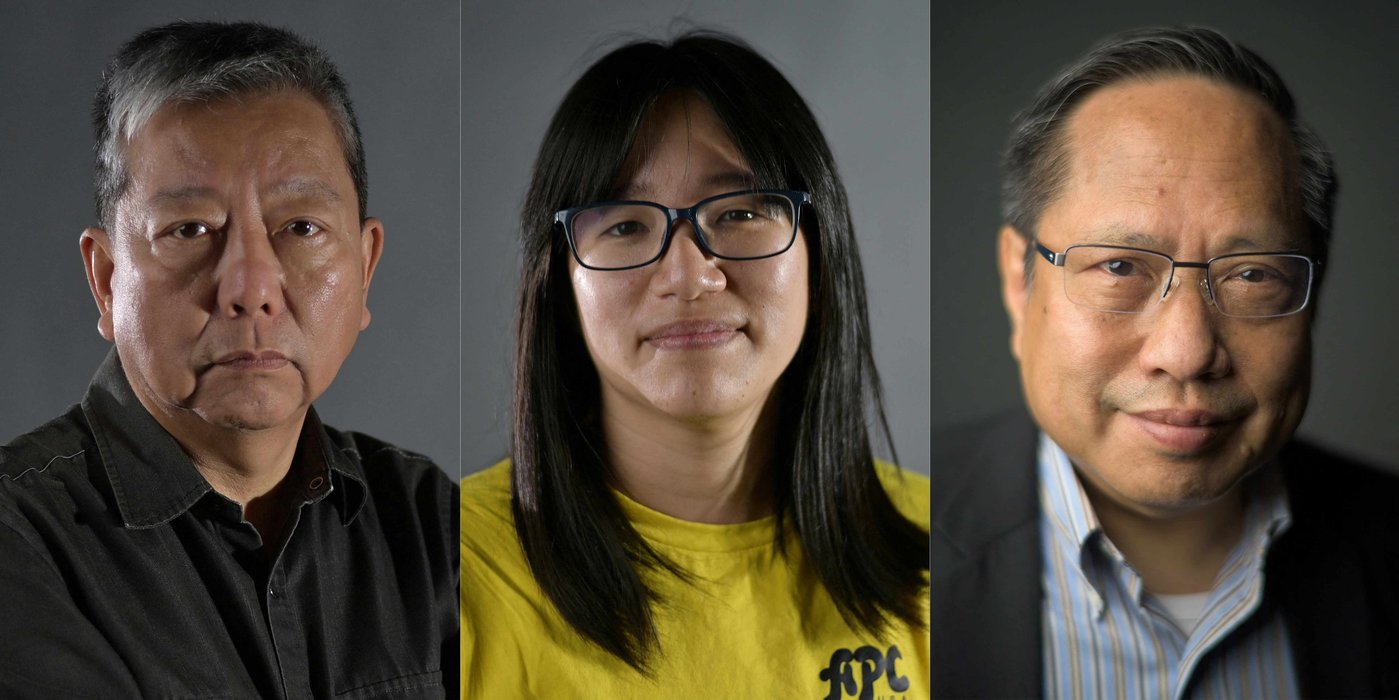
On 11th September 2026, Hong Kong’s High Court sentenced lawyer Chow Hang-tung to seven years and three months in prison, and her fellow Tiananmen activist Lee Cheuk-yan to seven years in prison for “inciting subversion of state power” under the city’s National Security Law. Albert Ho Chun-yan, who previously pleaded guilty to the same charge, was sentenced to five years and two months.
Chow and Lee were among seven members of the Hong Kong Alliance in Support of Patriotic Democratic Movements of China (Hong Kong Alliance) charged with different offences under the Beijing-imposed law in September 2021. Both have been held in pre-trial detention throughout the years since, having been repeatedly denied bail. They were convicted on 21st August 2026.
The Tiananmen vigils commemorated the events of 4 June 1989, when Chinese troops opened fire on students and workers who had been peacefully protesting for political reforms in and around Beijing’s Tiananmen Square. Hundreds – possibly thousands – of people were killed. Tens of thousands more were arrested across China in the suppression that followed. In the years since the crackdown, all discussion of the incident has been heavily censored in China, and authorities have effectively erased it from their version of history.
In Hong Kong, crowds reaching hundreds of thousands of people would gather annually in centrally located Victoria Park to peacefully remember those killed. The last major vigil organised by the Hong Kong Alliance was held in 2019.
Pro-democracy activist Joshua Wong pleads guilty in second national security case
Hong Kong pro-democracy activist Joshua Wong has pleaded guilty to foreign collusion in a second national security trial against him that could see him jailed for life, AFP journalists in court report. 29-year-old Wong is already serving a nearly five-year sentence for subversion and was due to be released next year https://t.co/iWDS2XcO5G
— AFP News Agency (@AFP) September 2, 2026
In September 2026, Joshua Wong, one of Hong Kong’s most prominent pro-democracy activists, pleaded guilty to conspiring to seek foreign sanctions against Hong Kong and China, a national security charge that carries a maximum life sentence.
Prosecutors have accused Wong, 29, of working with the exiled Hong Kong activist Nathan Law to urge foreign powers to impose sanctions, blockades or other hostile measures against China.
The prosecution said he had continued to call for sanctions on Hong Kong and China after the implementation of the national security law and that he had posted meetings on his social media accounts.
Wong has been continuously imprisoned since November 2020. He was sentenced to 13 and a half months in December 2020 for a mass protest outside a police station in June 2019. In 2022 he pleaded guilty to conspiracy to commit subversion under the National Security Law for his role in an unofficial primary election. In November 2024 he was sentenced to four years and eight months in prison.
Two jailed for joining a group that advocated independence for Hong Kong
In September 2026, two young men were jailed for 36 months and 38 months over their participation in a Taiwan-based group which called for Hong Kong independence and US sanctions.
Chan Tai-sum, 27, and Ng Chi-tung, 25, received their sentences at the District Court. Chan was jailed for 38 months while Ng was sentenced to 36 months’ imprisonment.
The pair pleaded guilty in early July to conspiracy to commit secession. Chan and Ng admitted to being “active members” of the Hong Kong Democratic Independence Union between November 2024 and July 2025. The Taiwan-based group was founded by a self-exiled Hongkonger and advocates for Hong Kong’s independence from China.
According to a mitigation statement submitted by the defence, both Chan and Ng suffer from autism: Chan had been seeking treatment since the age of 12, while Ng was diagnosed when he was in primary school.
Lingnan University Students’ Union disbands after 59 years
In August 2026, the student union at Hong Kong’s Lingnan University announced it had disbanded, citing “changes in circumstances inside and outside school”.
The Lingnan University Students’ Union (LUSU) posted the announcement on social media platforms, saying a resolution of disbandment was passed at a meeting.
LUSU said it had promoted Lingnan University students’ wellbeing and raised awareness of wider social issues and Hong Kong’s development since its founding in 1967.
Following the disbandment of the LUSU, only two Hong Kong publicly funded universities – the City University of Hong Kong and the Hong Kong University of Science and Technology – still have active students’ unions.
The introduction of the security law has undermined the right to freedom of association, supposedly guaranteed under article 18 of the Bill of Rights Ordinance. Many civil society organisations, political parties, social movements and trade unions and student groups have disbanded or closed their offices.
Expression
Police raid independent bookstores and arrest book sellers
While crowds streamed into the Hong Kong Book Fair on July 15, elsewhere in the city, national security police and customs officers raided two independent bookshops, seizing novels and arresting five people for alleged sedition. It is a bleak contrast. While the government made a public show of celebrating books, it was simultaneously punishing booksellers for what they placed on their shelves. Hong Kong officials have also refused to specify which books are illegal. This uncertainty does much of the censoring work for them—fear sparked by one arrest prompts other shops to preemptively remove unbanned novels. What disappears is not only a business, but the freedom to compare conflicting accounts of the past and encounter ideas that the government rejects, reaching independent conclusions. With every missing book, the horizon of what Hongkongers can know, question, and imagine grows narrower. https://t.co/ZTVPjCOswl
— 中国人权-Human Rights in China (@hrichina) July 17, 2026
On 15th July 2026, Hong Kong police raided the independent bookstores Have a Nice Stay and Greenfield Bookstore and arrested five people.
The five are suspected of violating the city’s Safeguarding National Security Ordinance for displaying items with “seditious intent” and selling publications with “seditious content.”
Among those arrested were Sum Wan-wah and Mandy Lau, who co-founded the Have a Nice Stay bookstore with three other journalists in 2022.
Police have accused the five of selling and displaying publications that incited hatred against the Hong Kong government, the judiciary, and law enforcement agencies. Officers seized books during the operation and all five remain in detention pending investigation, police said.
Among the seized books was “Let Only Red Flowers Bloom: Identity and Belonging in Xi Jinping’s China,” by National Public Radio journalist Emily Feng.
This is not the first case of the authorities’ targeting booksellers. As previously documented, in March 2026, national security police arrested Book Punch founder Pong Yat-ming and three female staff for allegedly “knowingly selling a publication that has a seditious intention” under Article 23’s Safeguarding National Security Ordinance. Hunter Bookstore, another shop that reportedly stocked the Jimmy Lai biography, was raided in June 2026 with two people arrested including owner Leticia Wong.
Jailed for subversion for his social media posts
On 20th July 2026, the District Court sentenced Chan Ho-hin, a 23-year-old waiter with an intellectual disability, to two years and four months in prison for inciting subversion.
Over approximately ten months he had published 118 messages on social media and put up posters in Yau Ma Tei and Wong Tai Sin promoting the Taiwan-based Revive the Republic of China Freedom Party and calling for the overthrow of the Communist Party.
The Beijing-imposed National Security Law passed in 2020 criminalises “incitement to subversion.” The law violates international human rights law and standards and has been used to arrest and prosecute scores of activists for their peaceful activism and deny them bail.
Arrests for sedition under security law
Section 24 of the Safeguarding National Security Ordinance criminalises sedition. A person convicted of sedition can be imprisoned for seven years. If the sedition is conducted in collusion with an “external force”, the maximum sentence rises to 10 years.
In August 2026, police arrested a woman for alleged sedition outside the West Kowloon Law Courts Building, hours before leaders of a Tiananmen vigil group were found guilty under the national security law. The woman was among those queueing for seats in the public gallery for the verdict. She was detained for investigation.
Police re-arrested three people on suspicion of sedition in September 2026, after previously apprehending them outside Prince Edward station on the anniversary of a 2019 incident. They had allegedly gone to the station to mark seven years since the “831 incident,” or the “August 31 incident.” On that date in 2019, baton-wielding riot police stormed Prince Edward MTR station following hours of protest clashes. Officers were filmed pepper-spraying people in carriages as they drove away reporters and medics.
National Security Law censors target NGO website
Another website appears to be disappearing from Hong Kong’s internet. The Committee for Freedom in Hong Kong Foundation (@thecfhk) website has become inaccessible for some users in the city. What does this mean for internet freedom in Hong Kong? Read🔗:https://t.co/rtsx175Ddd https://t.co/FdXcuSg4jJ
— Index on Censorship (@IndexCensorship) September 23, 2026
In September 2026, it was reported that the website of The Committee for Freedom in Hong Kong Foundation (CFHK) has apparently been blocked in Hong Kong, the latest of a series of blockages in the city following the enactment of the draconian National Security Law (NSL) in 2020.
Some using Hong Kong internet service providers including SmarTone, China Mobile Hong Kong, PCCW and CSL had found themselves unable to access the CFHK website. However, it appeared not to be a full blockage.
The implementation rules for Article 43 of the NSL grant power to the Hong Kong police to require internet service providers to take down websites that are “likely to constitute an offence endangering national security or is likely to cause the occurrence of an offence endangering national security”.
At least 10 websites have been blocked in Hong Kong since the enactment of the NSL, including UK-based advocacy group Hong Kong Watch and Washington-based Hong Kong Democracy Council. Hong Kong has also blocked the online 8964 Museum, which commemorates the 4 June 1989 Tiananmen Square massacre in China. Several Taiwanese websites have also been blocked.
David Green, the head of UK communications for CFHK, told Index on Censorship: “Requiring ISPs to participate in monitoring and censoring websites deemed undesirable by the Chinese Communist Party is reminiscent of how the mainland’s Great Firewall took shape. “If left uncontested, it’s only a matter of time before such blockages – of which there are already more than a few – multiply.”
Police arrest journalist and activist over alleged 'seditious' acts
A Hong Kong independent journalist arrested on Wednesday for allegedly acting “with seditious intent” has been released on bail. In full: https://t.co/Lpy3p6TR5k Photo: Screenshot via Boom News. https://t.co/TFt63sVi9V
— Hong Kong Free Press HKFP (@hkfp) October 2, 2026
On 30th September 2026, police arrested independent journalist Tang Ho-wing, after covering a recent gathering in the latest sedition case. Arrested with Tang was activist Lee Ying-chi.
According to the Committee to Protect Journalists, police arrested him under Hong Kong’s Safeguarding National Security Ordinance on suspicion of acting with “seditious intention,” according to a statement. Tang is the founder of the independent media outlet Boom News, which mainly operates through social media platforms. Boom News covers Hong Kong’s current affairs through social media platforms, including Facebook, where it has 87,000 followers, and on YouTube, with nearly 51,000 subscribers.
The arrest came after Boom News’ 31st August coverage of a small gathering in Hong Kong, featuring participants holding up yellow umbrellas to mark the seventh anniversary of a 2019 police crackdown on protests over a contested bill that would have allowed for the extradition of Hong Kong criminal suspects to stand trial abroad, including in mainland China.
Two of the umbrellas at the rally carried the logos of the now-defunct Apple Daily newspaper, whose founder and publisher, Jimmy Lai, is serving a 20-year sentence on charges of foreign collusion and sedition.