Civic space in China is still rated as ‘closed’ by the CIVICUS Monitor. China’s authoritarian state, ruled by the Chinese Communist Party (CCP), has systemically repressed fundamental freedoms. Human rights defenders and activists report harassment and intimidation; unfair trials; arbitrary, incommunicado and lengthy detentions; and torture and other ill-treatment for exercising their fundamental rights. Protests do occur but are quickly repressed, and critical civil society groups have been shut down. There are also increasing concerns about transnational repression against activists in exile.
A new ethnic unity law came into effect on 1st July 2026 in China despite warnings from the UN and human rights groups that it could threaten freedoms, especially for minorities. The law prohibits acts that “undermine ethnic unity or create ethnic division,” but these terms are broad and undefined, raising concerns about arbitrary enforcement.
In recent months, activists and artists have been arrested or convicted. There have also been reports of torture and ill-treatment of activists in detention. A new law has been proposed that could be used to criminalise lawyers. Censors barred reporting and social media posts linked to the flash flood in Tibet as surveillance persists, including for foreigners.
Association
Activist arrested over photo of Dalai Lama in Tibet
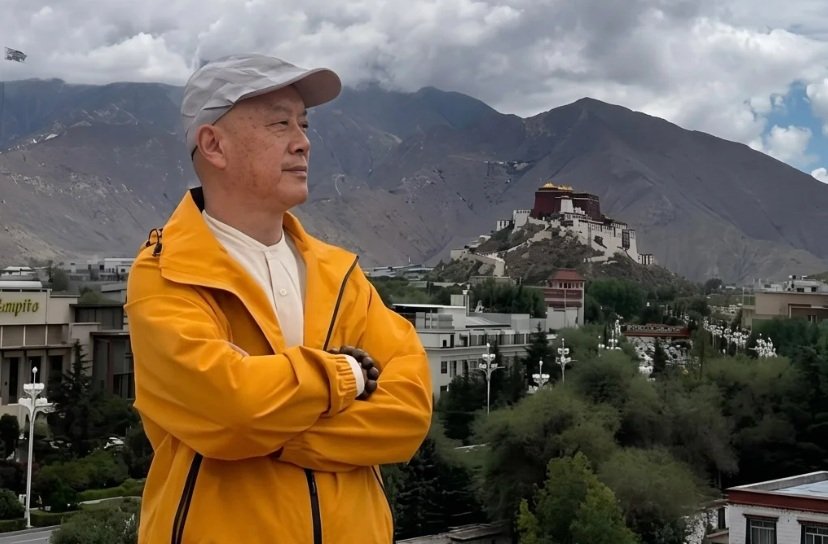
Activist Zhang Yi (photo above) was formally arrested on 28th July 2026 on suspicion of “inciting separatism”
According to Amnesty International, Zhang Yi was detained by police in Lhasa on 1st July 2026 while visiting Sera Monastery in Tibet with his younger brother. After he was unable to communicate verbally with a Tibetan worshipper from whom he wished to borrow a prayer mat, Zhang Yi showed the person a photograph of the Dalai Lama on his mobile phone. Two plainclothes men observed the interaction and appeared to record Zhang Yi and his brother as they left the prayer area. Police detained Zhang Yi before he had left the monastery.
Zhang’s family received a Criminal Detention Notice issued by the Lhasa Public Security Bureau on 18th July, stating that he had been placed under criminal detention on suspicion of “inciting separatism” and was being held at Lhasa Detention Centre. The authorities did not publicly disclose the factual basis for the accusation.
Zhang Yi is a prominent Chinese pro-democracy activist and human rights defender from Wuhan, Hubei province. He first became politically active during the 1989 Tiananmen Square pro-democracy movement.
In 2018, he was placed under administrative detention by the authorities for distributing memorial photos of Liu Xiaobo who died in 2017, and organising related commemorative activities.
Human rights groups have documented the Chinese authorities’ misuse of the offence of “inciting separatism” to prosecute Tibetans for the peaceful exercise of their human rights, including advocating for Tibetan language education and expressing views on religious freedom and the Dalai Lama.
Draft law requires party loyalty for lawyers
In July 2026, it was reported that the authorities were proposing an amendment to the Lawyers Law that threatens lawyers’ ability to ensure access to justice. Lawyers will be required to “uphold the leadership of the Communist Party of China” and its “socialist rule of law,” while law firms will have to “establish CCP organisations under the Party constitution.” The National People’s Congress published the amendment on 26th June 2026.
According to the Network of Chinese Human Rights Defenders, lawyer Chen expressed deep concern about the proposed amendment requiring lawyers to follow CCP ideology, describing it as “unprecedented,” and noting that in the past such a demand applied only to Party members. Chen assesses that the amendment is one of several recent methods the government has used to assert greater control over lawyers who take on human rights or other cases it deems “sensitive.”
Several of the lawyers observed that the authorities’ repression strategy over the past two to three years has relied less on physical violence and more on surveillance, licence revocations, and pressure applied through law firms.
The proposed change came just days before the 11th anniversary of the Chinese authorities’ unprecedented detention and disappearance of more than 300 human rights lawyers and activists that began on 9th July 2015. Officials targeted that community, whose members had become instrumental in defending human rights activists, helping mitigate the possibility of torture and ill-treatment of prisoners of conscience, and pressing for greater legal reform.
New report finds torture used against activists in detention
A new report published in September 2026 has highlighted how Chinese authorities torture and ill-treat prisoners of conscience with near-total impunity.
According to the report - “Swept Under the Rug”: Systemic Failures to End Torture in the People’s Republic of China - by the Network of Chinese Human Rights Defenders, authorities persist in their use of torture, typically to extract confessions, and fail to investigate allegations of ill-treatment.
The report draws on 209 cases of alleged torture between 2016 and 2025 across the country, and interviews with 25 human rights defenders (HRDs), family members, and lawyers.
One in five of the cases CHRD examined included allegations of beatings by authorities. Others reported being subjected to electric shocks and solitary confinement. Thirty five percent described deprivation of adequate medical care—the most common form of torture—and 16 died in detention as an apparent result.
More than half of the prisoners of conscience alleging torture had been imprisoned for “picking quarrels and provoking trouble,” a charge UN human rights experts have called vague and imprecise.
Human rights groups call for follow up to UN Xinjiang report
In August 2026, on the fourth anniversary of the release of the 2022 OHCHR Assessment of Human Rights Concerns in the Xinjiang Uyghur Autonomous Region (Uyghur Region), human rights groups called on the UN High Commissioner for Human Rights to report publicly on the status of the assessment’s recommendation that China investigate allegations of forced labour, particularly in light of evidence that state-imposed forced labour has intensified in the years since 2022.
Four years on from the assessment report, which found that the arbitrary and discriminatory detention of Uyghurs and other Turkic and Muslim-majority peoples “may constitute international crimes, in particular crimes against humanity” in the context of wider restrictions and deprivation of fundamental rights, the groups said they were concerned by the lack of substantive follow-up.
In September 2026, at the UN Human Rights Council, High Commissioner for Human Rights Volker Türk said he remained deeply concerned by the situation in China’s Xinjiang Uighur Autonomous Region, including in detention facilities. He urged the authorities to review national security and counter-terrorism legislation, strengthen the protection of minorities, and investigate allegations of human rights violations, including torture. He also called on them to follow up on the recommendations made by his Office and UN human rights mechanisms and encouraged full implementation of the national action plan for human rights.
Expression
Tibet flash flood reporting censored and scrubbed
There have been reports that the authorities tried to censor and silence reporting and social media posts following the devastating floods in Nepal and across the Chinese border in Tibet in August 2026.
On the morning of 26th August 2026, a landslide of ice and rock resulted in a torrent of mud, water and debris bursting the banks of the Trishuli River, also known as the Bhotekoshi, which runs between China and Nepal. It killed more than 1,450 people, and homes, roads, bridges and power plants were swept away.
In Tibet, officials said in early September 2026 that 43 people had been killed while 519 were still missing. However, the International Campaign for Tibet says its sources believe the number of casualties is significantly higher, with at least 300 homes destroyed.
Censors quickly deleted videos and eyewitness accounts from social media. Journalists working for state media and social media influencers were warned not to report on casualties or missing people unless their reports aligned with official announcements.
On 31st August 2026, Human Rights Watch said it received reports that journalists in China have been barred from the disaster zone and from interviewing families and told they must rely on official information narratives. Allyson Horn of the Australian Broadcasting Corporation said she had made repeated requests to travel to Tibet but was denied. Other foreign journalists were similarly blocked.
HRW also said that official media videos and images rely on AI-generated materials purporting to show the likely origins of the mudslide. Meanwhile, the full original footage circulated globally - showing Gyirong Port on the Chinese side of the border overwhelmed by floodwater as people run for their lives - was censored.
BBC’s China correspondent Laura Bicker also reported the deletion of videos showing the massive wave of mud and water swallowing Gyirong Port. The footage was initially circulated on the platforms Weixin and RedNote, but users later could not access it.
HRW reported that authorities had also punished at least ten people for “rumour mongering” related to the disaster.
China's media only distributes state-approved messages, content and pictures, while communication channels inside the country, including people’s social media, are heavily monitored. Content that does not follow strict government regulations can be restricted or deleted by a team of censors, or by AI algorithms that flag "problematic" content.
As previously documented, Beijing has imposed increasingly draconian restrictions on Tibetan people living in China as part of an effort to tighten control over ethnic minorities and stamp out separatist sentiment. In recent years, China has stepped up restrictions on Tibetan religion, education and language - even sending young children to state-run boarding schools to be inculcated with Chinese culture - and imposed strict surveillance measures on Tibetan communities.
Artist Gao Zhen jailed for his artistic work
HRF strongly condemns the sentencing of artist Gao Zhen and calls for his immediate and unconditional release. HRF also calls on the international community to hold China accountable for its repression of artistic expression. pic.twitter.com/2XpocAON3X
— Human Rights Foundation (HRF) (@HRF) August 25, 2026
On 25th August 2026, the Sanhe City People’s Court in Hebei Province sentenced Chinese artist and US permanent resident Gao Zhen to three years’ imprisonment, with his sentence due to end on 25th August 2027.
As previously documented, Gao Zhen was detained in August 2024 on suspicion of the offence of “infringing upon the reputation and honour of heroes and martyrs”. The charges relate to artistic works, dating back a decade or more, that authorities claim insulted revolutionary figures.
Gao Zhen is part of the internationally known Gao Brothers artistic duo. The brothers are renowned for their contemporary artworks examining Chinese history, state power and social change.
According to Amnesty International, there are also concerns about his health and well-being in detention. Gao Zhen, now 70, reportedly suffers from multiple health conditions, including lumbar spine disease and fluid accumulation in his knees. According to reliable information, he has collapsed several times during his detention. His communication with family has also reportedly been severely restricted since May 2025.
Further, Gao’s wife is subject to an exit ban on alleged national security grounds, preventing both her and their son from leaving China.
Comedian investigated after he altered a revolutionary song lyric onstage
Chinese comedy star Guo Degang under investigation for changing lyrics to famous revolutionary song https://t.co/y1CMrBPI7q pic.twitter.com/M6o3hGllW1
— The Independent (@Independent) August 19, 2026
One of China’s best-known comedians came under investigation and several of his shows were cancelled after he changed the lyrics of a revolutionary song during a performance.
In August 2026, Guo Degang, the country’s most prominent performer of traditional xiangsheng, a form of Chinese comedic dialogue, came under investigation by local authorities in the city of Wuhan in central China. Guo’s show in the northwestern city of Xi’an was cancelled due to “venue issues,” according to a statement on ticketing platform Damai released by his promotion company. The company offered refunds for tickets as well as travel and hotel expenses.
The investigation highlights China’s stricter controls and censorship of the entertainment and arts industries, where performers and artists have to navigate an environment where “red lines” are often unclear and shifting.
Guo was reported to Wuhan’s culture and tourism authorities after he changed a lyric from “it is quiet along Weishan Lake” to “it is quiet in the Forbidden City” while performing at a show in the city in July 2026. The lyrics are from “Playing My Beloved Pipa,” a song from Railway Guerrilla, a well-known 1950s film about Communist-led guerrillas fighting Japanese forces during World War II.
Censorship around calls for animal protection
An incident of videoed cruelty to stray animals in China has triggered widespread outrage followed by censorship and intimidation.
According to HRW, in late June 2026, videos of four boys cruelly mistreating and burning a dog and her puppies in Jieyang, Guangdong province, circulated widely online. Public outrage was swift and overwhelming: paid billboards and other advertisements appeared in over 100 cities across the country called for an end to animal abuse. More than 70,000 people signed an online petition demanding accountability and a national animal protection law.
In response, social media platforms removed posts about “Wang Wang,” a generic and endearing term supporters used for the puppies’ mother. The Chinese social media site Weibo also reportedly blocked a celebrity’s statement and a related trending topic. Online, people have reported that police ordered memorial advertisements taken down from public screens in several cities.
Surveillance network following foreigners
China already tracks its 1.4 billion citizens through an enormous web of cameras, phone signals and national identity records. However, a cybersecurity researcher has shown how far that surveillance reaches when it comes to foreigners too.
In a report from August 2026, Marc Hofer found an obscure website called the Dynamic Control Platform for Overseas Personnel. In Zhangjiakou, a city in northern China, the tool had records on over 700 foreigners living in the city, and close to 12,000 entries altogether. Among the names were wanted individuals, people from Hong Kong and Taiwan, and upward of 300 foreign reporters, several of whom had never set foot in Zhangjiakou.
The system logged where people liked to go, when they visited a doctor, what they paid for gas, and even which flights or trains they had boarded, seat numbers included.
The New York Times found links between the platform and a Beijing firm called Origin Dynamic, which sells robotics and surveillance equipment to police departments, based on tender documents that are publicly available. Part of the company is owned by local government officials in Yancheng, a city in Jiangsu Province.
Peaceful Assembly
Citizens continue to protest despite severe restrictions
Despite the Chinese Communist Party’s (CCP) attempts to curb dissent, China’s citizens continue to defy authority, as evidenced by recent findings of Freedom House’s China Dissent Monitor (CDM).
In June 2026, peaceful protests sparked by an animal abuse case in Chongqing developed into a large demonstration lasting four days, with a number of protesters joining in defiance after police detained some of the participants on the first day.
In 2025, CDM documented 5,343 dissent events, the highest annual number of protests recorded by the project, marking a 44 percent rise over the previous year. While typically sparked by economic grievances, many events are also driven by issues like school safety, environmental causes, or official misconduct. At least a third of protests are directed at the government or other state actors.