Freedom of association
Italian activists and journalists targeted with Paragon spyware
On 31st January 2025, WhatsApp’s owner, Meta, issued a notice revealing that several Italian activists and journalists had been targeted in a cyberattack using “Graphite”, advanced spyware developed by the Israeli company Paragon Solutions. Those affected included prominent figures in Italian civil society: Luca Casarini, co-founder of the NGO Mediterranea Saving Humans; Don Mattia Ferrari, the organisation’s chaplain; Francesco Cancellato, editor-in-chief of Fanpage; journalist Ciro Pellegrino; and David Yambio, an activist and founder of Refugees in Libya.
The WhatsApp alert was later confirmed by independent analysis from Citizen Lab, a Canadian research centre, which identified Paragon as the provider of the technology. The software is designed to access private conversations, sensitive documents and personal data without authorisation.
The Italian government’s initial response was opaque. Only after the intervention of the Parliamentary Committee for the Security of the Republic (COPASIR) was the use of the spyware by Italian intelligence services acknowledged. It was described as part of operations to combat irregular immigration. The committee, however, denied that journalists had been targeted, a claim contradicted by Citizen Lab’s forensic findings.
The case has prompted concern at European and international level. The European Commission has expressed serious concern over the use of surveillance tools against activists and journalists, warning that such technologies could be used to obstruct the exercise of fundamental freedoms.
Constitutional Court rules on law criminalising NGO rescue vessels
On 8th July 2025, Italy's Constitutional Court ruled on a challenge brought by the Court of Brindisi against the so-called “Piantedosi Decree”, the law underpinning Italy's detention of non-governmental organisations’ (NGO) search-and-rescue vessels.
The challenge was initially raised by the NGO SOS MEDITERRANEE in its appeal against the Italian authorities’ administrative detention of its rescue ship, the Ocean Viking, in February 2024. The Court of Brindisi subsequently referred the case to Italy’s Constitutional Court, questioning the compatibility of the Piantedosi Decree with constitutional principles, including proportionality and precision. The NGO argued that the sanction of administrative detention is disproportionate, and that the decree subjects the determination of ships’ unlawful conduct to assessments made by the authorities of a third state, in violation of the principle of precision – according to SOS MEDITERRANEE, the grounds for the Ocean Viking’s detention were based on false accusations made by the Libyan maritime authorities.
The Court rejected the constitutional challenge, finding the administrative detention penalty neither unreasonable nor disproportionate, and upheld the decree's basic legitimacy. At the same time, as highlighted by the Association for Juridical Studies on Immigration (ASGI), the Court acknowledged the measure's penal and punitive character, going so far as to note its markedly dissuasive intent toward rescue activity. The Court also added an important qualification: the penalty can only be applied where a ship fails to comply with instructions that are lawfully given and consistent with international maritime rescue obligations, meaning vessels cannot be sanctioned for refusing to follow orders that would require them to breach their primary duty to save lives at sea. The ruling followed a series of lower-court decisions (in Catanzaro, Reggio Calabria, Crotone, Vibo Valentia, and Ancona) that had already found specific vessel detentions unlawful and annulled the resulting fines.
Italy postpones VAT overhaul for non-profits after sector pressure
A legislative measure to revoke the VAT exemption for non-profit associations, bringing them into line with the tax regime for commercial businesses, has long been at the centre of debate over the funding of Italian civil society organisations (CSOs). The law, originally due to take effect on 1st January 2025, was postponed by a year after strong pressure from the sector.
While the delay offers partial relief, the underlying risk remains. According to CSOs, the reform would impose a significant administrative burden on thousands of grassroots associations that rely largely on volunteers. Critics say it could undermine the financial sustainability of non-profit activity and indirectly restrict freedom of association, discouraging local groups working to protect rights and promote social cohesion.
Left-wing party Potere al Popolo alleges police infiltration
In May 2025, the left-wing party Potere al Popolo (Power to the People, PaP), which has been participating in elections at all levels since 2018, alleged that it was spied on and infiltrated by police for 10 months. According to the party, the operation was carried out by a 21-year-old who graduated from the police academy in 2023 and approached PaP activists in Naples undercover, posing as an out-of-town student.
PaP is demanding explanations from Interior Minister Matteo Piantedosi, and the Democratic Party (PD) has launched a parliamentary inquiry. The police have denied the allegations.
Attacks on civil society and political premises
Several incidents in 2025 point to an increasingly polarised and tense social climate. On 15th May, the entrance door of the social centre La Strada in Rome’s Garbatella district was destroyed.
Political party offices and educational institutions were also targeted. On 25th April, during Liberation Day celebrations, a group of protesters besieged the Fratelli d’Italia office in Milan, throwing objects. On 26th May, the Lega office in Modena was defaced with offensive graffiti and anarchist symbols.
Although the incidents stem from differing ideological backgrounds, they point to rising polarisation and tension affecting civil society organisations, trade unions, community spaces and political parties.
Freedom of peaceful assembly
Pressure on pro-Palestinian and environmental protests
A series of incidents in the first half of 2025 points to the increasing use of preventive and punitive measures against dissent.
On 7th April, Extinction Rebellion filed complaints against the police headquarters in Rome and Brescia, alleging degrading searches of activists after peaceful sit-ins against the defence company Leonardo and at the Interior Ministry.
On 17th April, Sara Maffioletti, an activist with Ultima Generazione, was sent to trial in Milan for violating a removal order issued in March 2025 after a demonstration for clean air. She said activists would find new forms of peaceful protest to circumvent what she described as the government’s repressive measures against the right of assembly.
On 28th April, Extinction Rebellion activists were identified by police during a peaceful protest outside the Air Force headquarters in Rome.
On 28th May, a protester was identified by police for waving a Palestinian flag as the Giro d’Italia cycling race passed through Vicenza.
On 13th June, students from the Federico II University of Naples and members of Potere al Popolo reported police infiltration of assemblies on Palestine and housing rights.
Migrant textile workers violently assaulted by employers while striking in Tuscany
On 16th September 2025, in Montemurlo, a town in the province of Prato, Tuscany, a group of migrant workers in the textile sector were physically assaulted by company owners while taking part in a strike organised by the Sudd Cobas trade union. Union representatives said the incident was not isolated, pointing to a similar attack at another factory in Seano, Tuscany, in October 2024, when picketers were reportedly beaten with iron bars.
Police raid on “free party” in abandoned warehouse: Participants describe unlawful detention
Police used force against participants in the Witchtek “free party” held between 31st October and 3rd November 2025 in Modena, deploying tear gas and subjecting thousands to identity checks and what those present described as unlawful detention.
On 31st October, approximately 5,000 people gathered at an abandoned factory in Campogalliano, Modena, for a free party – an independently organised music event held without formal authorisation. Organisers described the event as a political act, citing the need to reclaim abandoned private spaces, resist growing political repression, and support housing rights and solidarity with Gaza. Proceeds were reportedly directed to organisations operating in Palestine. The party took place exactly three years after a similar event in 2022 prompted the Meloni government to issue the so-called “anti-rave decree”, which was criticised for restricting civic freedoms (see previous CIVICUS Monitor update).
A massive police deployment began several hours before the event, with officers surrounding the site and subsequently closing its entrances and placing concrete blocks around the perimeter. According to media reports, the situation escalated on 2nd November when some participants attempted to leave without undergoing identity checks, prompting officers to use force. Police reportedly carried out baton charges and used tear gas, with one person allegedly struck in the face by a canister. Those inside also reported that an ambulance was prevented from entering to assist a person experiencing seizures, while police blocked a solidarity checkpoint from delivering water, food and clothing to people at the site. Participants were eventually allowed to leave freely at 5.00am on 3rd November. Reports indicate that more than 3,000 people were subjected to identity checks, while several were detained before being released. Those present reported that people who were detained were denied access to legal representation.
Several other instances of police using significant force to disperse free parties were recorded in 2025. On 5th May, police used tear gas and batons to disperse participants at the TAZ Free Spring festival in Comano Terme, and on 31st May, in La Cassa, in the province of Turin, law enforcement forcibly dispersed the musical event MuTAZioni, which organisers described as violent repression.
Mass Gaza protests put pressure on Meloni government
Major protests in solidarity with Gaza took place across Italy in the autumn, including a national strike on 3rd October 2025. They increased pressure on the Italian government to end its commercial agreements with, and political support for, the Israeli government. Thousands took to the streets, including in spontaneous demonstrations after the Israeli military intercepted the Global Sumud Flotilla.
The protests were largely peaceful. However, the government pointed to a few incidents between protesters and police to question the legitimacy of the demonstrations and to characterise the movement as extremist and violent. Organisers and reports of the protests dispute this, saying the accusations were a pretext. The government had also criticised the flotilla, citing the dangers of the expedition and questioning the organisers’ intentions to help people in Gaza.
Excessive force at protest against Italy-Israel football match
On 14th October 2025, on the occasion of the Italy-Israel football match, a national demonstration (“Show Israel the Red Card”) took place in Udine to protest the normalisation of the genocide in the Gaza Strip and the participation of the Israeli national football team in the qualifiers for the next World Cup.
Observers from Amnesty International Italy who were present at the 14th October protest documented excessive use of force by police, who fired around 150 tear gas canisters over roughly 90 minutes, including at close range and at head height towards peaceful demonstrators, and used water cannon without warning. A journalist documenting the protest told Amnesty that he and several other protesters were struck with batons while sheltering behind a bus stop. While returning from the demonstration, at least 13 people were detained for around five hours without being informed of the reason for their detention and were denied access to phones or lawyers. They told Amnesty that they were knocked to the ground and beaten with batons despite having their hands raised. Ten were subsequently issued one-year exclusion orders (fogli di via), an administrative measure imposed without judicial oversight that is increasingly being used to deter participation in peaceful assemblies.
Pro-Palestinian activists arrested following protest against Israeli pharmaceutical company
On 25th October 2025, three pro-Palestinian activists were arrested in Naples following a protest against the Israeli pharmaceutical company Teva at the Pharmaexpo trade fair. The demonstration began with a rally outside the venue, followed by a symbolic action inside, where a university professor read a statement accusing the company of complicity in the genocide in Gaza.
According to activists, as the protest was ending and participants were leaving the venue, police carried out an unprovoked baton charge, which they described as reprisal for the demonstration. Police, however, claimed that protesters had torn down barriers and thrown them at officers, injuring three. The activists disputed this account, pointing to video footage of the clashes that they said showed no barriers were present.
Five people were detained, of whom three – members of the SI Cobas union, the Iskra political collective and the Handala Ali cultural centre – were formally arrested and subsequently charged with resisting arrest and assaulting a public official.
Neo-fascist groups intimidate pro-Palestinian demonstrators
During autumn 2025, neo-fascist groups in Rome carried out repeated attacks and acts of intimidation against pro-Palestinian demonstrators, including students occupying a high school in protest against the genocide in Gaza.
In September and October, masked assailants attacked demonstrators returning from solidarity marches for Gaza, including one incident in which a demonstrator was hospitalised and another in which police reportedly failed to intervene. According to media reports, on 16th September, around a dozen right-wing extremists wearing helmets and carrying knives attacked young people returning home from a demonstration against the genocide in Gaza. One was taken to hospital with multiple head injuries. On 3rd October, a doctor was hospitalised after being attacked while leaving a flash mob in support of Palestine. The following day, after a mass mobilisation in Rome in support of the Global Sumud Flotilla, around a dozen assailants stormed a bar and smashed its windows with clubs. Two young men wearing keffiyehs were beaten and the premises were vandalised. An eyewitness told the press that a police car passed the scene during the attack and continued on after they attempted to flag it down.
An occupied school, Liceo Righi, was also targeted. Students occupied the Liceo Scientifico Augusto Righi in Rome from 22nd October to 7th November 2025. The Ludus student collective organised the occupation to protest against the genocide in Gaza and what they describe as Italian government policies supporting it, after the school cancelled a planned conference featuring a member of the Global Sumud Flotilla. On 3rd November, a group of hooded right-wing extremists gathered outside the school, throwing bottles and attacking cars while shouting fascist slogans before police dispersed them. The following day, another group attempted to break a window and enter the premises while performing Roman salutes. The headteacher confirmed that the assailants shouted “Sieg Heil” and hurled sexist insults at female students.
Previously, on 25th October, around 40 people entered and vandalised a secondary school in Genoa that was being occupied by its students in solidarity with Gaza. Students stated that the attackers were not pupils at the school and had no connection to the occupation. The group chanted fascist slogans and painted swastikas on the walls, although they do not appear to belong to far-right organisations.
Security Decree fast-tracked into law, restricting protest and civil liberties
As previously reported by the CIVICUS Monitor, the Italian government advanced the so-called “Security Decree” in 2024 and 2025, a legislative framework that civil society groups characterised as highly repressive. The measure began as an ordinary bill (DDL 1660), which was debated in Parliament for several months. In April 2025, the government converted it into a decree-law, an instrument reserved for cases of extraordinary necessity and urgency, bringing parliamentary debate to an abrupt end. The Senate approved its conversion into law on 4th June 2025. The process bypassed committee review of 131 opposition amendments and relied on a confidence vote, preventing further changes. Opposition lawmakers described this as a bypass of ordinary parliamentary procedure for legislation with significant implications for protest rights. Law No. 80/2025 subsequently introduced 14 new criminal offences and nine aggravating circumstances.
The law significantly restricts the freedoms of peaceful assembly, expression and association and has been described by civil society organisation Antigone as “the biggest attack on the freedom of protest in the history of the Italian Republic”. As reported by the Human Rights Centre of Padua University, it created a new offence for blocking roads or railways with one’s body punishable with up to two years in prison, criminalising a common form of non-violent civil disobedience. It also introduced aggravating circumstances for protests near transport and energy infrastructure and expanded police surveillance powers, including the use of body cameras during public order operations. In addition, it created a new “riot” offence in prisons and migrant detention centres that criminalises passive resistance, further restricting detainees’ rights to peaceful assembly and expression.
The Court of Cassation’s advisory office also raised concerns in a June 2025 report, questioning both the substance of the legislation and the government’s use of emergency law-making. The report questioned whether the decree met the constitutional requirements of necessity and urgency and warned that several provisions could disproportionately affect minorities, migrants and refugees, while criminalising conduct that may constitute peaceful assembly or passive resistance.
Freedom of expression
Silencing pro-Palestinian expression
In October and November 2025, several incidents reflected mounting restrictions on expressions of solidarity with Palestine.
On 20th November, Lombardy regional councillor Luca Paladini was identified by police and fined €200 for displaying a Palestinian flag ahead of a basketball match between Olimpia Milano and Hapoel Tel Aviv. Paladini reported that, as soon as he unfurled the flag, he was approached by a plainclothes officer from the General Investigations and Special Operations Division (DIGOS), which is responsible for investigating organised crime and terrorism. The officer took down his details and instructed him to put the flag away.
Concerns over the use of national security measures in response to political speech also emerged in the case of Mohamed Shahin, an imam at a mosque in Turin. On 24th November 2025, Shahin was detained in a repatriation centre (CPR) after Interior Minister Matteo Piantedosi ordered his expulsion and deportation to Egypt on national security grounds. The order followed remarks Shahin made at a pro-Palestinian rally that authorities interpreted as expressing support for Hamas. Born in Egypt, Shahin has lived in Italy for more than 20 years and is seeking political asylum there. He challenged the measure on the grounds that his asylum claim was still pending. On 22nd December, the Lazio Regional Administrative Court ruled that, as an asylum seeker, Shahin could not be expelled pending a determination of his status. An appeals court confirmed the decision on the same grounds on 30th December.
The previous month, Gabriele Nunziati, a journalist with Agenzia Nova, was dismissed after asking a European Commission spokesperson whether Israel should contribute to the reconstruction of Gaza, in line with requirements placed on Russia regarding Ukraine. Nunziati posed the question at a press conference in Brussels on 13th October. In an interview with Fanpage, he said that, in the following days, as video footage of his question began circulating widely online, he received several phone calls from his superiors in a tone he described as “tense”. He was subsequently informed by letter on 27th October that Agenzia Nova would terminate its collaboration with him. Agenzia Nova defended the decision, arguing that his question was “completely inappropriate and erroneous” and had caused embarrassment to the agency after being shared by “Russian nationalist Telegram channels and media outlets linked to political Islam”.
Data Protection Authority head resigns amid media interference scandal
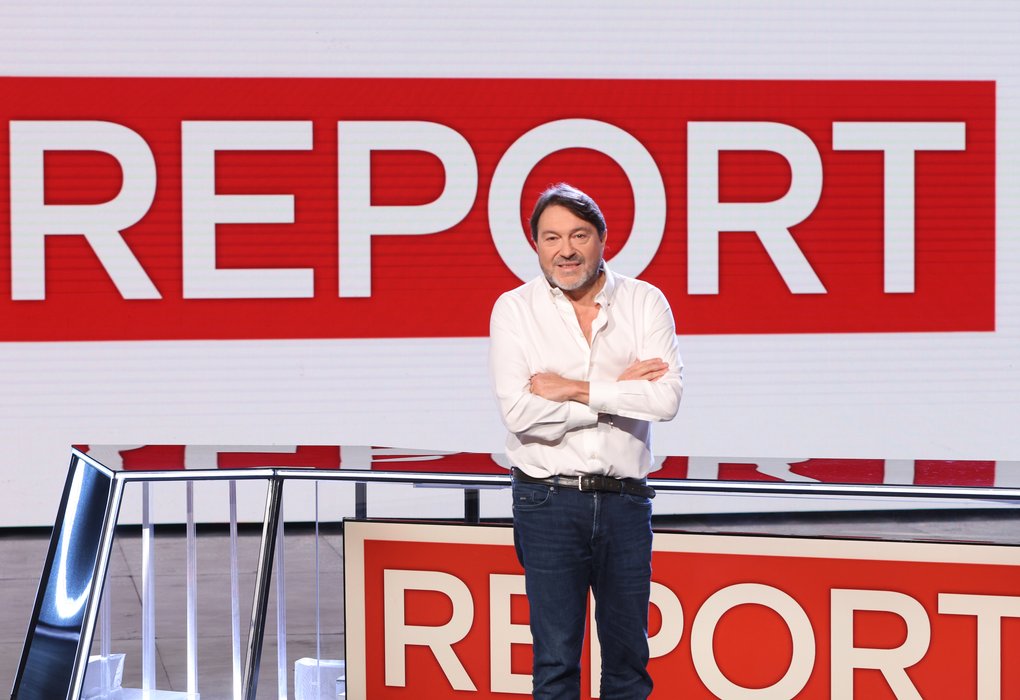
On 23rd October 2025, Italy’s Data Protection Authority (Garante per la protezione dei dati personali) fined Report, an investigative programme on public broadcaster RAI3, €150,000 following an October 2024 complaint by then culture minister Gennaro Sangiuliano and his wife, journalist Federica Corsini. The complaint concerned the broadcast of a private phone conversation between the two which they alleged had been “illicitly obtained”.
As noted by the Media Freedom Rapid Response Mechanism, the decision came amid heightened tensions between Report and members of the Authority, as the programme had recently aired investigations questioning the body’s independence and potential conflicts of interest. On 2nd November 2025, Authority board member Agostino Ghiglia sought to prevent Report from airing an episode featuring footage of him entering the headquarters of the ruling Fratelli d’Italia party the day before the Authority fined Report over the audio recording involving Sangiuliano and Corsini. The episode also reported that Ghiglia had urged the swift handling of complaints by the pair. In a formal legal notice, Ghiglia accused the programme of unlawfully obtaining and disseminating confidential messages and threatened legal action. RAI proceeded with the broadcast despite the threats.
Separately, on 29th October, Carabinieri seized audio-visual material from the newsroom of Anteprima24 following complaints by Sangiuliano and Corsini. They also notified journalist Carlo Tarallo and entrepreneur Maria Rosaria Boccia that they were under investigation over the alleged unlawful acquisition and dissemination of the recording. According to Anteprima24, however, Tarallo had not independently obtained the recording, which was a segment from a Report broadcast aired the previous year.
The tensions escalated further in November, when it emerged that the Authority’s Secretary General had ordered, on 4th November, the collection of extensive internal data, including staff emails, VPN access logs, shared folders and network drives, in an attempt to identify employees suspected of leaking information to Report journalists. The Authority’s head of IT security refused to carry out the order, arguing that it would breach constitutional protections on the secrecy of correspondence and data protection rules. After the story broke on 20th November, the Secretary General resigned that evening. The Authority’s staff subsequently held an assembly and unanimously called for the resignation of its entire four-member governing board. The board rejected the demand, stating that it had not been involved in issuing the directive.
Explosive device detonated outside investigative journalist’s home
These developments unfolded against a backdrop of escalating hostility toward Report's host, Sigfrido Ranucci. On the night of 16th October 2025, an explosive device detonated outside his home in Pomezia, near Rome, destroying cars belonging to him and his daughter, though no one was injured. The attack drew condemnation across the political spectrum, including from President Sergio Mattarella, Prime Minister Giorgia Meloni, and European Parliament President Roberta Metsola, while journalists’ union FNSI (Federazione Nazionale Stampa Italiana, Italian National Press Federation) organised a solidarity rally in Rome, calling on lawmakers to follow up their statements of support with concrete legal protections for journalists, including anti-SLAPP measures and implementation of the EU Media Freedom Act.
Journalist beaten for refusing to remove antifascist sweatshirt
On 25th October, journalist Alessandro Sahebi was beaten in central Rome by three men after refusing to remove a sweatshirt bearing an antifascist slogan. He was approached while walking with his partner and their baby, and his partner was also intimidated when the assailants threatened her unless she made him remove the sweatshirt. Sahebi later recounted that the assailants also filmed him on their phones.
Environmental activists targeted with defamation lawsuit
In June 2025, energy company Fox Petroli sued activists Roberto Malini and Lisetta Sperindei for defamation, seeking €2 million after they described a disused hydrocarbon storage site linked to a planned LNG plant in Pesaro as “degraded”. The Coalition Against SLAPPs in Europe formally recognised the case as a strategic lawsuit against public participation (SLAPP), noting the suit targeted only the individual activists rather than the outlet that published their statement. In November 2025, UN Special Rapporteurs on human rights defenders and freedom of expression sent a joint communication to the Italian government and Fox Petroli raising concerns about the case.
Comedian Daniele Fabbri indicted after Meloni lawsuit over satire
In April 2025, comedian Daniele Fabbri was indicted following a lawsuit filed by Prime Minister Giorgia Meloni over ironic remarks made in an episode of the podcast Contiene Parolacce, published in 2021. The legal action, initiated by her then lawyer Andrea Delmastro Delle Vedove, now Undersecretary for Justice, seeks €20,000 in damages for moral injury. Critics say the case raises concerns about the use of lawsuits to curb political satire.