INTRODUCTION
Femicide surge in Cameroon amid calls for legislative action
Recent events have witnessed a surge in femicide, the intentional killing of women or girls in Cameroon. Between 6th and 26th August 2026, at least eight women were killed in Cameroon. The latest case, on 25th August, involved a 44-year-old female teacher who was stabbed to death in a hotel in Yaoundé by a 22-year-old man. Data from Cameroon’s Ministry for the Promotion of Women and the Family (MINPROFF) show that at least 33 women have been killed since January 2026. Statistics indicate an upward trend over the past few years: 50 femicides in 2023, 67 in 2024, and 77 in 2025.
Despite long-standing promises, the government’s response to gender-based violence and femicide has been limited. In 2023, the government of Cameroon initiated the process of drafting a “bill specifically addressing violence against women and girls” but no specific law criminalising femicide and gender-based violence has yet been passed. Human Rights Watch noted that the government “has many plans—and few results—on gender-based violence,” with women and domestic violence survivors having little protection or access to justice. Nonetheless, Human Rights Watch revealed that in 2022, the government adopted both a national strategy to combat gender-based violence and a national gender policy. Madame Abena Ondoa, neé Obama Marie Thérèse, the minister of MINPROFF, told parliamentarians in June that her ministry was “finalising a bill to create a standalone criminal offence of gender-based violence and strengthen legal protections on women’s rights.” Yvonne Akoa, president of the Cameroon Association of Women Lawyers (Acafej), called for a law to “define gender-based violence, incriminate and sanction femicide, but also prevent it, with the possibility of seeking judges for removal orders.”
Post-electoral violence, deaths, and mass arrests in Cameroon
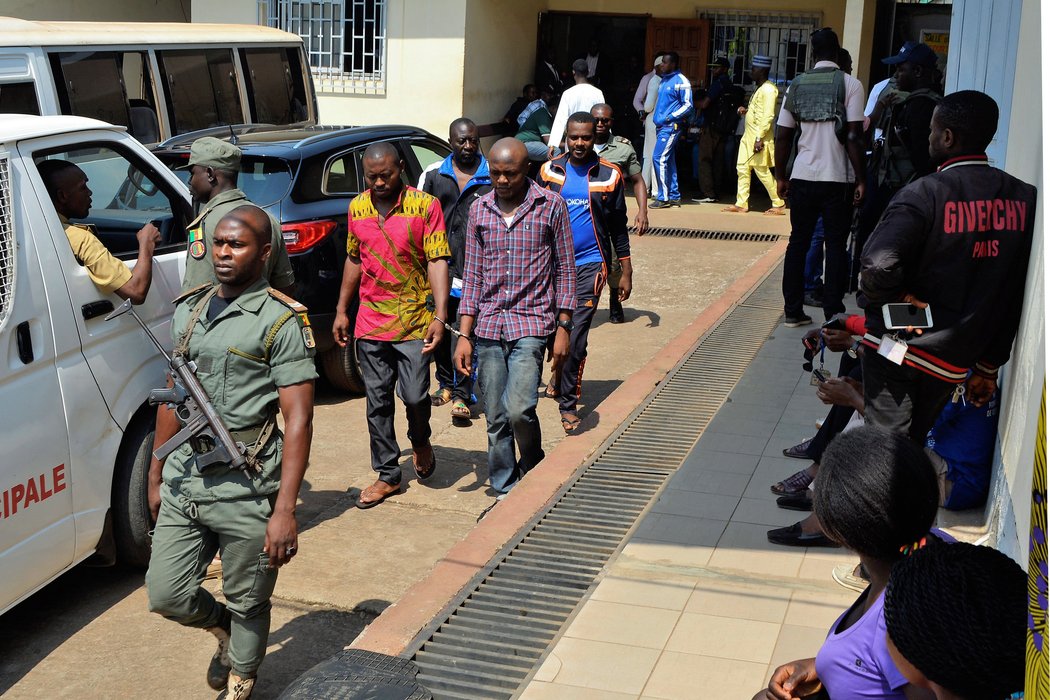
Radio France Internationale (RFI) reported on civil society monitoring efforts in Cameroon, highlighting significant casualties and arrests after the election results were announced on 27th October 2025. Despite the government’s silence on casualty numbers, legal networks across the country documented 2,000 arrests. In seven of Cameroon’s ten regions, 149 lawyers offered free legal assistance to those detained. Civil society groups, as cited by RFI, reported 39 civilian deaths but lacked official government data on the same. Philippe Nanga, from the NGO Un Monde Avenir in Douala, noted that families continued to seek missing members without knowing whether they were injured, detained, or dead. Hospitals refused to share casualty information, which Nanga said increased speculation about the violence’s true extent. RFI’s coverage also mentioned civil society concerns about minors being among those arrested, and civilians being tried in military courts.
Cameroon postpones legislative and municipal elections
The timing of Cameroon’s legislative and municipal elections remains unclear due to repeated delays. Originally, legislative and municipal elections scheduled for 2025 were postponed through a series of legal measures, including Law No. 2024/011 of 24 July 2024, which extended the mandate of Members of Parliament to 30th March 2026. Municipal councillors also benefited from an executive order extending their term to at least May 2026. The government attributed the delay to challenges in organisation and logistics, the need to uphold electoral integrity and transparency, and the aim to strengthen institutional reforms while ensuring a stable and credible electoral system. However, no official confirmation or announcement regarding this potential date or further postponements has been issued. As of now, the government has not released a formal statement to officially delay or organise the elections, leaving the political class in anticipation of a definitive electoral schedule.
Constitution amended to reinstate the vice-presidency
Paul Biya Rewrites the Rules of His Succession: What the Constitutional Revision Bill Really Says It is a five-page document, modest in appearance but considerable in its implications. The bill amending Cameroon’s Constitution, submitted to the Parliamentary Congress, goes far beyond a simple technical adjustment. It fundamentally reshapes the architecture of power in Cameroon. Here is what you need to know. A Vice President Created from Scratch and Appointed by Biya The core of the text lies here: Cameroon will officially establish the position of Vice President of the Republic. Until now, this office did not exist within Cameroon’s constitutional framework. From now on, the President of the Republic will be able to appoint a Vice President — and dismiss him at will. His responsibilities will be those that the Head of State chooses to delegate to him through an explicit mandate. In other words, this Vice President is not elected. He does not come from universal suffrage. He is selected, installed, and removable solely by Paul Biya. His legitimacy is entirely delegated, never popular. Presidential Succession: A Historic Shift This is where the text takes on its full political significance. Until now, Cameroon’s Constitution provided that in the event of a vacancy in power (death, resignation, or permanent incapacity), the President of the Senate would serve as interim leader, with limited powers, while a new presidential election was organized. That system is now set aside. Under the reform, the Vice President would complete the ongoing presidential term without any intermediate election. He would take the oath of office immediately upon the occurrence of the vacancy and assume office at once. He would no longer be a caretaker responsible for organizing a transition, but a full successor governing until the end of the mandate. The President of the Senate would only assume interim duties in one specific situation: if the Vice President himself is unable to serve or if the position is vacant. Only in that case would a presidential election be organized within 20 to 120 days. What This Means in Practice Let us be clear. Paul Biya is 92 years old. He was sworn in in November 2025 for a new seven-year term. The question of his succession is therefore not theoretical; for many observers, it is the central political issue in Cameroon today. By creating a Vice President appointed by himself, Paul Biya gives himself the possibility of personally choosing who will succeed him should a vacancy arise. This designated successor would not need to face voters to complete the current term. He would govern with the constitutional legitimacy granted by this reform — and by it alone. Read more here 👇 https://t.co/is4y0hQbvr
— MMI News (@MimiMefoInfo) April 2, 2026
On 4th April 2026, Cameroon’s Parliament adopted Law No. 2026/001 of 14 April 2026, reintroducing the office of Vice President (VP). This VP role has been absent from Cameroon’s constitutional architecture since 1984. It was adopted with a vote of 200 in favour, 18 against, and four abstentions out of 222 parliamentary votes. The amendment revises key provisions of the 1996 Constitution (as revised in 2008), notably Articles 5, 6, 7, 10, 53, and 66. Under the revised Article 5(3), the President of the Republic is assisted by a VP appointed by presidential decree who does not derive authority from a joint electoral mandate and remains dismissible by the President. The government frames the amendment as a necessary institutional evolution addressing concerns about a potential “succession gap” and power vacuum during interim periods, presenting it as a strategic tool for “predictability” in governance and safeguarding the state against economic and political volatility.
Anglophone crises continue to pose security threats to civilians
The Anglophone crisis in the North-West (NWR) and South-West (SWR) regions of Cameroon began around 2016 as peaceful protests led by lawyers and teachers opposing the marginalisation of English-speaking communities within a predominantly Francophone country. Over the past decade, these protests resulted in widespread violence, displacement, and ongoing security challenges in the two English-speaking regions.
Between January and June 2026, more than 88 attacks on education were reported, with schools targeted and teachers facing threats including intimidation and abductions, while movement restrictions, hostage-taking, and illegal checkpoints complicated access to schools and essential services. These attacks have disrupted access to schooling and medical care, compounding the humanitarian impact of the conflict on local communities.
Beyond attacks on civilians and military personnel, armed separatists enforced weekly “ghost town” orders in cities including Buea and Bamenda, where activities shut down every Monday. According to reports, the anglophone crisis has resulted in the displacement of over 638,000 people internally, with at least 1.7 million requiring humanitarian aid as of mid-2023, and, according to reports, the United Nations (UN) documented at least 2,245 schools which are not functioning in the Anglophone regions due to these attacks.
According to the International Crisis Group (ICG), the anglophone crisis has claimed over 6,000 civilian lives since late 2016, with government forces and separatist fighters both implicated in atrocities, and hundreds of thousands displaced between 2017 and 2023. Civil society representatives asserted that “a purely security-based response does not provide a sustainable resolution to the crisis,” noting that previous international mediation attempts have failed. Civil society called for an immediate and structured solution to the Anglophone crisis.
EXPRESSION
New forensic evidence in Martinez Zogo murder case
🔴AFFAIRE MARTINEZ ZOGO:"CEUX QUI ONT DÉCOUVERT LE CORPS DE ZOGO ÉTAIENT COMPLICES DE SES BOURREAUX". LCL AYISSI «Ceux qui ont découvert le corps de Martinez Zogo, selon les conclusions du médecin légiste, devaient bénéficier de l'aide de ceux qui l'ont torturé», a-t-il asséné. https://t.co/2pqmbisQGZ
— Vision4 Tv (@vision4_tv) October 27, 2026
More than two years after the brutal killing of Martinez Zogo, concerns are growing about the Cameroonian government’s ability and willingness to hold the perpetrators accountable.
As previously reported by the CIVICUS Monitor, Zogo, a 51-year-old investigative journalist and radio broadcaster at Amplitude FM in Yaoundé, was abducted on 17th January 2023 and found dead on 22nd January 2023, bearing signs of torture. On 29th February 2024, Colonel Magistrate Pierrot Narcisse Nzie closed the judicial investigation and referred 17 accused persons to trial at the Yaoundé Military Court on charges of conspiracy, torture, and murder. The defendants included Léopold Maxime Eko Eko, former head of the Directorate General for External Research (DGRE); Lieutenant-Colonel Justin Danwe, a Cameroonian soldier and former director of DGRE operations; and Jean-Pierre Amougou Belinga, a business tycoon. Substantive hearings in the trial began on 1st September 2025.
According to latest reports, during hearings at the Yaoundé Military Tribunal on 1st and 2nd June 2026, a court-certified cybersecurity expert revealed forensic evidence uncovering a torture and execution video of Zogo hidden within a Google Cloud account linked to Marshal Godje Oumarou Vincent, the serving DGRE, and encrypted communications linking Lieutenant-Colonel Justin Danwe to the abduction and killing, as well as a cash transfer of 35 million Central African CFA Francs (approximately 59,500 USD).
Radio France Internationale reports that during hearings on 31st August and 1st September 2026, Colonel Jean-Pierre Otoulou, the principal investigator, testified that several indices suggested that Léopold Maxime Eko Eko, former head of the DGRE, was aware of the operation. These included Eko’s own statements directing investigators toward Belinga, the DGRE’s failure to conduct an internal investigation following the abduction, and forensic evidence showing Eko Eko provided only three of ten mobile phones, with some ceasing transmission after Danwe’s arrest.
Lawyer Calvin Job, representing Zogo’s family, alleged serious investigative failures, citing the non-recovery of a critical iPhone 12 belonging to Amougou Belinga. As of the latest court sessions in June and September 2026, no convictions have been made in this case.
Journalist arrested without legal process after publishing security operation photo
On 10th August 2026, military officers arrested George Atabong Lekeaka, a freelance journalist, in Buea, the capital of Cameroon’s SWR. According to the Committee to Protect Journalists (CPJ), the arrest occurred after Lekeaka shared a photo on the Facebook page “All-About-Cameroon”, which showed security personnel patrolling. The image was accompanied by a caption claiming a gunfire exchange between military and separatist fighters, advising residents to stay indoors for safety. Lekeaka was held incommunicado, without contact with his lawyer or family. On 12th August 2026, Lekeaka’s lawyer, Emmanuel Aleambong Nkea, submitted a habeas corpus petition urging the authorities to present Lekeaka in court and reveal his whereabout, as police and military officials had not disclosed where Lekeaka was being held. According to Nkea, Lekeaka was released on 14th August 2026.
Media regulator imposes wave of sanctions against seven journalists and Equinox TV
At its 49th ordinary session on 5th March 2026 in Yaoundé, the National Communication Council (CNC) sanctioned seven journalists and several media outlets after reviewing 12 cases of alleged breaches of journalistic ethics and professional standards.
Among those affected, Haman Mana, the publication director of the daily newspaper Le Jour, received a warning after the CNC found him guilty of violating public opinion and wrongly interpreting the official results of the Cameroonian presidential election of 12th October 2025.
Meanwhile, Le Jour’s editor-in-chief, Jules Romuald Nkonlak and journalist Adolarc Lamissa were suspended as journalists for a month. Nkonlak’s suspension was due to an article in Le Jour newspaper, which analysed the results of the 12th October 2025 presidential election. The CNC found that the article contained incorrect interpretations of official data and violated the standards of public opinion. Lamissa was suspended for publishing information that the CNC considered baseless and potentially damaging to the National Gendarmerie’s reputation, following a complaint from Galax Etoga, the Secretary of State to the Minister of Defence responsible for the National Gendarmerie.
Emmanuel Yimga, Director of the newspaper L’Ouragan Indépendant, was suspended for six months because he did not respond to CNC summonses.
Philippe Boney, Media Director of the L’Anecdote group, a media organisation in Cameroon which manages the Vision 4 TV channel, was suspended for one month following statements made during two editions of the Club d’Élites, a weekly Sunday debate programme aired on Vision 4 TV, on 8th and 15th February 2026, where Boney was the host. Specifically, the CNC accused Boney of “declarations targeted directly the Prime Minister Joseph Dion Ngute.” The suspension prohibited Boney from practising journalism across the entire national territory for a month.
Richard Bondol, host of the programme Génération Libre, also received a one-month suspension for violations of journalistic ethics. Équinoxe TV received a warning for broadcasting a statement attributed to Issa Tchiroma Bakary, former opposition leader, calling on Cameroonians to remain at home following the announcement of presidential election results, with the CNC noting a lack of balance in the coverage.
The National Union of Cameroon Journalists (SNJC) criticised the sanctions as the “repetitive repression of the media” and advocated for self-regulation within the profession.
Four journalists, lawyer detained while investigating US migrant deportations
On 18th February 2026, judicial police officers arrested four journalists and a lawyer in Yaoundé while they were investigating the detention of around 15 African migrants deported from the United States of America (USA).
The individuals taken into custody included Barrister Awah Joseph Fru, a well-known Cameroonian attorney; Randy Joe Sa’ah, a freelance journalist and veteran BBC correspondent; Nalova Akwa, a stringer for the Associated Press; Angel Ngwe, a photojournalist with the Associated Press; and Arnold Ndal, an Associated Press videographer. The arrests occurred at the migrant detention centre, after which the group was transported to the Judicial Police headquarters in Yaoundé for questioning. The journalists and lawyers were arrested while attempting to document the situation, interview the deportees, and clarify the role of Cameroonian authorities in receiving individuals who were not Cameroonian nationals given that the agreement between the US and Cameroon was never made public. During their detention, all professional equipment, including cameras, mobile phones and laptops, was seized by the authorities.
The four journalists and lawyer were released later the same day, but the police confiscated their equipment, preventing the journalists from continuing their work. Also, after his release, Fru Awah has consistently faced obstacles in meeting his clients. On 17th February, Fru Awah was directed by authorities to secure permission from the International Organisation for Migration (IOM), a UN entity, before meeting with his clients.
Journalist detained on unsubstantiated abduction charges
On 19th January 2026, Brand Kamga, a journalist and editor-in-chief of Naja TV, was arrested and detained at Kodengui Central Prison in Yaoundé following a complaint filed against him by Annette Wandji, a Cameroonian female bodybuilder and fitness practitioner. Kamga was arrested on a charge of “attempted kidnapping of a child”. According to Réseau des Défenseurs des Droits Humains en Afrique Centrale (REDHAC, Network of Human Rights Defenders in Central Africa), the charge stemmed from an incident in May 2025, when Kamga was contacted by a man in France who alleged that he had been defrauded by his fiancée, Wandji. Although Kamga abandoned the enquiry due to insufficient evidence, Wandji accused Kamga of attempting to abduct her daughter, a charge Kamga vehemently denies, stating that he neither knows the child nor her school. Despite a request filed by the Public Prosecutor of the Mfoundi High Court seeking to address potentially false accusations against Kamga, he was remanded into custody. On 20th January 2026, Kamga appeared before the Correctional Chamber of the Yaoundé-Ekounou Court of First Instance (CFI). Due to Wandji’s absence during the hearing and the lack of tangible evidence, the Court adjourned the case until 3rd February 2026, when the Yaoundé-Ekounou Court of First Instance subsequently released him.
ASSOCIATION
Trial against REDHAC leadership
🛑JUSTICE - AFFAIRE REDHAC : Me ALICE NKOM CONDAMNÉE À UN AN AVEC SURSIS, MAXIMILIENNE NGO MBE RELAXÉE. Le Tribunal de première instance de Douala-Bonanjo a rendu, ce lundi 21 septembre 2026, son jugement dans l’affaire opposant le ministère public et l’État du Cameroun à deux responsables du Réseau des défenseurs des droits humains en Afrique centrale (REDHAC), Me Angèle Alice Nkom et Chantal Maximilienne Ngo Mbe. Après plusieurs mois de procédure et une dernière audience consacrée aux réquisitions du ministère public et aux plaidoiries de la défense, la juridiction a rendu une décision différenciée concernant les deux prévenues. Sur le volet relatif à la rébellion en coaction, le tribunal a déclaré les deux prévenues non coupables. Me Alice Nkom et Maximilienne Ngo Mbe bénéficient ainsi d’une relaxe sur ce chef de poursuite. Cette décision intervient alors que, lors de l’audience du 7 septembre, le ministère public avait demandé la requalification des faits en « délit de rébellion en coaction » et sollicité la déclaration de culpabilité des deux responsables du REDHAC. La défense avait, de son côté, plaidé la relaxe. Le tribunal a toutefois retenu la culpabilité de Me Alice Nkom pour bris de scellés. C’est sur ce second volet de la procédure que l’avocate a été condamnée. Selon les éléments rapportés au cours de la procédure, l’affaire trouve son origine dans la suspension administrative du REDHAC en décembre 2024 et dans la mise sous scellés de ses locaux. La réouverture des locaux avait ensuite donné lieu à des poursuites judiciaires. La juridiction a prononcé à l’encontre de Me Alice Nkom une peine d’un an d’emprisonnement assortie intégralement du sursis pendant cinq ans, ainsi qu’une amende de 500 000 FCFA et 62 100 FCFA de dépens, selon les informations rapportées après le prononcé du jugement. La peine d’emprisonnement n’entraîne donc pas, à ce stade, une incarcération immédiate. Cette décision constitue l’aboutissement, en première instance, d’un dossier qui avait connu plusieurs audiences au TPI de Douala-Bonanjo. Lors de l’audience du 7 septembre, les avocats de la défense avaient contesté les poursuites et s’étaient notamment appuyés sur les développements antérieurs du contentieux administratif concernant la suspension du REDHAC et les scellés apposés sur ses locaux. Le dossier avait alors été mis en délibéré pour le 21 septembre. Le jugement de ce lundi marque ainsi une issue différente pour les deux responsables de l’organisation : Maximilienne Ngo Mbe est relaxée des poursuites pour rébellion, tandis que Me Alice Nkom est relaxée sur ce même chef mais condamnée pour bris de scellés. Le dossier reste susceptible d’évoluer sur le terrain judiciaire selon les éventuels recours exercés par les parties. #EsbiMedia
— EsbiMedia (@EsBi_Media) September 21, 2026
The Réseau des Défenseurs des Droits Humains en Afrique Centrale (REDHAC), a human rights organisation in Douala, had its leadership trial postponed again on 7th September 2026, from October 2025. REDHAC has faced ongoing administrative and legal pressure since December 2024. As previously reported by the CIVICUS Monitor, on 6th December 2024, the Minister of Territorial Administration, Paul Atanga Nji, ordered REDHAC’s suspension for three months, accusing it of questionable financial practices. The offices were sealed, preventing access to the premises and documents. On 9th December 2024, Alice Nkom, Co-Chair of REDHAC’s Board, broke the seal, and on 6th May 2025, Executive Director Ms. Maximilienne Ngo Mbe was summoned to the Secretariat of State for Defence.
In connection with the administrative suspension in December 2024, legal proceedings were initiated against REDHAC’s leadership: Nkom, and Ngo Mbe, were accused of non-compliance with suspension orders and for violating the sealing order of the REDHAC offices in Douala after the ministerial order in December 2024 and the decision of the administrative tribunal in September 2025. Nkom and Ngo Mbe face allegations including ‘breaking seals’, ‘rebellion’, and ‘refusal to comply with summons’.
The hearings against Nkom and Ngo Mbe witnessed multiple postponements throughout 2025, occurring on 7th April, 4th August, 6th October, and 1st December. The judicial process continued into 2026, with sessions held on 16th March, 6th April, 4th May, 6th July, and 7th September.
The hearing scheduled before the Douala-Bonanjo CFI on 6th July 2026 was postponed to 7th September 2026 after the Public Prosecutor’s representative reported that the REDHAC case file was missing from his records. On 7th September, Nkom and Ngo Mbe appeared once again before the Douala-Bonanjo CFI, and following the adversarial proceedings, the case was adjourned to 21st September 2026. On 21st September, the Court sentenced Nkom to one year in prison suspended, and a fine of 500,000 CFA Francs (approximately 800 USD), for breaking the seals placed on the REDHAC offices. Nkom intends to challenge the ruling against her. However, according to RFI, Nkom and Ngo Mbe were acquitted of charges related to rebellion for lack of sufficient evidence.
31 humanitarian workers abducted between January and September 2026
Between January and August 2026, the International Safety Organisation (INSO), a CSO monitoring violence against humanitarians, reported a total of 31 humanitarian workers abducted across 31 documented incidents in Cameroon. One national NGO staff member was injured during these events. Analysis of the affected personnel reveals that 48% of those abducted were international NGO staff members, and 4% UN humanitarian workers.
The nature of the attacks that led to the 31 cases of abduction varied: 7% were linked to direct threats, 44% involved theft-related motives, and 48% were associated with confinement. The temporal distribution of abductions indicates a significant concentration in April 2026, which accounted for 20 of the total 31 abduction cases within the reporting period.
Activist arrested in Douala after alleged altercation with police
On 1st July 2026, the police arrested Jacques Bertrand Mang, an activist and former member of the Cameroon Party for National Reconciliation (PCRN), in Youpwé, Douala 2 Subdivision, in the Littoral region. This arrest followed a dispute with a police officer, who reportedly damaged Mang’s phone while he was recording a meeting with young individuals in Douala. Mang is known for criticising governance issues in Cameroon on social media platforms. That same day, he was presented to the Public Prosecutor at the Douala-Bonanjo CFI before being moved to New Bell Central Prison later that night. Mang is facing three accusations: “violence against a public official, hindering the operation of a public service, and defamation on social media.” On 17th July 2026, his application for provisional release was rejected, and the hearing was postponed to 14th August 2026. On 4th August 2026, Mang was relocated from New Bell Central Prison to Ngoma Prison in Douala. A whistleblower reported that this transfer occurred after several hours during which Mang was allegedly tortured by the authorities at New Bell Central Prison. On 14th August the Douala-Bonanjo CFI postponed Mang’s trial to 28th August 2026.
Civil society member surveilled by unidentified individual
According to information received by REDHAC, on 13th January 2026, Philippe Nanga, coordinator of the NGO Un Monde Avenir based in Douala, was allegedly being surveilled by a vehicle parked adjacent to his car while he was visiting an acquaintance at a place behind a hotel in central Douala. After Nanga’s visit and while on his way back, the suspected vehicle departed simultaneously and followed his movements.
Nanga is a prominent civil society activist/member of civil society and regularly comments on civic space and governance issues
According to REDHAC, the surveillance reflects a broader pattern affecting civil society actors working on civic and governance issues in Cameroon.
Activists released after several months in military custody without formal charge
On 19th August 2026, activists André Blaise Essama and Nzepang Scotty Winner were acquitted and released after approximately ten months in military detention following their arrest in 2025.
Essama and Winner were arrested on 7th November 2025, by the Commissioner of the 4th District of Douala, following the disputed presidential election on 20th October 2025. According to reports, Essama and Winner were arrested after the former distributed a video that denounced deadly violence committed by state forces against peaceful demonstrators following the October 2025 election. Upon their arrest, Essama and Winner were immediately remanded in custody at New Bell Central Prison in Douala. The Douala Military Tribunal later charged Essama and Winner with rebellion, false information, and incitement to insurrection.
On 19th August, after nearly ten months in detention, the Military Tribunal of Douala acquitted Essama and Winner on grounds of lack of evidence.
ASSEMBLY
Students and parents protest stringent French visa requirements
On 14th July 2026, dozens of students and parents staged a peaceful protest outside the French Embassy in Yaoundé to contest new visa financial requirements imposed by Campus France Cameroun, a service that helps Cameroonian and international students apply for higher education in France. Effective 9th July 2026, the new visa requirements mandated visa applicants to provide proof of full payment of tuition fees or demonstrate possession of complete funds before visa issuance. The measure came into effect after several students had already submitted their applications for the coming academic year. According to RFI, by 11th September 2026, the French Embassy in Cameroon had reversed and cancelled the new visa issuance policy for students.
Government authority bans protest
On 8th April 2026, the Prefect of the Wouri Department in Cameroon’s Littoral region, acting under the directives of the Governor of the region, issued an order banning the “Vendredi en noir” (Black Friday) protest that was planned for 10th April 2026 in Douala. Stand Up for Cameroon, a civil society organisation, planned the protest. In a statement released on 9th April 2026 by Stand Up for Cameroon, the demonstration aimed to facilitate public discussions about the importance and implications of the newly established vice-president position in Cameroon (see introduction). According to sources, the prefectural authority cited public order as grounds for prohibiting the protest. The prefect further warned against anyone proceeding with the protests, emphasising that violators would face penalties, and directed the security forces to enforce the order.
Protest against femicides, gender-based violence
On 19th September 2026, many women and men took part in a peaceful march in central Yaoundé, organised by the Jeunesse émergente et républicaine camerounaise (Jerc), a civil society association. They protested against the increasing cases of femicides and infanticides in Cameroon. During the march, participants displayed poignant messages expressing their frustration about the ongoing femicides (see introduction). The protesters called for three specific policy changes: making infanticides a crime, punishing femicides, and adopting the Convention for the Elimination of All Forms of Discrimination Against Women and Children (CEDAW). The march went on without any police interference or arrests.