Introduction
Russia has been rated “closed” by the CIVICUS Monitor since 2022. The period between May and October 2026 was marked by increasing restrictions in the context of the 2026 State Duma elections, with the only anti-war party, Yabloko, prevented from taking part in the election and several of its candidates being prosecuted. Protests calling for free elections were blocked on dubious grounds and numerous protesters opposing Yabloko’s exclusion from the ballot were detained. At the same time, prosecutions of critics under draconian laws on “foreign agents”, “undesirable organisations”, “terrorism” and “extremism” continued, with a law adopted in July further aimed at stripping rights from journalists and activists living in exile.
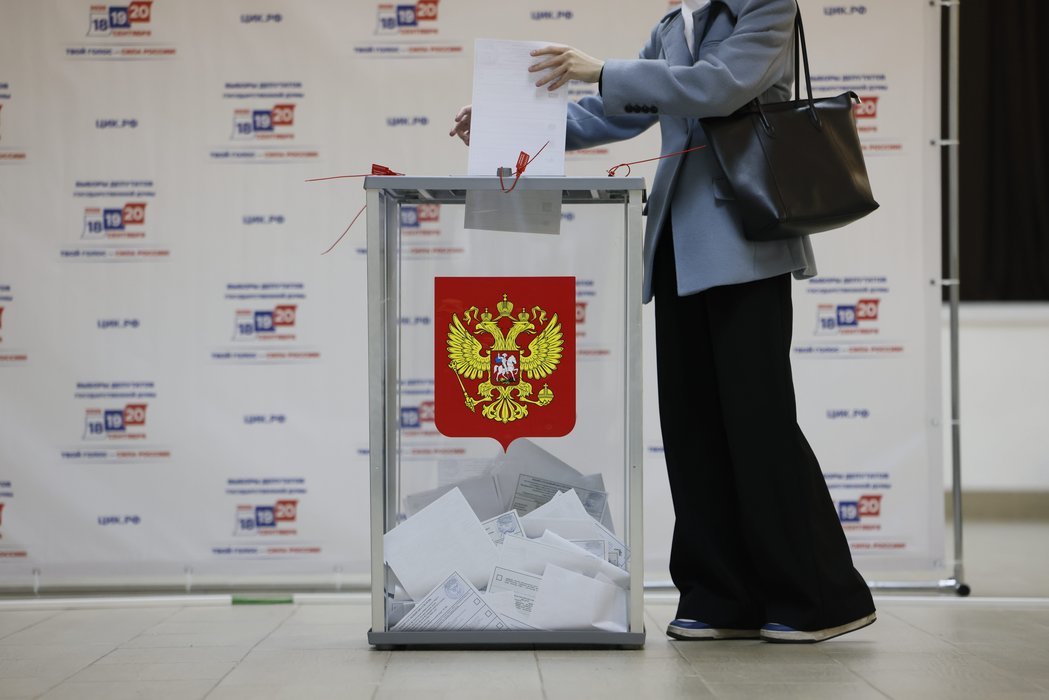
Russia held elections to the State Duma, the lower chamber of parliament, on 18th-20th September 2026. President Vladimir Putin’s United Russia party increased its dominance, winning a record 349 of the 450 seats. In an October resolution, the European Parliament voted to “strongly reject” the elections as neither free nor fair. It said, “there were no genuine alternative candidates, no free media, no credible observers and no political freedoms, with critics of the regime having been either imprisoned, murdered or forced into exile”.
The vote was marked by numerous instances of pressure on voters, candidates and observers. The rights group OVD-Info documented 590 such incidents, 409 of them during the three days of voting, including 18 detentions. According to the group, a total of 331 cases involved restrictions on the exercise of voting rights, while others involved coercion to vote or pressure from employers or educational institutions.
Freedom of association
Anti-war party barred from election
Ahead of the State Duma election, Russian authorities moved to suppress the participation of Yabloko, the only registered party campaigning against the war in Ukraine. One of modern Russia’s oldest parties, Yabloko has fielded candidates in every parliamentary election since 1993.
The Central Election Commission initially registered the party on 29th July, despite its open calls for a ceasefire. On 10th August, however, the Supreme Court cancelled its registration after a challenge brought by the Putin-aligned Rodina (Motherland) party. Rodina’s 40-page lawsuit set out four separate arguments for Yabloko’s removal, which critics have described as extremely dubious.
According to an analysis by Riddle Russia, the first part of the lawsuit alleged copyright violations in material on the party’s website dating back more than a decade. These included quoting a Soviet-era song in an interview, citing polling data allegedly without authorisation, and using images said to resemble protected works. Rodina claimed in particular that Yabloko’s logo infringed the rights of the Soviet artist El Lissitzky.
The second part alleged campaign finance violations. It cited a large number of social media posts supporting the party appearing on platforms banned or restricted in Russia, which Rodina classed as advertising not paid for from Yabloko’s electoral fund. It also cited a report by Russia’s financial intelligence agency, Rosfinmonitoring, which identified a number of Russian citizens who had received funds from abroad and had also made small donations to individual Yabloko candidates.
The third part alleged that the party’s campaign materials contained signs of extremism. In support, Rodina pointed to Yabloko’s backing for the so-called “international LGBT movement”, which the Supreme Court designated an extremist entity in 2023. It also accused the party of calling for a violation of Russia’s territorial integrity by urging an end to the war, and of inciting hostility towards the authorities and other parties. As evidence of the latter, it cited the slogan “If you vote for Yabloko, you are voting for change, for peace, for freedom, for a different life”, and statements such as “the authorities keep adopting more and more repressive laws”. The fourth section, which didn’t refer to any specific legal provisions, expressed doubt that certain candidate documents were submitted within the required deadlines.
According to Yabloko, the Supreme Court sided with Rodina on most claims; however, it notably refused to rule on the point about the party’s alleged extremism, stating that the matter could only be considered in separate proceedings and upon presentation of the relevant evidence.
Half of the seats in the State Duma are filled by candidates elected through proportional representation from party lists, while the other half are contested in single-member constituencies under a first-past-the-post system. After the Supreme Court’s decision, Yabloko’s federal party list was annulled, leaving the party able to compete only in single-member constituencies, where it fielded individual candidates. Ahead of the election, some of those candidates were also prevented from standing after being prosecuted over social media posts, some of them decades old. Such convictions automatically bar individuals from standing in elections for one year (see more under Freedom of expression).
New law expands restrictions on exiled “foreign agents”
On 4th August 2026, a new Russian law came into force, expanding restrictions on exiled Russians, including journalists, who are designated “foreign agents” or prosecuted for cooperating with “undesirable” organisations. Parliament adopted the law unanimously on 24th July, and President Vladimir Putin signed it on 4th August. It allows authorities to freeze bank accounts, bar the sale of property and vehicles, revoke driving licences and restrict access to public services. It also allows them to deny consular services, including passport renewals, and to redirect income earned in Russia into special accounts, from which funds can be seized to cover fines or legal costs. Reporters Without Borders (RSF) condemned the legislation, warning that it intensifies pressure on independent journalists beyond Russia’s borders. According to RSF, more than 1,500 Russian journalists have left the country since the full-scale invasion of Ukraine in 2022.
Meanwhile, prosecutions under “foreign agent” and “undesirable organisation” laws continue to be frequently and arbitrarily deployed against exiled critics. For example, on 13th May 2026, Moscow’s Simonovsky District Court fined Dmitry Anisimov, press secretary of the human rights organisation OVD-Info, 10,000 roubles (around $116) for participating in the activities of an “undesirable organisation”. The case stemmed from his participation in a discussion on political repression in Russia on the YouTube channel Transit, which is associated with the Free Russia Foundation, designated “undesirable” in 2019. Anisimov, who no longer lives in Russia, called the prosecution unlawful and said he planned to appeal.
Those remaining in Russia also continue to be targeted. The next day, on 14th May, a court fined Alexei Venediktov, former editor-in-chief of the Ekho Moskvy radio station, the same amount for collaborating with the Echo project, which was launched in Germany after Ekho Moskvy closed. The Prosecutor General’s Office designated the project “undesirable” in 2025. Venediktov, who was designated a “foreign agent” in 2022, rejected the ruling as unfounded and unfair and said he would appeal.
“Extremism” and “terrorism” laws used against civil society and critics
The legal framework used against independent organisations in Russia continues to restrict freedom of association and civil society activity significantly. In particular, abuse of “terrorism” and “extremism” provisions is increasingly deployed as a tactic of repression.
On 4th June 2026, OVD-Info, a project that monitors repression and supports people facing political persecution, was added to the list of “extremist” organisations kept by Russia’s financial intelligence agency, Rosfinmonitoring. The next day, on 5th June, the Ministry of Justice entered it in its register of extremist organisations.
According to a statement by the organisation, the designation makes a wide range of interactions with OVD-Info illegal or severely restricted in Russia, including financial support, volunteering and the public sharing of its materials. OVD-Info said there had already been cases in which resharing materials online was interpreted as participation in the activities of a banned organisation. The designation therefore affects not only the organisation itself but also its relationships with volunteers, beneficiaries and other individuals or organisations in Russia, as well as anyone engaging with its content. As a result, OVD-Info said it had been forced to end cooperation with lawyers in Russia and temporarily suspend certain forms of humanitarian assistance for political prisoners. In the same statement, it said it would continue its information and legal counselling work remotely.
Authorities have also continued to pursue charges of “financing extremist activity” against donors to the Anti-Corruption Foundation (FBK), founded by the late opposition leader Alexei Navalny. The FBK and Navalny’s campaign offices were designated extremist organisations in June 2021. Exiled investigative media outlet Mediazona estimates that at least 225 criminal cases related to donations to the FBK had been opened across Russia by April 2026.
On 13th May 2026, the Pushkinsky City Court in the Moscow region sentenced businessman Andrei Vorobyov to a suspended prison term for “financing extremist activity”. According to OVD-Info, the case concerned seven donations of 100 roubles each (about $8 in total) that he made to the FBK between August 2021 and February 2022. He was also ordered to repay the total amount donated, and his phone was confiscated by the state. The case was opened on 29th December 2025, when he confessed to the charges. On 29th May, Moscow’s Ostankino District Court sentenced Gleb Stovbun, a former photographer for the Dynamo Moscow football club, to three and a half years in a general-regime penal colony over a donation to the FBK.
On 19th May, a court in Novosibirsk declared the local LGBTQI+ rights organisation T9 NSK an “extremist organisation” and banned its activities. The group’s members had provided legal, psychological and social support to transgender people and their loved ones. According to First Department (Первый отдел), a human rights and investigative project that reported the news on Telegram, it was the ninth such ruling in three months.
In a further case, on 28th September, Russia’s Federal Security Service (FSB) announced a criminal case against Ksenia Maksimova, coordinator of the Russian Democratic Society in London and a councillor in the London Borough of Ealing. The FSB accused her of participating in the activities of an organisation designated as terrorist, citing her cooperation with the Anti-War Committee of Russia. Maksimova has been placed on federal and international wanted lists and added to the registry of individuals designated as “terrorists and extremists”. The FSB alleged that the Russian Democratic Society organised fundraising and other forms of support for Ukraine.
Freedom of peaceful assembly
State Duma elections: restrictions on protests before and after the vote
On 10th August 2026, around 500 people gathered outside Russia’s Supreme Court to support the Yabloko party during a hearing on its removal from the parliamentary elections (see Freedom of association). During appeal proceedings on 17th August, police detained more than 85 people who had gathered in front of the court. Most were released with warnings. In the following days, however, reports emerged that police had begun visiting supporters’ homes and detaining them. According to those reports, at least four people faced administrative charges for taking part in an unauthorised gathering that obstructed traffic and pedestrians, and were held overnight at police stations. Human rights defender Maxim Rudnev also reported that two activists were detained at home and held overnight. Other supporters were charged with administrative offences but released without being held overnight.
Restrictions on gatherings continued ahead of the vote. On 1st September, police in Novgorod shut down an authorised picket organised by Yabloko outside the United Russia office, citing an alleged bomb threat. The protesters were forced to end the picket when firefighters, National Guard personnel and dog units arrived.
After the elections, activists in several cities, including Moscow, St Petersburg, Perm, Izhevsk and Kazan notified the authorities of their intention to hold rallies against electoral fraud. In Moscow, organisers were denied permission to hold a rally titled “For Free Elections” on 4th October, with the authorities citing continuing “coronavirus restrictions”. In Kazan, the municipal administration refused to authorise demonstrations scheduled for 3rd and 4th October, citing the insufficiently precise wording of the protest and difficulties in ensuring security for the participants.
In Tyumen, Kristina Nekrasova, a blogger and voice actress who had submitted a notification for a rally planned for 10th October, was visited by local police and given a formal warning to sign, citing liability for holding an unauthorised rally. She said the officer also told her informally that the rally had not been approved. Nekrasova then decided not to resubmit the notification and urged people not to attend.
On 24th September, Krasnodar authorities denied permission for a rally against election violations, citing the “threat of drone attacks”. Events marking Krasnodar City Day, a municipal holiday held in the last week of September, had previously taken place in the city without restrictions. The rally’s organiser, 19-year-old Kurban Magomedrasulov, was detained when he went to the mayor’s office to collect the refusal notice. Six administrative protocols were filed against him for insulting the authorities and “discrediting”, reportedly in connection with comments he had made on Telegram. After his detention, a Telegram channel reportedly affiliated with the security forces circulated a video on 28th September in which Magomedrasulov, his face censored, apologises for “discrediting” the Russian army and using “obscene language”.
According to RusNews, a young man named Kirill was detained and intimidated after holding a solo picket in Moscow’s Sokolniki district on 28th September. He held a sign reading “Fair elections. No fraud! Discrediting democracy is criminal!” and was detained after about 40 minutes. He said he was intimidated at the police station and entered into a database before being released without charge.
Dozens detained at authorised Communist Party march in Moscow
On 4th October 2026, Russian police detained around 60 people during an authorised march in Moscow organised by the Communist Party (CPRF) to commemorate those killed in the October 1993 political crisis. Security forces began making sudden arrests after protesters chanted “Down with the Tsar!”. Participants also called for the release of political prisoners and an end to political repression.
According to media reports, those detained included 26 CPRF members, 30 Yabloko members and several activists. At least 15 people were held overnight at police stations, and some were held for 48 hours pending court hearings. Some detainees were subsequently prosecuted on administrative charges for violating public assembly rules, while others were released without charge. On 7th October, the Tverskoy District Court sentenced Kirill Martemyanov to 14 days’ detention and fined Maria Usoltseva 4,000 roubles (about $40) for disobeying police orders during the march.
Freedom of expression
Pressure on journalists continues
On 29th July 2026, the Moscow City Court sentenced journalist Daria Shipacheva to 12 years in prison after finding her guilty of treason. Shipacheva, who was born in Ukraine, was arrested in April 2025. According to reports, the case centred on a bank transfer she made to a civilian family member in Ukraine, the purpose of which was “reinterpreted” to base the treason charge around. Her trial was held behind closed doors and reportedly lasted just 90 minutes. She was initially held in a detention facility in Rostov-on-Don before being transferred to Moscow’s Lefortovo prison.
Russia has continued to pursue exiled critics through transnational repression, with several recent cases of journalists and media figures being sentenced or ordered detained in absentia. On 2nd October, ASTRA editor-in-chief Anastasia Chumakova, who lives outside Russia, was sentenced to seven years in prison for spreading “false information” about the army, relating to articles and posts about the killing of civilians in Ukraine. She was also convicted of repeatedly breaching foreign agent rules. Chumakova herself has not been designated a “foreign agent”, but ASTRA has. In addition to the prison term, she was fined 200,000 roubles (about $2,350) and banned from administering websites for four years.
On 29th September, Moscow’s Basmanny District Court ordered journalist Yury Dud detained in absentia for two months on charges of publicly justifying terrorism, over his interview with Denis “White Rex” Kapustin, a far-right activist and commander of the Russian Volunteer Corps, a paramilitary unit of Russian nationals fighting for Ukraine. On the same day, the court ordered the arrest in absentia of documentary filmmaker Andrey Loshak, who has since been declared wanted. The details of his case are not publicly available. According to OVD-Info, an arrest in absentia means not only that a person will be detained immediately on entering Russia, but also that they risk being detained and extradited while travelling through or transiting countries of the Commonwealth of Independent States (CIS).
On 2nd September, the Investigative Committee in Moscow opened a criminal case against journalist Ekaterina Kotrikadze, a presenter for the TV channel TV Rain (Dozhd), who is in exile. She is accused of repeatedly failing to comply with obligations under “foreign agent” laws. The case follows a sentence of eight years in prison handed down in absentia for allegedly disseminating “false information” about the Russian army, in connection with posts about crimes against civilians in Bucha.
On 17th August 2026, Russian authorities had opened a criminal case against TV Rain’s founder and former chief executive, Natalia Sindeeva, for allegedly organising the activities of an “undesirable” organisation. The case relates to the Dutch company TVR Studios BV, which Russian authorities have designated “undesirable” and which they allege operates the channel. Sindeeva, who lives abroad, chairs Dozhd’s board of directors and remains its majority shareholder.
On 21st August 2026, Russia’s Ministry of Justice once again designated the independent news outlet Mediazona a “foreign agent”. The ministry accused the outlet of spreading “fake news” about law enforcement agencies, opposing Russia’s war in Ukraine and disseminating information from organisations designated “foreign agents” or “undesirable”. Mediazona said its founding legal entity, OOO ZP, was first added to the “foreign agent” register in 2021 and was removed by the ministry after the company was liquidated.
Independent regional media are also under pressure. On 1st September, 108 Channel, an independent television station in the Tuva republic, ceased operations. Its management did not publicly specify a cause, saying only that it was due to circumstances beyond its control. According to the outlet Current Time, the channel was the only media organisation in the republic offering information that diverged from the official agenda, covering social and economic issues as well as human rights.
Censorship under anti-LGBTQI+ legislation
On 7th October, Russia’s communications regulator, Roskomnadzor, banned two novels by the writer Olga Ptitseva, Dvesti trety den zimy (The 203rd Day of Winter) and Vesna vody (Spring of Water), and ordered their withdrawal from public circulation. The books, which depict an alternate Russia under an authoritarian regime, were added to the regulator’s Unified Register of Prohibited Information. Their publisher, Polyandria No Age, confirmed the ban, and the novels disappeared from its website and from the catalogues of major booksellers. According to media reports, the formal grounds for the ban may be alleged “propaganda of non-traditional sexual relationships” in the books, which would contravene Russia’s infamous 2013 “LGBT propaganda” law.
On 7th August 2026, a Moscow court sentenced Dmitry Protopopov, former head of the Popcorn Books editorial team, to a suspended four-year prison term on “extremism” charges for selling LGBTQI+ literature. He was also banned from publishing and from using the internet for four years. The court ordered the confiscation of more than 8.7 million roubles (about $95,000) in alleged criminal proceeds, as the prosecution had requested. Protopopov pleaded guilty and testified against other defendants, and his case was heard under a special procedure.
His conviction concludes the so-called “book publishers’ case”, on which the CIVICUS Monitor has previously reported. Protopopov and two colleagues, Pavel Ivanov and Artyom Vakhlyaev, were detained in May 2025 and accused of distributing LGBTQI+ literature. They had been placed under house arrest and were released a year later, having also received suspended sentences after pleading guilty and testifying against other defendants.
In November 2023, Russia’s Supreme Court banned what it called an “international LGBT public movement” as extremist. Rights groups say the ruling is vaguely worded and has paved the way for widespread and arbitrary prosecutions.
Authorities abandon “false information” case against children’s hospice founder
On 2nd September, Lida Moniava, founder of the Lighthouse Charity Foundation (Dom s mayakom) children's hospice, was detained in Moscow following a search, on suspicion of spreading “false information” about the Russian army. She had previously been fined in February for “discrediting” the military in connection with public posts. On 6th October, her lawyer reported that the criminal investigation into her had been dropped. Reporting on her case, the Moscow Times noted this is an exceedingly rare outcome when it comes to Russia’s crackdown on anti-war speech, citing a February 2025 report from OVD-Info which had documented just over 20 instances in which anti-war criminal cases had been dropped at various stages since the full-scale invasion of Ukraine.
Yabloko candidates jailed or fined for social media posts and removed from the ballot; senior figures imprisoned
Following the Supreme Court decision annulling Yabloko’s federal party list, leaving the party able to compete only in single-member constituencies, some of those candidates were also prevented from standing in the September 2026 parliamentary election after being prosecuted over social media posts, some of them decades old. Such convictions automatically bar individuals from standing in elections for one year.
OVD-Info has documented various examples of this practice. On 24th July in Kaliningrad, State Duma and regional assembly candidate Anton Gendrikson was detained for ten days for posts featuring the Instagram and Facebook logos without mentioning that they belong to Meta, which is designated an “extremist” company. On 8th September in Nizhny Novgorod Region, candidate Dmitry Smirnov was removed from the elections due to a photo he posted in 2015 of the late Motörhead frontman Lemmy Kilmister wearing a pendant in the shape of a German cross; an expert concluded that the symbol resembles a Nazi award “to a confusing degree”.
On 14th September, in Yekaterinburg, State Duma candidate Vladimir Sevostyanov was sentenced to 12 days of administrative arrest under the charge of “displaying extremist symbols” for a repost he made in 2020 of someone else’s publication. While the ruling came too late to remove him from the ballot, according to Yabloko’s press service, he would only be released from the detention centre after the elections had concluded.
Key figures in the party have already been imprisoned on charges relating to discrediting the Russian army. A week after the Supreme Court decision annulling Yabloko’s federal list, on 17th August, Yabloko deputy chairman Lev Shlosberg was sentenced to 11 years and one month in prison on charges of “discrediting” the Russian armed forces and spreading “false information” about them. The charges relate to his participation in an online debate about the war and to his sharing on social media of a publication featuring a Daily Mirror front page showing Vladimir Putin and a blood-covered Ukrainian woman. Previously, on 24th June, Maxim Kruglov, another leading Yabloko politician, received a seven-year prison sentence on “false information” charges. These related to social media posts calling for an international investigation into possible war crimes by Russian forces in Bucha, and citing UN data on civilian deaths in Mariupol.
Obstruction of election observers
OVD-Info also reported that authorities used a variety of tactics to obstruct the work of election observers. According to the watchdog, Territorial Election Commissions (TECs) refused to accept lists of observers. Commissions were closed during working hours, signatures “went missing”, and documents were rejected for technical reasons or over other minor formalities. The Communist Party of the Russian Federation (CPRF) said at least 1,175 of its observers were barred from monitoring the election. The publication 7x7 counted around 1,300 observers from the CPRF and Yabloko who were not allowed to take part.
OVD-Info’s analysis found 36 reported incidents in which video recording was a source of conflict. Observers were banned from filming, had their positions cordoned off with tape to restrict their movement, had their equipment confiscated and had official reports drawn up against them. Access to surveillance footage was denied to opposition party representatives and electoral commission members.
The watchdog said six election observers were detained in total. At polling station No. 1919 in St Petersburg, they reported that an observer was denied entry after an election official said he was not registered to monitor the vote. A police officer called to the scene reportedly threw the observer to the ground and pinned him down, knocking him unconscious. He was then taken to a police station and fined for disobeying police.
Fines and detentions for protest messages on ballots
Numerous cases were recorded during the elections of people prosecuted over protest messages written on their ballots. On 29th September, an administrative protocol for “petty hooliganism” was filed against Nikolai Rybakov, chairman of the Yabloko party, according to the party’s press service. While voting on 20th September, Rybakov checked the boxes next to every candidate on his ballot and wrote “Yabloko. For Peace” and “Yabloko. For a Ceasefire Agreement”, then showed the inscriptions to journalists. Under Part 1 of Article 20.1 of the Code of Administrative Offences, he faces a fine of up to 1,000 roubles (around $11) or detention for up to 15 days.
On 22nd September, police detained blogger Stanislav Morozov after he posted a video showing ballots on which he had written anti-government messages and crossed out the name of the ruling United Russia party. Morozov, who lives in Penza in the Volga region, has previously reported on forced conscription there in his videos and organised a chat for locals who had been pressured to sign military contracts connecting them with legal assistance. The court’s press service reported that he had been sentenced to 14 days’ detention for “petty hooliganism” under Part 1 of Article 20.1 of the Code of Administrative Offences.
On 21st September, 7x7 reported that the journalist Alexander Stepanov was fined 30,000 roubles (around $358) by the Frunzensky District Court in Vladimir for “discrediting” the armed forces under Article 20.3.3 of the Code of Administrative Offences. Stepanov had written “No to war! For peace!” on his ballot. After a member of the electoral commission, a police officer and an observer noticed the inscription, officers detained him near his home and drew up a report against him. 7x7 described Stepanov as a pro-government journalist. He argued that his inscription was in line with the aims of the “special military operation”, which he said was meant to bring peace.