This update covers developments relating to the freedoms of expression, peaceful assembly and association in Algeria from 1st May 2026 until 31st August 2026.
GENERAL
Record-low turnout for parliamentary elections sees candidates arbitrarily disqualified
On 30th May 2026, ahead of the 2nd July parliamentary elections, the Independent National Electoral Authority disqualified a significant number of lists and candidates, mainly on the basis of Section 200 of the Electoral Act of 4 April 2026 which grants the authorities a wide margin of discretion when examining applications. Some of these individuals previously held public office but were removed on the basis of mere suspicion of being linked to ‘dubious business circles’ or likely to exert influence on the proper conduct of the elections.
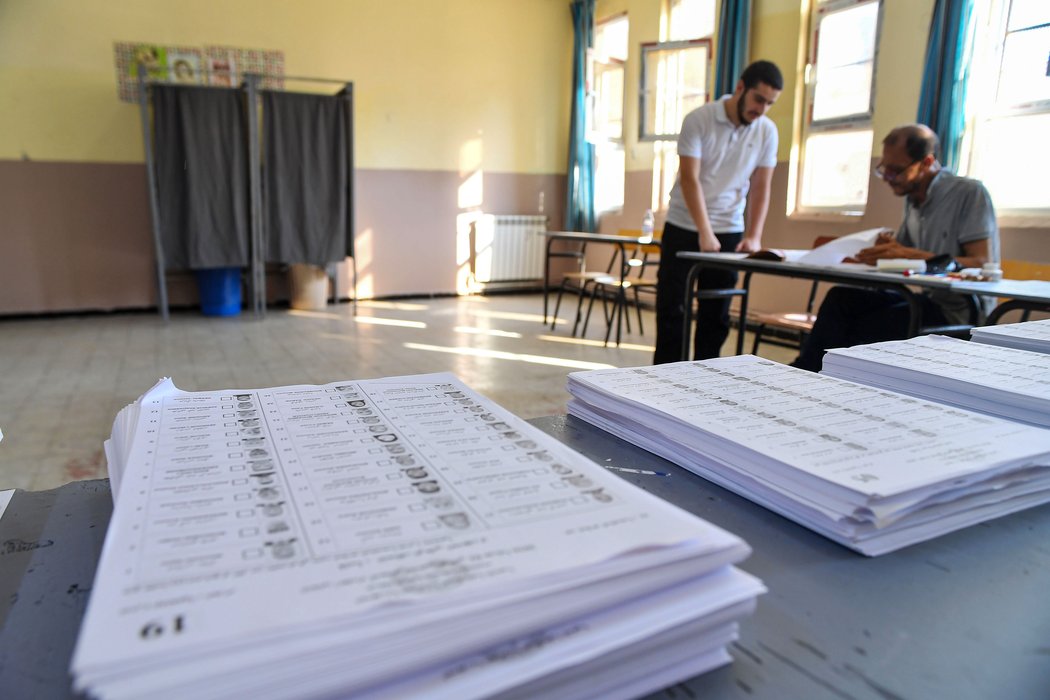
On 2nd July 2026, parliamentary elections took place, witnessing the lowest-ever recorded turnout rate in an Algerian legislative election and a nearly 80% rate of abstention. Only 21.24% domestically and 10.75% abroad of around 23 million registered voters took to the polls to elect the 407 members of the National People’s Assembly (APN), reflecting a general mistrust in representative institutions and exceeding the then-record-low turnout rate of 23% in the 2021 parliamentary elections. On 18th July, the Constitutional Court confirmed the election’s results, which saw three pro-government parties securing a majority: the National Liberation Front (FLN), Algeria’s dominant party since its 1962 independence, emerged in first place with 91 out of the 407 seats, the National Democratic Rally (RND) came in second with 74 seats and the El-Moustakbel Front (FM) came in with 56 seats. The vote was held against the backdrop of a particularly volatile post-Hirak socio-political setting, with President Abdelmadjid Tebboune framing the vote as groundwork for a “new Algeria” after the 2019 movement which sought to restructure the country’s political and executive landscape. On 28th July 2026, the newly configured National People’s Assembly elected FLN’s Algiers 44-year-old assembly member Khalida Boufedeche as parliamentary President, becoming the first woman to assume such a position, among only 25 voted into parliament during the 2026 round.
Executive Decree sets up commission to review cases of citizenship-stripping
On 26th May 2026, the Prime Minister signed Executive Decree No.26-209 to set up the organisation, composition and operation of a special commission tasked with reviewing citizenship-stripping cases, in line with Law No.26-01 amending the 1970 Nationality Code which introduced six broadly worded grounds for nationality revocation. The Commission is set to be composed of the Prime Minister, the Foreign, Interior and Justice ministers, a Defence ministry representative, a Supreme Court chamber president and the heads of police and security authorities, who issue a two-thirds majority ‘reasoned opinion’. The power of citizenship-revocation, however, resides solely in the President, whose decision is informed by the Commission’s opinion. Article 20 of the decree stipulates that all information related to citizen-stripping cases remains entirely “confidential”, further reinforced by Article 5 which imposes a strict duty of confidentiality on each commission member, raising serious inquiry into inadequate transparency measures of the commission’s operations. Additionally, the means by which individuals can contest decisions highlight a lack of judicial review prior to the disqualification procedure. Article 18 provides the individual with the capacity to lodge an appeal with the administrative court; however, this can only be done once the decision has been issued, raising further concerns over the effectiveness of the right to appeal or even whether the appeal concerns the Commission’s non-binding opinion or the presidential decree.
Article 19 of the decree allows proceedings to be suspended should the person agree to return to Algeria and appear before the courts, with civil society organisations such as MENA Rights Groups seeing this as a practice of pressuring exiled activists and opponents into endangering their lives by returning.
Wildfires ravage northeastern Algeria, killing more than 200
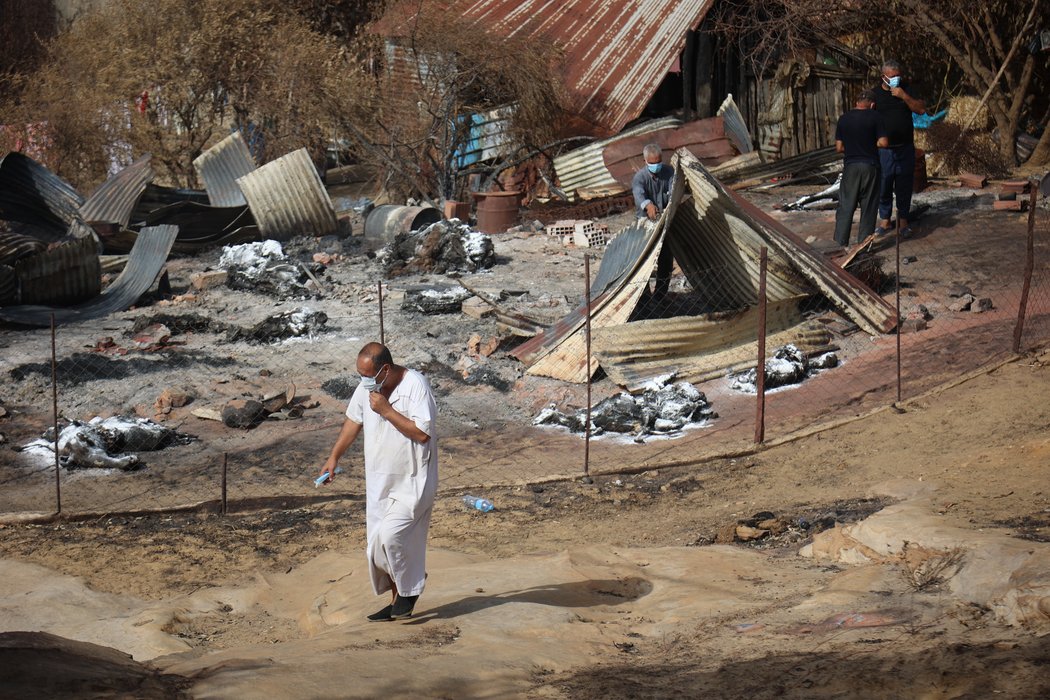
Between July and August 2026, violent wildfires took hold of Algeria’s northeastern mountains and coastlines. More than 150 homes were destroyed in the July wildfires and more than 100 residents of small towns in north-eastern Algeria were hospitalised. However, the deadliest fires swept through the country between 26th and 30th August in sixteen provinces during a heatwave above 45°C, with the northeastern provinces of Jijel, Béjaïa and Tizi Ouzou registering 12 deaths and 54 injured. In response, on 27th August, President Abdelmadjid Tebboune announced a three-day national mourning as 154 wildfires continued to be recorded across the country, of which 18 had been controlled, according to Algeria’s civil protection service. He convened a Council of Ministers meeting to allocate resources to the “disaster area” of the Jijel region. However, the death toll is believed to be more elevated than official media sources, with international news outlets releasing independent counts that tally the death toll at more than 200 people.
Amidst public scrutiny regarding governmental unpreparedness in the face of mounting climate crises, authorities announced on 22nd July that four individuals in Constantine had been placed in pre-trial detention and accused of deliberately triggering the July fires. On 30th August, President Tebboune announced his intention to reinstate the death penalty - which had been under a de facto moratorium since 1993 - against the wildfire’s suspected perpetrators, allowing for the “modification of the penal code” in favour of this reinstatement.
Freedom of Expression
The reporting period saw recurring patterns of repression targeting activists, journalists and researchers, with authorities regularly levying the charge of “glorifying terrorism” against critical voices in Algeria.
Arbitrarily detained journalist undergoes hunger strike
On 12th April 2026, journalist and human rights defender Hassan Bouras was arbitrarily detained outside his home in El Bayadh by security agents in plainclothes, who raided his home and seized a laptop. A day later, on 13th April 2026, an El Bayadh court in northwestern Algeria ordered Bouras to pre-trial detention pending charges of “membership of a terrorist organisation” and “dissemination of publications deemed harmful to the national interest”. In early May 2026, to protest his detention, Bouras underwent a 26-day hunger strike that resulted in serious health complications. On 2nd May, he was placed in solitary confinement. On 22nd June, his case was referred to El Bayadh Criminal court, and as of the writing of this report, he is awaiting trial. On 10th July 2026, UN Special Rapporteurs on the situation of human rights defenders, the promotion and protection of human rights while countering terrorism and the promotion and protection of the right to freedom, as well as the UN Working Group on Arbitrary Detention, released a statement calling on Algerian authorities to immediately release Bouras. They underscored that “no one should be deprived of their liberty for the peaceful exercise of their human rights”.
Journalist and activist sentenced to one year’s imprisonment for social media posts
On 19th May 2026, a Constantine court sentenced 51-year-old journalist, activist and political campaigner Abdelkrim Zeghileche to one year in prison, of which six months were conditionally suspended without a committal order and a fine of 100,000 dinars ($742). Zeghileche’s sentence follows a post on social media in December 2025 in which he called for the creation of a political and legal framework to defend political prisoners. It is the latest in authorities’ attempts to constrain his freedom of expression, previously sentencing him to a year in prison on three separate occasions for “spreading ideas inciting violence and hatred”; in total, Zeghileche has sixteen convictions to his name, both suspended and unsuspended, and has been the subject of judicial harassment, as recorded by Amnesty International, on cases related to his political online expression.
French journalist sentenced to seven years’ imprisonment withdraws appeal to Court of Cassation
On 5th May 2026, French sports journalist Christophe Gleizes’ family announced the journalist had withdrawn his appeal to the Court of Cassation in Algeria. Soon after, on 25th May, Algeria’s Supreme Court rejected the prosecution’s appeal for a harsher sentence and formally noted Gleizes’ withdrawal, potentially paving the way for presidential pardon. Gleizes was sentenced to seven years’ imprisonment without parole in June 2025 for “glorifying terrorism” and “possession of publications for propaganda purposes harmful to the national interest” following his arrest in May 2024 whilst preparing an article on the JS Kabylie football club. The charges were particularly based on his interaction with an official within the JS Kabylie football club who was also a member of the Movement for the Self-Determination of Kabylie (MAK), officially labelled a terrorist organisation by Algeria in 2021. International civil society organisations including Reporters Without Borders (RSF) have continually called on his release, alongside members of the football community.
University professor’s case referred to criminal court over social media publications
On 6th May 2026, the Indictment Division of the Blida Court issued the referral of University of Blida history professor Tahar Ouhachi’s case to the criminal tribunal, with a trial date set for 31st December 2026. The lecturer and researcher had been held in pretrial detention since February over his social media publications, as previously documented by the CIVICUS Monitor, by the investigating judge at the El Affroun court pending charges of “glorifying terrorist acts through the use of information and communication technologies” and “spreading false information likely to undermine public order and public safety” under Article 87 bis of the Algerian Penal Code. On 16th May 2026, the Committee for Justice (CFJ) underscored that the charges brought against an academic researcher for his opinions or writings constitute a serious infringement of freedom of expression and scientific research.
Researcher placed in pre-trial detention
On 26th May 2026, researcher Mounir Seghir was placed in pre-trial detention by the investigating judge at the Oran Criminal Court regarding his online publications allegedly criticising public affairs. He has pending charges of “praising a group classified as terrorist/subversive” as well as “publishing content deemed harmful to the national interest” under Article 87 bis of the Algerian Penal Code.
Lawyer and president of women’s association sentenced to four years’ imprisonment
On 2nd June 2026, the Sidi M’Hamed Criminal Court in Algiers ordered the pre-trial detention of former lawyer and president of the National Organisation of Algerian Women Professionals Latifa Dib, and adjourned her trial to 8th June, under charges of “disseminating publications intended for the public that undermine the national interest”. Latifa Dib had previously been sanctioned by the Algiers Bar Association, which had ordered her permanent disbarment on the grounds of publications deemed contrary to professional ethics and the legal provisions in force. Soon after, on 15th June, Dib was sentenced to four years behind bars and a fine of 200,000 dinars ($1,478.09), a lesser sentence than the five years’ imprisonment and 500,000 dinars fine ($3,698.08) advocated for by the public prosecutor. Paradoxically, Latifa Dib had made a name for herself as a staunch defender of state institutions in various media appearances and online publications.
Twice-imprisoned activist and brother of detainee sentenced to one year behind bars
On 9th June 2026, Hirak activist Mohamed Said Riahi, who had been detained twice before as a result of his critical advocacy, was detained from his workplace at Aïn Témouchent and held in police custody until he was brought before the public prosecutor’s office on 11th June, using Algeria’s immediate appearance procedure, and ordered into pre-trial detention pending charges related to his social media posts. During his trial, which took place on 29th June, the public prosector had sought a three-year custodial sentence and fine. Riahi was handed an 18-month prison sentence on 6th July 2026 with a fine of 200,000 Algerian dinars ($1,478.09) over his online political commentary. On 17th August 2026, the Criminal Division of the Court of Aïn Témouchent reduced his sentence to one year behind bars without parole while maintaining the fine.
Riahi is the brother of political activist and current prisoner Malik Riahi, who has been imprisoned for more than fourteen months without trial. About a month ago, Said Riahi had posted a public appeal condemning the prison authorities’ refusal to allow his brother to receive a money transfer, which he described as arbitrary and a form of psychological pressure.
Journalist arrested over online commentary critical of July parliamentary elections
On 7th July 2026, freelance journalist, blogger and ex-host of the Kabyle-language programme “Tizi n wassa-a” Mourad At-Mimou was detained while at a café in Tizi-Ouzou in northern Algeria by plainclothes police authorities, according to the Committee to Protect Journalists’ (CPJ) anonymous sources. At-Mimou was taken to the Azazga police station, 30 km from Tizi-Ouzou, where his phones were seized and transferred to Algeria’s Central Service for Combating Cybercrime, and he was interrogated over social media publications in which he had allegedly been critical of Algeria’s parliamentary elections in July 2026. After two days in police custody, on 9th July, At-Mimouni was ordered to pretrial detention by the investigating judge at the Azazga Court pending alleged charges of “glorifying terrorism”, “insulting state symbols” and “spreading ideas likely to incite hatred within society” under Article 87 bis of the Algerian Penal Code. Initially, he was investigated under charges of “obstructing an electoral process” but according to local media outlets, they were dropped once authorities effected a search on his phone, using his social media posts and previous extracts from his programme to bring forth evidence for “attack(ing) symbols of the state”. On 31st August 2026, the Public Prosecutor at the Court of Tizi-Ouzou upheld the charge of “glorifying a terrorist organisation” and referred At-Mimou’s case to the criminal court. He is currently awaiting trial. Several international organisations including the Committee for Justice (CFJ), CPJ and Riposte Internationale have called on Algerian authorities to immediately release At-Mimou and “end their practice of detaining journalists over their reporting and online expression”.
Hirak activist charged with glorifying terrorism on TikTok live
On 9th August 2026, activist Mohamed Bakir Torki was arrested at his workplace at the Directorate of State Property in Algiers, where he works as a security officer. He was held in police custody until he appeared on 12th August before the Public Prosecutor of the Sidi M’Hamed Court, who referred his case to the investigating judge. The latter ordered Bakir Torki into pre-trial detention pending charges of “disseminating false information via social media” linked to his participation in a live broadcast on TikTok on 5th June 2026, as well as “glorifying and praising terrorism” and “undermining public security and public order”. He is currently awaiting trial.
Mohamed Bakir Torki, also known as ‘Sofiane’, is closely linked to the 2019 Hirak protest movement, which called for the resignation of then President Abdelaziz Bouteflika and later transformed to a call for socio-political reforms. Bakir Torki famously interrupted a local correspondent of Sky News Arabia in March 2019 to say “Ytenehaw ga3” (“May they all leave”) in response to Bouteflika’s resignation. The slogan soon became synonymous with the Hirak movement and was used to call for a complete resignation of Algeria’s ruling political elite.
Activist placed in pre-trial detention following arrest at Algiers airport
On 6th August 2026, activist Abderrezak Zitouni was arrested by border police upon his arrival from Paris at the Houari Boumediene International Airport and subsequently transferred to a police station in the Algiers neighbourhood of Bab Ezzouar where he was interrogated and placed in police custody for 3 days. On 9th August, he was brought before the Public Prosecutor and ordered into pretrial detention by the investigating judge at the Dar El Beida Court in Algiers pending charges under Article 87 bis of the Algerian Penal Code, allegedly in connection with his participation in Hirak protests and anti-government mobilisation in Paris.
Freedom of Association
Dissolution of teachers’ union ordered following successful ministerial petition
On 28th July 2026, the Bir Mourad Raïs Administrative Tribunal in Algiers ordered the dissolution of the National Autonomous Council of Teaching Staff in the Tertiary Education Sector (CNAPESTE), an independent trade union recognised since 2007, and ordered the appointment of a liquidator. The ruling, previously documented in the CIVICUS Monitor, had come following a March 2026 petition seeking to dissolve the CNAPESTE, put in place by the Ministry of Labour, with the support of the Ministry of National Education, on the basis of Law No. 23-02 on trade union rights, particularly on grounds related to the compliance of the statutes and representativeness.
The trade union’s defence team maintains they had fulfilled the necessary formalities, viewing the proceedings as an attempt to neutralise independent trade union action. As the judgment is subject to provisional enforcement, the dissolution takes effect immediately, even if an appeal is lodged. Amnesty International has called for the immediate annulment of the judgement, whilst several political and civil society actors have denounced this decision.
Arrest of pro-Kabyle independence movement members
On 13th July 2026, six members of the Movement pour l’autodétermination de la Kabylie (Movement for the self-determination of the Kabylie, MAK) were arrested under charges of “disrupting the smooth running” of the general elections held on 2nd July, according to the Algerian Ministry of Defence. MAK is a separationist movement founded in 2001 to establish a “sovereign Kabyle state” and has been labelled a terrorist organisation by Algerian authorities since 2021. According to the Ministry of Defence, four members of the group were operating in the Tizi-Ouzou region under Moroccan nationality, ‘illegally’ residing in the country.