This update covers developments relating to the freedoms of expression, peaceful assembly and association in Algeria from 16th December 2025 to 30th April 2026.
GENERAL
Constitutional amendments consolidate presidential powers
In January 2026, the authorities presented draft “technical” amendments to the 2020 Constitution and the Organic Law on the Electoral System, and opted for the parliamentary route rather than a referendum. These amendments concern, amongst other things, the office of the President, the organisation of Parliament, the Supreme Council of the Judiciary and the National Independent Electoral Authority. Some objected to this “technical” classification, emphasising that the proposed constitutional amendments affect the nature of the political system and the functioning of several state institutions.
On 15th March 2026, twelve constitutional amendments were adopted by the Parliament, meeting in joint session. They expand the executive’s room for manoeuvre in legislative coordination and limit the extent to which electoral administration is detached from the state apparatus.
Grounds to deprive Algerians of their nationality are expanded
On 24th December 2025, the National People’s Assembly adopted a proposed law amending the Nationality Code to expand the circumstances under which an Algerian citizen may be stripped of their nationality, whether by birth or by acquisition. The Council of the Nation (the Senate) unanimously approved the law on 22nd January 2026, and the President signed Law No. 26-01 on 17th February 2026.
The text introduces a new Article 22 bis, which provides, in particular, for the possibility of withdrawing nationality from any Algerian against whom there is serious and consistent evidence establishing that they have committed, outside the national territory, acts deemed to be seriously harmful to national security, national unity, state stability or other broadly framed national interests, allegiance to another state, cooperation with hostile foreign forces or entities, and participation in or financial support for organisations classified as terrorist or subversive.
The law does not define ‘the interests of Algeria’or what constitutes an attack on ‘national unity’, ‘the stability of its institutions’ or ‘the unity of the people’, and the vague nature of the formulations could be used against critical voices, particularly in the diaspora. In addition, as the MENA Rights organisation analyses, one of the key changes introduced by this reform concerns the standard of proof required to order deprivation of nationality: whereas revocation was previously conditional upon a criminal conviction, the new law requires only the existence of ‘serious and consistent evidence’ of the commission of one of the acts listed in Article 22 bis.
UN experts urge quashing of poet Tadjadit’s new trial
On 28th April 2026, six UN Special Rapporteurs urged the authorities to quash the trial of poet Mohamed Tadjadit. Tadjadit was arrested in January 2025 and sentenced to five years in prison under Articles 96, 79 and 146 of the Penal Code, in connection with his online writings and criticism of the government. The UN experts expressed concerns as the retrial on three new criminal charges carry the penalty of death. The trial on the charges of attacking and conspiring against the authority of the State and the integrity of the national territory was initially scheduled for 30th April 2026 but the trial was postponed to June 2026.
We continue to observe unjustified restrictions on freedom of opinion and expression and the repeated use of the judicial system to intimidate those considered dissidents in Algeria
- UN experts
EXPRESSION
Arrests of journalists
- On 5th February 2026, freelance journalist Abdelali Mezghiche was arrested and placed in pre-trial detention on several charges, including “disturbing public order”, “spreading false information” and “belonging to a subversive group” and “incitement to an unarmed assembly”. According to the Committee to Protect Journalists, Mezghiche was arrested over posts on his Facebook page, reporting on public anger over the imprisonment of local figures in the southern city of Djanet.
- On 5th February 2026, state security officers arrested journalist Omar Ferhat from his home in Algiers. Ferhat is the director of the local independent news website Algerie Scoop and he runs several well-known pages on social media sites. The investigative judge at the Sidi M’hamed Court ordered his pretrial detention pending investigation into charges related to collusion, defamation, spreading false news, and inciting hate speech.
- On 12th April 2026, plainclothes security officers arrested Hassan Bouras outside his home in El Bayadh, apparently without a warrant or any explanation. Bouras is a journalist and was previously chair of the Algerian League for the Defence of Human Rights (LADDH) for the southern regions of Algeria. According to the Committee to Protect Journalists, Bouras’ detention follows years of judicial harassment.
As of 30th April 2026, there are 6 imprisoned journalists in Algeria, according to the Committee to Protect Journalists.
Arrest of economist who had raised concerns about a flagship project of the President
On 24th January 2026, the engineer and economist Djelloul Slama was abducted and missing for several days. A week earlier, he had provided an analysis of the Ghar (Gâra) Djebilet iron ore mine during a broadcast on the El Hayat TV channel. During that interview, he expressed his opinion on the President’s flagship project, saying that it would only become profitable in the very long term and pointing at several logistical and economical hurdles. On 5th February 2026 he was placed in pre-trial detention by the Dar El-Beïda Magistrates’ Court. The Workers’ Party called for his release.
Arrest of researcher working on the Algerian national movement for his online posts
On 15th February 2026, Tahar Ouhachi, an associate professor of history at the Lounici-Ali University in Blida, was arrested and remanded in custody by the investigating judge at the El Affroun Court. He is accused of posting social media content that the authorities consider to be an endorsement of terrorist acts and a threat to the national interest. Ouhachi is a specialist in ancient history and he developed a particular interest in the national movement in Algeria and the historical dynamics of identity formation. The case has caused concern among civil society, independent media and the academic community.
Professor sentenced to imprisonment for online posts
According to the organisation SHOAA for Human Rights, on 9th April 2026, university professor Abderrahim Guerna was placed in custody. Guerra is a professor of computer science at the University of M’sila, who has been imprisoned in the past. On 16th April 2026, following immediate appearance procedures, he was sentenced to one year’s imprisonment without parole and a fine in connection with posts attributed to him on Facebook. According to SHOAA, the sentence is based on several charges, including undermining national unity, publishing information likely to undermine public order, and disseminating material deemed harmful to the national interest.
Activist and content creator sentenced for Facebook posts
On 21st April 2026, Kabyle activist Wafia Tidjani was sentenced to five years’ imprisonment under Article 87 bis of the Criminal Code, on the basis of posts on Facebook. This sweeping provision that defines terrorism-related acts has become a primary instrument to silence dissent. Tidjani is known for her social and environmental initiatives in Tizi Ouzou, as well as her commitment to supporting the families of prisoners of conscience and marginalised communities. She was arrested and has been in pre-trial detention since March 2025. Tidjani has faced a series of legal proceedings since the start of the popular protest movement Hirak in 2019-2021.
Authorities and press are silent about suicide attacks in Blida
On 13th April 2026, while Pope Leo XIV was visiting Algeria, two men blew themselves up near a police station in Blida. According to Le Monde, because of the Pope’s visit, the authorities decided to impose total silence on the incident and everyone in the Algerian press complied. There was no official statement, but the Union Africaine initially condemned the attacks. The next day, the post was withdrawn from the website and social media accounts of the Union.
a systematic suppression of information
- RFI
Book signing censored and bookshop closed
On 18th April 2026 in Algiers, the Algerian police intervened at the Beaux-Arts bookshop in Algiers to prevent a book-signing event for the essay Les Identités rebelles by sociologist and anthropologist Fatma Oussedikt. The book is the result of years of field research on the history and sociology of the M'zab Valley, a Berber-speaking region. The police seized copies of the book and notified a decision to impose a one-month administrative closure on the bookshop. Shortly after, the National Library of Algeria reported irregularities surrounding the legal deposit.
According to the publishing house Koukou, plainclothes police officers, tax officials and officials from the Ministry of Culture had come to the bookshop two days earlier to demand the cancellation of the event. The publishing house also reported hostile messages on social media accusing the writer and her publisher “of fomenting separatism, undermining national unity and inciting communal clashes”. The bookshop was closed for three days after the event.
Release of activist Touati, accused of collusion with a terrorist organisation
On 3rd February 2026, Lyes Touati, an activist arrested on 15th December 2025 in Bejaia and placed in preventive detention, was released after 59 days in detention. He was accused of “collusion with a terrorist organisation”. A leading figure in the 2019 Hirak in Bejaia, he is well-known in his community for organizing campaigns and fundraisers.
Initially prosecuted on terrorism charges, the charges were reclassified as misdemeanours and finally brought under Article 196 bis of the Criminal Code for allegedly spreading “false information”. This article provides that any person who intentionally disseminates false or defamatory information or news to the public that is likely to undermine public safety or public order shall be punished by imprisonment. He was acquitted by the Bejaia court and released. The release comes after prolonged inaction by the judiciary and pressure from his support committee and human rights organisations.
ASSOCIATION
Closure of historical CSO that provides support to families of victims of enforced disappearances
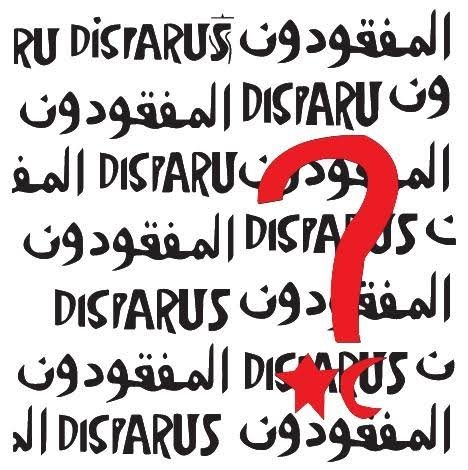
On 16th March 2026, the organisation SOS Disparus, which campaigns against enforced disappearances in Algeria and is a sanctuary of memory for victims, was closed down and sealed off by the police. Police officers from the Sidi M’hamed district arrived with a sealing warrant, inspected the premises and sealed off the office. They acted on the basis of an administrative decision taken by the Ministry of the Interior, according to which the organisation does not have the necessary authorisation to operate. The organisation has never obtained this official accreditation required by the 2012 Law on Associations. By not processing registration applications from organisations, the authorities put organisations in legal limbo.
The organisation has operated since 2001, documenting and supporting the families of victims of enforced disappearance and advocating for the right to truth and justice. It is part of the Coalition of Families of the Disappeared in Algeria. According to these organisations, up to 20,000 civilians were forcibly disappeared during the civil war that lasted from 1992 to 2002.
Young Hirak activist sentenced to seven years’ imprisonment
On 16th April 2026, Mohamed Arezki Saïd Chetouane, a figure associated with the Hirak movement, was sentenced by the Blida Criminal Court to seven years’ imprisonment on charges relating to “terrorism”, “insulting the president” and “publication detrimental to the national interest”.
In 2021, at the age of 15, Saïd Chetouane took part in the Hirak protests. He was arrested and taken to the Bad El Oued police station. Upon his release, he stated on camera that he had been sexually assaulted by police officers, allegations which in turn led to further arrests. Chetouane was arrested on 4th October 2025, following incidents that occurred after a basketball match. His phone was subsequently searched, and the conviction is based primarily on messages found on it. In 2021, a fundraising campaign was launched by the exiled YouTuber Amir Boukhers, known as Amir DZ, to support Saïd Chetouane whilst he was in detention. According to the prosecution, the young man allegedly requested the money from this fundraiser via the Messenger app. Amir Boukhers is said to have redirected him to another Canada-based videographer, Imad Lakhdara, who is described as the holder of the funds.
The Court accused Chetouane of following the social media accounts of Amir DZ, Imad Lakhdara and the exiled YouTuber Mohamed Larbi Zitout. Mohamed Larbi Zitout is a founding member of Rachad, a political movement which the Algerian authorities labelled as a terrorist group in 2022. Chetouane was also accused of possessing videos downloaded from social media and deemed offensive to the President of the Republic; and, finally, of sharing on his Facebook account a photograph of the imprisoned Hirak activist and poet Tadjahit.
Enforced disappareance of human rights defender Ben Nakhla
In April 2026, Rachid Ben Nakhla was apprehended. Rachid Ben Nakhla is the son of the missing Mr Boukhatem Ben Nakhla. He is a human rights defender and a member of the Coalition of Families of the Disappeared in Algeria (CFDA). On 29th April 2026, UN experts and the Chairperson-Rapporteur of the Working Group on Enforced Disappearances urged Algeria’s regime to immediately disclose the fate and place of detention of Ben Nakhla and to release him without delay. The UN experts also expressed their concern over the reported arbitrary detention of several other individuals, including Hamza Tellaa, Samia Bekouche, and Slimane Hamitouche, who were detained without a warrant before being released.
Further delays in trial of lawyer Soufiane Ouali
On 16th February 2026, the organisation Committee for Justice (CFJ) reported that it had been officially informed of the postponement of the criminal trial of Mr Soufiane Ouali and his co-defendants. Sofiane Ouali is an Algerian lawyer who defends prisoners of conscience. He was held incommunicado in 2024 for organising a sit-in to protest against the detention of a human rights activist. Ouali is currently on bail, but his criminal trial has been repeatedly postponed: originally scheduled for 25th December 2025, it was adjourned to 29th January 2026, then to 5th February 2026, and subsequently to 9th June 2026.
Judicial uncertainty is becoming a tool for exerting pressure, a means of keeping a committed lawyer in a state of constant vulnerability
- La Radio des Sans Voix
UNHCR-recognised refugee subject to travel ban
On 6th March 2026, Slimane Bouhafs tried to leave Algeria but discovered that he was subject to a travel ban and could not leave the country despite having received no official document or notification. He had already tried to take a flight on 27th February 2026 but his questioning by the border police made him miss his flight.
Bouhafs is an Algerian Christian activist and member of the Amazigh ethnic minority. He was sentenced in 2016 to prison for “offending the prophet of Islam” on Facebook and released in 2018 following a presidential pardon. He then went into exile and was recognised as a refugee in Tunisia by the UNHCR.
Slimane Bouhafs was abducted in Tunisia in 2021 and forcibly returned to Algeria. On 4th July 2023, an appeals court in Algiers upheld his three-year prison sentence for ‘membership of a terrorist organisation’, for having ‘received funds from abroad for the purposes of political propaganda’, for ‘hate speech and discrimination’, for ‘using technology to spread false information’ and for ‘conspiracy’, amongst other charges. He was released in 2024 after serving his sentence.
A 2025 report by several human rights organisations documents how the Algerian authorities increasingly use arbitrary travel bans to retaliate against perceived critics.
On 30th March 2026, the MENA Rights Group lodged a complaint with the United Nations Human Rights Committee, denouncing the Tunisian authorities’ failure to investigate Bouhafs’ arbitrary abduction and forced transfer to Algeria.
No authorisation to hold union congress
The national congress of the National Autonomous Union of Public Administration Staff (SNAPAP) was due to take place on 10th and 12th April 2026 at the Safir Hotel in Algiers. It was blocked due to a lack of administrative authorisation. Repeated requests for authorisation since 2024 have gone unanswered by the Algerian authorities. The authorities refused to accept the union’s final application, even though it had been served by a bailiff on 10th March 2026, making it impossible for the congress to take place. The cancelled congress was intended to heal the rifts between several federations, which had registered and were ready to reunite. The failure to achieve this outcome makes the situation even worse.
Threat of dissolution of large labour union
On 9th March 2026, the Ministry of Labour, supported by the Ministry of National Education, decided to bring proceedings before the administrative court against the National Autonomous Council of Teaching Staff in the Tertiary Education Sector (CNAPESTE). The Ministry of Labour filed a petition with the Bir-Mourad-Raïs Administrative Court seeking the dissolution of CNAPESTE, the appointment of a liquidator and an order that the trade union pay the costs of the proceedings. According to La Radio des Sans Voix, this is the first time that authorities have initiated proceedings to dissolve a trade union.
The trade union is accused of failing to comply with current legislation and of failing to comply with certain court rulings. The trade union categorically rejects these accusations. The coordinator of Cnapeste, Messaoud Boudiba, and other senior union officials have been facing legal proceedings and disciplinary measures following the organisation of protest sit-ins outside National Education headquarters in 2025. They are accused of organising unarmed gatherings.
ASSEMBLY
Strike of lorry drivers is followed by arrests
On 1st January 2026, a mass walkout of lorry and bus drivers took place in several wilayas across the country. The strikers denounce the new Traffic Code, which includes stricter fines and tougher licensing rules, as well as the rise in fuel prices.
In the following days, several individuals were arrested for having participated in the movement or for having recorded or shared videos about the movement:
- On 5th January 2026, security services arrested four individuals, including three truck drivers, who had recorded a video documenting the movement.
- Meanwhile, in the wilaya of Batna, a lorry driver known as Younes Haddar (alias “Houssam”) was arrested after participating in the strike and posting a video calling for the revision of the Highway Code.
- Security forces arrested Hadj Djamel Haiour, after documenting the strike in a video broadcast on 1st January 2026.
According to investigative journalist Abdou Semmar, more than 40 people were arrested after the strike and a few were detained on various charges.
Coordinator of CSO SOS Disparus sentenced to imprisonment for “incitement to assembly”
On 9th April 2026, the Sidi M’hamed court sentenced Slimane Hamitouche, coordinator of SOS Disparus, to six months’ imprisonment without a committal order. According to published reports, he was arrested the day before during the weekly gathering of families of the disappeared, taken into police custody, and then brought before the court for an immediate hearing the following day. The public prosecutor’s office had brought two charges against him: refusal to comply with the orders of law enforcement officers in the course of their duties, and incitement to an unarmed assembly. The court found him guilty of ‘unarmed assembly’ and acquitted him of the charge of ‘disobeying police orders’.