Civic space in Afghanistan remains rated as ‘closed’. Since the Taliban seized power in August 2021, the de facto authorities continue to commit human rights violations and crimes under international law against the Afghan people, especially women and girls, with absolute impunity. Civil society activists, journalists and others face severe restrictions, and activists have been arbitrarily arrested and detained for their criticism of the Taliban. Others have faced harassment, intimidation and violence, and some have been killed. The Taliban have also raided media offices and detained journalists. Some activists have been tortured and ill-treated.
In September 2026, UN Secretary-General António Guterres called for the removal of restrictions preventing Afghan female UN staff from entering their workplaces, marking the first anniversary of the prohibition imposed on 7th September 2025. He described the restrictions as contrary to international law, including the UN Charter, and warned that they undermined the delivery of life-saving assistance.
In the same month, a statement shared by France’s Permanent Mission to the UN reported that 42 states and the European Union had jointly condemned, in the strongest terms, the Taliban’s systemic discrimination and repression against Afghan women and girls. The declaration called for an end to gender-based segregation.
At UN General Assembly events in September 2026, High Commissioner for Human Rights Volker Türk warned that more than 200 Taliban decrees and directives had institutionalised women’s repression.
A report to the UN Human Rights Council’s 63rd session by the UN Special Rapporteur Richard Bennett in September 2026 said, among other issues, that the de facto authorities have instituted various measures to control speech and social narratives since August 2021. On 5th October 2026, the Human Rights Council renewed the mandate of Special Rapporteur Richard Bennett for one year, adopting the Afghanistan resolution without a vote.
On 25th September 2026, organisations including Rawadari urged Australia, Canada, Germany and the Netherlands to advance their CEDAW accountability initiative. The four countries had announced the initiative on 25th September 2024, invoking the Convention’s dispute-resolution mechanism to hold Afghanistan accountable for systematic discrimination against women and girls.
On 5th October 2026, the International Criminal Court unsealed four arrest warrants concerning alleged persecution in Afghanistan. The allegations concern persecution of women, girls, people considered incompatible with Taliban gender policies and perceived supporters of women’s rights. They encompass severe restrictions on education, movement and expression, connected with other grave violations.
On 8th October 2026, the United Nations Assistance Mission in Afghanistan (UNAMA) expressed concern over arrests and detention for alleged breaches of dress requirements and restrictions on travelling without a male guardian.
In recent months, it was reported that women-led organisations faced financial and operational pressure, detention of activists and closure of a university, school and cultural centre. Protests remain restricted but did take place for women’s rights and against a seminary’s evacuation. Media outlets faced closures, journalists were arrested, and cultural artists and critics were targeted.
Association
Restrictions on political association
An analysis by Afghanistan International in September 2026 showed restrictions on political organisation since the Taliban takeover. It highlighted how the prohibition of political parties and dismantling of electoral institutions had removed channels through which citizens could organise, seek representation and pursue peaceful political change. Freedom House’s 2026 assessment likewise awarded Afghanistan zero points for the freedom to organise political parties or competitive political groupings.
Women-led organisations face financial and operational pressure
Women-led and women’s rights organisations faced overlapping pressures from restrictions on women’s work and declining international funding. A UN Women study on 74 organisations, reported in September 2026, found that 61 organisations - 82 per cent - were at risk of closure. One had already closed permanently, while 40 anticipated possible suspension or closure within the following 12 months. Sixty-six per cent described their financial position in 2026 as worse or critical compared with 2025.
The effects extended to essential protection services. Seventy-six per cent reported reductions or suspension of case-management and referral services for survivors of violence; 70 per cent reported reduced or unavailable safe spaces; and 68 per cent reported disruption to livelihoods and economic-empowerment services. Although 83 per cent reported increasing needs, 62 per cent were reaching fewer beneficiaries and 54 per cent had introduced waiting lists or turned people away. Ninety-two per cent reported staff losses, while 65 per cent relied on unpaid workers or volunteers.
Alongside the Taliban’s ban on Afghan women working for national and international NGOs, the funding crisis threatens the networks through which women provide services, document abuses, organise and advocate. Organisations called for direct, flexible, multi-year funding that covers core operational costs.
Detention of activist and Shia commission members
🚨URGENT, Ehsan Sadat, a young Afghan civil society activist and defender of education and human rights, is reportedly in a coma after being detained and severely tortured by Taliban intelligence in Khost. Source confirm for me, His life is reportedly at serious risk. This is not the time for silence. I urgently call on the UN, human rights organisations, journalists, and the international community to expose this case and demand immediate protection, medical care, and his release. #FreeEhsanSadat #HumanRightsViolations
— Jahanzib Wesa (@jahanzebwesa) August 11, 2026
Civil society and education activist Ehsan Sadat was reportedly released from Taliban detention in Khost on 12th September 2026, following his arrest on 6th August 2026 on allegations of “anti-government propaganda”. His work included community advocacy, promoting women’s and children’s rights, and supporting access to education.
His release followed allegations made public on 11th August 2026 that Taliban intelligence personnel had severely tortured him, leaving him in a coma. His family confirmed his detention. His condition following release was not established.
On 13th September 2026, five members of the High Shia Commission were reportedly detained in Kabul and taken into the custody of the Taliban’s Ministry of Justice. They included commission head Mohammad Ali Akhlaqi and members Sayed Nader Shah Bahr, Haji Amir Mohammad Bazel, Sayed Mohsen Hossaini and Sayed Abdullah Hashemi.
Justice Minister Abdul Hakim Sharei allegedly ordered them held in a private prison within the ministry and declared the commission an illegal political-intelligence body, despite its establishment under Taliban rule. The ministry also dissolved the commission, confiscated membership cards from 25 members and instructed them not to return to its office. The detentions and dissolution weakened a structure through which Shia communities could raise concerns and seek collective representation.
Closure of university, school and cultural centre
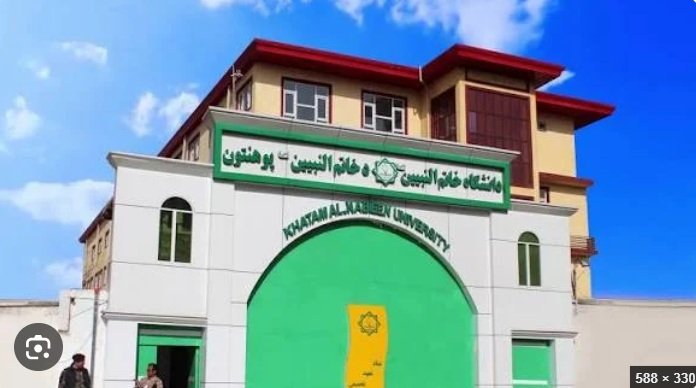
On 16th September 2026, the Taliban’s Ministry of Higher Education revoked Khatam al-Nabieen University’s operating licence and ordered the closure of both its main campus in Kabul and its Ghazni branch. Taliban spokesperson Ziaullah Hashimi alleged non-compliance with ministry policies, insults to Islamic values and misuse of the institution’s status, without providing detailed evidence. Students were to be transferred to other private universities.
The university, established in 2007, offered programmes including law, political science, medicine, engineering and economics. Earlier in September 2026, the Taliban had reportedly taken control of its management and appointed a president and four deputies. Mohammad Jawad Mohseni, identified as an owner, rejected the accusations and described the closure as unjust. Allegations that the university’s Shia identity had prompted objections were not substantiated in the ministry’s public explanation.
The university’s closure followed the confrontation over the associated Khatam al-Nabieen seminary, where a contested property claim led to evacuation and detentions. Interference with leadership, licensing and premises removes several foundations of institutional autonomy at once, limiting communities’ ability to sustain their own educational and religious organisations.
On 21st September 2026, Taliban intelligence forces reportedly raided the separate Khatam-ul-Anbia Religious School in western Kabul. Students and staff were expelled, and the school’s prayer hall and administrative sections were sealed. Its head, Sayed Hassan Fazelzada, and several teachers were reportedly detained, with their whereabouts and condition unknown after the raid.
On 29h September 2026, The Taliban Ministry of Justice shut down the Tebyan Cultural Center in Kabul. Tebyan is a Shia-affiliated religious and cultural organisation founded in Kabul in March 2002.
Peaceful Assembly
Taliban defends ban on demonstrations
On 2nd September 2026, Taliban spokesperson Zabihullah Mujahid publicly defended the complete prohibition on demonstrations contained in the Police Law. He invoked the Taliban’s interpretation of Islamic law and the purported requirements of security and stability, arguing that demonstrations belonged to political systems such as democracies or republics. A blanket prohibition denies communities any lawful avenue for collective public dissent, rather than regulating specific safety risks.
The Spontaneous Movement of Afghan Women (SMAW) responded in a statement dated 3rd September 2026. It condemned the protest ban and described how women had adapted their methods under threat of arrest and violence. It described protesters using smaller gatherings in enclosed spaces, concealing their faces, displaying slogans and sharing photographs and videos online. It also described symbolic actions and graffiti as ways of maintaining opposition when street demonstrations had become especially dangerous.
Residents protest against seminary’s evacuation
Taliban forces on Monday September 7, forcibly evicted students from the Khatam al-Nabieen complex, one of the largest Shia seminaries in Kabul, and took control of the premises after detaining dozens of teachers and students, while separately arresting three prominent Shia community figures who had planned to discuss the detentions, local sources said. Sources told local media that Taliban personnel from the Ministry of Justice had given students until around 10 a.m. on Monday to leave the seminary but later removed them by force in the afternoon. Read more: https://t.co/hlPEd17nO1
— KabulNow (@KabulNow) September 7, 2026
On 5th September 2026, residents gathered outside Khatam al-Nabieen seminary on Dar-ul-Aman Road in Kabul after Taliban forces surrounded it and ordered its evacuation. Residents responded to calls from seminary officials to protest, chanting “Allahu Akbar”. Ministry of Justice forces deployed military personnel and equipment. They used violence against students and teachers, with several students reportedly beaten.
Tamadon TV head Mohammad Jawad Mohseni said 12 instructors had been detained to pressure the institution’s leadership into leaving. Authorities claimed the complex occupied government land, while seminary representatives disputed the claim and maintained that the ownership case remained unresolved. Residents, teachers and students joined the protest to defend the institution.
Following the protest, 28 students, teachers and other people associated with the seminary had been detained; four had been released later while 24 remained in custody. The seminary was evacuated on 7th September 2026.
Protest held to mark International Day of Peace
#Breaking: with all the danger Afghan women protester and members of the Free Women’s Network (FWN) held a protest inside Afghanistan on the International Day of Peace, calling for freedom, justice, equality, and the rights of women and girls. #Afghanistan #AfghanWomen #PeaceDay https://t.co/XI5DB3cDqa
— Jahanzib Wesa (@jahanzebwesa) September 21, 2026
In September 2026, members of the Free Women’s Network held a protest inside Afghanistan to mark the International Day of Peace. Women came together to call for freedom, justice and equality, asserting their right to participate collectively in public debate despite restrictions on their movement and visibility. Their demands linked peace to women’s access to education, employment and public life.
Protest to support teachers and girls
On 6th October 2026, the Women’s Freedom Network held a protest to demand international support for teachers and girls denied access to work and education. Members expressed solidarity with teachers and students and urged educational and human rights organisations to take practical action. These interventions sustained organised advocacy even where restrictions limited opportunities for public assembly.
Expression
Media outlet closures and arrest of journalists
#Afghanistan 🇦🇫 @AFJC_Media condemns the closure of Lapis, an affiliate of the Moby media group, by the #Taliban, & calls for its urgent reversal. Lapis plays a significant role in the media sector by producing public health & educational advertisements. https://t.co/4LcL25Kabb https://t.co/UDWYGHbSod
— IFEX (@IFEX) September 3, 2026
On 26th August 2026, intelligence personnel closed the Kabul office of Lapis, an affiliate of the Moby media group. They raided the office in Wazir Akbar Khan, ordered staff to leave and confiscated computers and data-storage devices without prior notice. Officials cited an investigation into content allegedly contradicting local values and promoting Western narratives.
Lapis supported the media sector through advertising, including educational and public-health messaging, journalist training and staff development. Its closure therefore affected both its operations and support available to other outlets. The Afghanistan Journalists Center (AFJC) condemned the action and called for its reversal.
Taliban security forces closed Rah-e-Farda TV in Kabul’s Sar-e-Karez neighbourhood on 6th September 2026 and detained its owner, Salman Akhlaqi. The closure came approximately three months after the station resumed broadcasting following structural changes, including the appointment of Akhlaqi as owner and Rahman Mirzad as executive director.
Forces also sealed a local elder’s office in an adjacent building and detained several people inside, whose identities and exact number were not disclosed. An unnamed Taliban Ministry of Justice official told AFJC that the operation was linked to claims that both buildings belonged to exiled politician Mohammad Mohaqeq. The watchdog called for Akhlaqi’s immediate and unconditional release and the broadcaster’s reopening.
On 7th September 2026, morality police detained 12 journalists covering a book exhibition in District 2 of Khost city. The journalists were filming and conducting interviews at approximately 9:30 a.m. after being invited by the local Department of Information and Culture. Officers marched them along a crowded road to the morality police office, held them for approximately an hour, recorded their details and confiscated their cameras.
The detentions were linked to restrictions on images of living beings. The ban, introduced in August 2024, was reportedly being enforced in 25 of Afghanistan’s 34 provinces.
On 24th September 2026, Taliban personnel raided the Kabul office of the Afghan Voice Agency (AVA), seized equipment and documents, sealed the premises and detained its security manager. Officials subsequently summoned current and former contributors associated with AVA, some of whom also worked with the Tebyan Social and Cultural Centre. Five people, including reporter Zamin Ali Chavoshi, were detained after appearing on 25th September 2026.
The Committee to Protect Journalists (CPJ) called for the release of all six detainees and the office’s reopening, warning of an escalating crackdown on media serving Shia and Hazara communities. The raid removed a reporting platform serving a marginalised community and, through the associated closure of Tebyan, also restricted its cultural and organisational life.
AFJC urges Taliban to immediately reinstate BBC FM — the only intl FM radio in Farsi, Pashto & English — suspended nationwide. The ban cuts off women & rural communities from independent news. https://t.co/CaQWENc9hJ https://t.co/cD1S4UaSnG
— Afghanistan Journalists Center (@AFJC_Media) October 19, 2026
On 13th October 2026, the Taliban confirmed that they had suspended BBC World Service programming from FM radio transmitters across Afghanistan, affecting the broadcaster’s Dari, Pashto, and English-language services, according to the BBC and news reports. The BBC said it continues to provide news and programming for Afghan audiences in the three languages through shortwave and medium-wave radio, satellite, and online services.
On 1st September 2026, journalist Shakib Ahmad Nazari was released after 405 days in Taliban custody. Nazari, who worked for Japan’s NTV network, had been arrested in Kabul on 24th July 2025. AFJC reported that he had been held without access to legal counsel or a fair trial and subsequently sentenced by an intelligence-linked military court to three years’ imprisonment on allegations of propaganda against the Taliban and collaboration with exiled media.
Nazari returned to his family after release, but the circumstances of his release and the status of his sentence remained unclear. AFJC also noted that Abuzar Sarem Sar-e-Puli, director of Tawana News Agency, remained detained on allegations including propaganda against the authorities. It called for his immediate and unconditional release.
Restrictions on access to information
Restrictions on smartphone use in government offices, reportedly introduced in June 2026, hindered journalists’ access to official information. Journalists said officials had previously shared information, photographs and audio through WhatsApp and similar applications, but the restrictions had made these channels harder to use.
Women journalists were particularly affected because their access to press conferences and face-to-face interviews was already restricted, including through demands that a male relative accompany them. Some described unfinished stories and delays in obtaining official responses. A Taliban spokesperson disputed that the smartphone ban had been finalised.
Cultural artists detained
Sources told Afghanistan International that Taliban intelligence detained local singer Sayed Ghafar Agha at his home in Kabul’s 15th district after he posted a video mourning the death of NRF commander Hasib Panjshiri. https://t.co/JuCYkbZ615 https://t.co/Fuzo9LiRTW
— Afghanistan International English (@AFIntl_En) August 25, 2026
On 25th August 2026, singer and dambura player Sayed Ghafar Agha was reportedly detained at his home in Kabul after posting a video mourning National Resistance Front commander Hasib Panjshiri. Agha had returned from Iran and had reportedly been required to pledge that he would stop singing.
Taliban intelligence forces have detained and imprisoned Muzhda Uzbek, a poet from northern Afghanistan, sources in Takhar province confirmed to KabulNow. The sources said on Sunday, October 4, that Uzbek was arrested four days ago in the provincial capital, Taloqan, and remains in Taliban custody. Read more: https://t.co/NPyxP9NOfb
— KabulNow (@KabulNow) October 4, 2026
Around 30th September 2026, Taliban intelligence forces reportedly arrested poet and schoolteacher Muzhda Uzbek in Takhar province over poems critical of the Taliban and alleged links to former senator Rahila Dostum. She remained in custody with her whereabouts and condition unknown. Local Taliban authorities had not publicly commented on her detention.
Uzbek’s detention prompted collective appeals from women’s movements. Members of the Northern Women’s Protest Movement sent Afghanistan International a video demanding her release and alleging that she was being subjected to pressure and torture in custody. They called on the United Nations, human rights organisations and the international community to intervene to ensure her safety and release. These allegations remain attributed to the movement.
The detention of writers over critical poetry risks discouraging independent cultural activity and participation in public debate.
Targeting of critics
On 22nd September 2026, Taliban authorities detained a young man in the Esfandi area of Ghazni city’s fourth district over social media posts allegedly critical of the group. The provincial police command confirmed the arrest and said he would be transferred to the relevant authorities following an initial investigation. Neither his identity nor the content of the posts was disclosed.
The case illustrates how restrictions on expression extend beyond professional journalists to ordinary social media users. Arrests accompanied by little information about the allegedly offending material or subsequent proceedings reinforce fear and self-censorship around public criticism.